


Table of Contents
- Introduction
- Understanding Aluminum Conductors
- Thermal-Resistant Aluminum Alloy Conductors (TACSR)
- High-Temperature Low-Sag (HTLS) Conductors
- Comparative Performance Analysis
- Real-World Applications and Case Studies
- Future Developments and Innovations
- Conclusion
- References
- Meta Information
1. Introduction
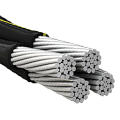
In the realm of power transmission, the choice of conductor material is pivotal, especially in regions subjected to extreme weather conditions. Aluminum conductors have gained prominence due to their favorable properties, including a high strength-to-weight ratio, corrosion resistance, and cost-effectiveness. This article delves into the performance and reliability of aluminum conductors, with a focus on Thermal-Resistant Aluminum Alloy Conductors (TACSR) and High-Temperature Low-Sag (HTLS) conductors, under extreme weather scenarios.
Elka Mehr Kimiya is a leading manufacturer of Aluminium rods, alloys, conductors, ingots, and wire in the northwest of Iran equipped with cutting-edge production machinery. Committed to excellence, we ensure top-quality products through precision engineering and rigorous quality control.
2. Understanding Aluminum Conductors
Aluminum conductors are widely used in overhead power lines due to their lightweight nature and excellent conductivity. Compared to copper, aluminum offers a more economical solution without significantly compromising performance. However, traditional aluminum conductors like ACSR (Aluminum Conductor Steel Reinforced) have limitations in high-temperature environments, leading to the development of advanced conductors such as TACSR and HTLS.
3. Thermal-Resistant Aluminum Alloy Conductors (TACSR)
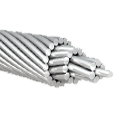
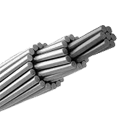
TACSR conductors are designed to operate at higher temperatures, typically up to 150°C, without significant loss of mechanical strength or conductivity. They consist of a steel core surrounded by thermal-resistant aluminum alloy strands, often incorporating zirconium to enhance thermal stability. This design allows for increased current-carrying capacity and reduced sag under thermal stress.
Key Features of TACSR:
- Operating Temperature: Up to 150°C
- Mechanical Strength: Maintains tensile strength at elevated temperatures
- Applications: Suitable for areas with high ambient temperatures and limited right-of-way for new lines
4. High-Temperature Low-Sag (HTLS) Conductors
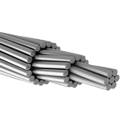
HTLS conductors represent a class of advanced conductors capable of operating at temperatures ranging from 150°C to 250°C. They are engineered to minimize sag under high thermal loads, making them ideal for upgrading existing lines without altering tower structures. Variants include ACCC (Aluminum Conductor Composite Core), ACSS (Aluminum Conductor Steel Supported), and others, each with unique core materials and design features.
Advantages of HTLS Conductors:
- High Ampacity: Increased current-carrying capacity
- Reduced Sag: Maintains clearance under high temperatures
- Retrofit Capability: Enables line upgrades without structural modifications
5. Comparative Performance Analysis
| Parameter | TACSR | HTLS |
|---|---|---|
| Operating Temperature | Up to 150°C | 150°C – 250°C |
| Sag Resistance | Moderate | High |
| Ampacity Increase | Moderate | Significant |
| Installation Complexity | Similar to ACSR | May require specialized fittings |
| Cost | Moderate | Higher initial investment |
Note: Data compiled from industry reports and manufacturer specifications.
6. Real-World Applications and Case Studies
Case Study 1: TACSR in Desert Climates
In regions with high ambient temperatures, such as parts of the Middle East, TACSR conductors have been deployed to replace conventional ACSR lines. The enhanced thermal resistance has led to improved reliability and reduced maintenance costs.
Case Study 2: HTLS in Urban Upgrades
Urban areas with growing electricity demand have utilized HTLS conductors to upgrade existing transmission lines. The ability to increase capacity without modifying existing structures has proven cost-effective and efficient.
7. Future Developments and Innovations
Research continues into developing conductors with even higher thermal ratings and improved mechanical properties. Innovations include the use of composite cores, advanced aluminum alloys, and smart monitoring systems to enhance performance and reliability further.
8. Conclusion
Aluminum conductors, particularly TACSR and HTLS variants, offer viable solutions for power transmission in extreme weather conditions. Their ability to maintain performance under high temperatures and reduce sag makes them essential components in modernizing and expanding electrical grids.
9. References
- ScienceDirect. (2024). Novel SolidStir extrusion technology for enhanced conductivity cable manufacturing via in-situ exfoliation of graphite to graphene. Retrieved from https://www.sciencedirect.com/science/article/pii/S0264127524000157
- Elka Mehr Kimiya. (2025). TACSR vs HTLS vs Similar Conductors: An In-Depth Comparative Analysis. Retrieved from https://elkamehr.com/en/tacsr-vs-htls-vs-similar-conductors-an-in-depth-comparative-analysis/
- De Angeli Prodotti. (2025). HTLS conductors: what their applications are and how to choose them. Retrieved from https://www.deangeliprodotti.com/en/articles/htls-conductors-what-their-applications-are-and-how-to-choose-them/
- Compow. (2025). Aluminum Based High Temperature Low Sag Conductors. Retrieved from https://compow.com/blog/aluminum-based-high-temperature-conductors
- Midal Cable. (2023). TACSR (Thermal Resistant Aluminum Alloy Conductors Steel Reinforced). Retrieved from https://www.midalcable.com/tacsr-thermal-resistant-aluminum-alloy-conductors-steel-reinforced

No comment