
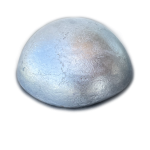
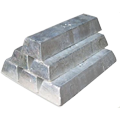
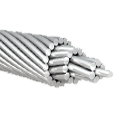
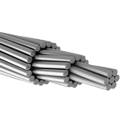
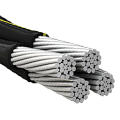
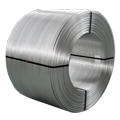
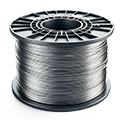
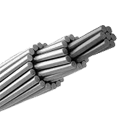


Aluminum alloy ingots serve as essential raw materials for a wide range of industries, including automotive, construction, and electrical engineering. Their versatility, lightweight properties, and strength make them indispensable in the production of various components and structures, from vehicle parts to building materials and electrical conductors.
Elka Mehr Kimiya has emerged as a key player in the aluminum ingot industry in Iran, where it is renowned for its competitive pricing, superior quality, and ISO-certified production processes. Located in the northwest of Iran, Elka Mehr Kimiya is a leading manufacturer of aluminum rods, alloys, conductors, ingots, and wire. The company is equipped with cutting-edge production machinery and leverages advanced technology to ensure that its products meet the highest standards of quality and performance.
Elka Mehr Kimiya’s commitment to excellence extends beyond mere production capabilities. The company prioritizes understanding customer needs, delivering tailored products, and fostering long-term partnerships based on trust and mutual success. By offering both standard and custom aluminum products, Elka Mehr Kimiya guarantees customer satisfaction through precision engineering and rigorous quality control.
In addition to its focus on quality and precision, Elka Mehr Kimiya is dedicated to innovation. The company’s investment in state-of-the-art machinery and adherence to best practices in manufacturing enables it to produce aluminum ingots that are not only cost-effective but also meet the highest international standards. With a dedicated team and a commitment to continuous improvement, Elka Mehr Kimiya stands out in the market by providing products where quality meets precision.
Aluminum alloy ingots find extensive application in creating parts for the automotive, electrical, power, construction, and defense sectors, among others. Over time, we have positioned ourselves as prominent manufacturers of aluminum alloy ingots in Iran.
Wide range of aluminum alloy ingots are available most common specifications are listed as the table below:
| Alloy Series | Alloying Elements | Common Applications | Subcategories (Variations) | Composition (for Common Variations) |
|---|---|---|---|---|
| 1xxx (Aluminum) | 99% or more Aluminum | Electrical conductors, chemical equipment | 1050, 1100 | 1050: Al ≥99.50%, Fe ≤0.40%, Si ≤0.25% 1100: Al ≥99.00%, Cu 0.05-0.20%, Fe ≤0.95% |
| 2xxx (Aluminum) | Copper | Aircraft structures, truck wheels | 2024, 2011 | 2024: Al 90.7-94.7%, Cu 3.8-4.9%, Mg 1.2-1.8%, Mn 0.3-0.9% 2011: Al ≥93.0%, Cu 5.0-6.0%, Bi 0.2-0.6%, Pb 0.2-0.6% |
| 3xxx (Aluminum) | Manganese | Beverage cans, cooking utensils | 3003, 3105 | 3003: Al 96.8-99.0%, Mn 1.0-1.5%, Cu ≤0.12% 3105: Al 98.0-99.0%, Mn 0.3-0.8%, Mg 0.2-0.8%, Cu ≤0.3% |
| 4xxx (Aluminum) | Silicon | Automotive parts, welding wire | 4043, 4032, 4047 | 4043: Al 94.8-96.8%, Si 4.5-6.0%, Fe ≤0.8% 4032: Al 85.0-91.0%, Si 11.0-13.5%, Cu 0.9-1.3%, Ni 0.8-1.3%, Mg 0.8-1.2% 4047: Al 86.8-88.8%, Si 11.0-13.0%, Fe ≤0.8% |
| 5xxx (Aluminum) | Magnesium | Marine environments, pressure vessels | 5052, 5083, 5050 | 5052: Al 96.5-98.5%, Mg 2.2-2.8%, Cr 0.15-0.35% 5083: Al 92.0-95.0%, Mg 4.0-4.9%, Mn 0.4-1.0%, Cr 0.05-0.25% 5050: Al 95.5-98.5%, Mg 1.1-1.8%, Mn 0.10-0.50%, Cr ≤0.15% |
| 6xxx (Aluminum) | Magnesium and Silicon | Structural applications, bridges | 6061, 6063, 6101, 6201 | 6061: Al 95.8-98.6%, Mg 0.8-1.2%, Si 0.4-0.8%, Cu 0.15-0.4% 6063: Al 97.5-99.0%, Mg 0.45-0.9%, Si 0.2-0.6% 6101: Al 98.0-99.0%, Mg 0.35-0.8%, Si 0.3-0.7% 6201: Al 98.0-99.0%, Mg 0.6-0.9%, Si 0.7-0.9% |
| 7xxx (Aluminum) | Zinc | Aerospace, sporting equipment | 7075, 7050, 7049 | 7075: Al 87.1-91.4%, Zn 5.1-6.1%, Mg 2.1-2.9%, Cu 1.2-2.0% 7050: Al 87.1-91.4%, Zn 5.7-6.7%, Mg 1.9-2.6%, Cu 2.0-2.6% 7049: Al 85.7-91.4%, Zn 7.2-8.2%, Mg 2.2-3.0%, Cu 1.2-2.0% |
| 8xxx (Aluminum) | Other elements | Lithium battery foils, aluminum-lithium alloys | 8006, 8090, 8011 | 8006: Al ≥98.80%, Fe 1.2% 8090: Al 90.0-95.0%, Li 2.2-2.7%, Cu 1.0-2.0%, Mg 0.6-1.2% 8011: Al 97.0-99.0%, Fe 0.6-1.0%, Si 0.5-0.9% |
Aluminum alloys are an essential material in modern manufacturing and engineering, thanks to their lightweight, corrosion resistance, and excellent mechanical properties. This guide delves into the different series of aluminum alloys, outlining their main alloying elements, common applications, subcategories, and compositions, providing a detailed understanding to help you select the best alloy for your needs.
1000 Series: Pure Aluminum
Alloying Element: Pure Aluminum
Common Applications: Electrical conductors, food packaging, architectural applications
Overview: The 1000 series, often referred to as commercially pure aluminum, consists of at least 99% aluminum. These alloys are known for their excellent corrosion resistance, high thermal and electrical conductivity, and good workability. They are typically used where high strength is not required.
Subcategories and Compositions:
- 1100: This alloy is soft, ductile, and ideal for general use. Its high corrosion resistance makes it suitable for chemical equipment and food processing industries. Composition: Al (99.00% min)
- 1050: This alloy is used in applications requiring high electrical conductivity, such as electrical conductors and decorative applications. Composition: Al (99.50% min)
2000 Series: Copper
Alloying Element: Copper
Common Applications: Aircraft structural components, high-performance engineering applications
Overview: The 2000 series aluminum alloys are characterized by the inclusion of copper as the primary alloying element. These alloys exhibit high strength and excellent machinability but lower corrosion resistance compared to other aluminum alloys. They are often used in aerospace applications where strength-to-weight ratio is crucial.
Subcategories and Compositions:
- 2024: Known for its high strength-to-weight ratio and fatigue resistance, making it ideal for aerospace applications. Composition: Al (90.7-94.7%), Cu (3.8-4.9%), other elements
- 2011: This alloy offers excellent machinability, making it suitable for precision machining. Composition: Al (99.0% min), Cu (0.4-0.8%), Pb (0.2-0.6%)
3000 Series: Manganese
Alloying Element: Manganese
Common Applications: Beverage cans, cooking utensils, heat exchangers
Overview: The 3000 series alloys incorporate manganese, enhancing their strength and corrosion resistance while maintaining good workability. These properties make them ideal for applications in the food and beverage industry, as well as in heat exchangers.
Subcategories and Compositions:
- 3003: This versatile alloy is corrosion-resistant and easily formable, suitable for applications like beverage cans and cooking utensils. Composition: Al (96.75-99.5%), Mn (1.0-1.5%)
- 3105: Commonly used in sheet metal work and general fabrication due to its excellent formability. Composition: Al (96.7-98.8%), Mn (0.3-0.8%)
4000 Series: Silicon
Alloying Element: Silicon
Common Applications: Welding filler materials
Overview: Silicon is the primary alloying element in the 4000 series, which enhances the alloy’s fluidity when molten, making it ideal for welding and brazing applications. These alloys are often used to produce welding wire and brazing rods.
Subcategories and Compositions:
- 4043: Commonly used for aluminum-to-aluminum welding, offering good flow characteristics and reduced cracking. Composition: Al (95.7-97.7%), Si (4.5-6.0%)
- 4047: Preferred for brazing applications due to its lower melting point and high silicon content. Composition: Al (88.3-91.7%), Si (11.0-13.0%)
5000 Series: Magnesium
Alloying Element: Magnesium
Common Applications: Marine applications, structural components
Overview: The 5000 series alloys incorporate magnesium, providing excellent corrosion resistance, especially in marine environments. These alloys are also known for their good weldability and moderate-to-high strength.
Subcategories and Compositions:
- 5052: This alloy is highly corrosion-resistant and is used for structural applications in marine environments. Composition: Al (95.7-97.9%), Mg (2.2-2.8%)
- 5083: Known for its exceptional performance in extreme environments, making it suitable for shipbuilding and offshore structures. Composition: Al (98.6%) Mg (4.4%)
6000 Series: Magnesium and Silicon
Alloying Elements: Magnesium and Silicon
Common Applications: Extrusions, architectural profiles, automotive parts
Overview: The 6000 series alloys combine magnesium and silicon to form magnesium silicide, imparting good mechanical properties and corrosion resistance. These versatile alloys are used in a wide range of applications, including structural and architectural applications, as well as automotive parts.
Subcategories and Compositions:
- 6061: Known for its versatility, this alloy offers a good balance of strength, corrosion resistance, and workability, making it suitable for structural components. Composition: Al (98.9%) Mg (0.60%) Si (0.50%)
- 6082: Often used in construction and transportation due to its good strength and excellent corrosion resistance. Composition: Al (98.5%) Mg (0.80%) Si (0.70%)
7000 Series: Zinc
Alloying Element: Zinc
Common Applications: Aerospace components, bicycle frames
Overview: The 7000 series alloys are high-strength materials, with zinc as the primary alloying element. These alloys are often used in aerospace and other high-performance applications where high strength and durability are critical.
Subcategories and Compositions:
- 7075: This alloy is renowned for its high strength and is used in aerospace and high-stress applications. Composition: Al (87.1-91.4%), Zn (5.1-6.1%), other elements
- 7049: Frequently used in military applications due to its robust properties. Composition: Al (88.0-91.9%), Zn (6.1-7.5%), other elements
8000 Series: Various Alloying Elements
Alloying Elements: Various
Common Applications: Specialty alloys, customized applications
Overview: The 8000 series alloys are tailored for specific applications and incorporate various alloying elements to achieve desired properties. These alloys are typically used in specialty applications where unique properties are required.
Subcategories and Compositions:
- 8011: Commonly used in food packaging, such as foil and containers, due to its excellent formability and corrosion resistance. Composition: Al (99.0-99.8%), other elements
- 8090: Designed for specific applications with a customized composition based on performance requirements.
Conclusion
Aluminum alloys offer a diverse range of properties that make them suitable for numerous applications across various industries. By understanding the specific characteristics of each alloy series, you can select the appropriate material for your needs, whether it be for high-strength aerospace components, corrosion-resistant marine structures, or versatile automotive parts. Aluminum alloys continue to be a cornerstone of modern engineering, providing solutions that meet the demands of today’s technological advancements.
Reviews
There are no reviews yet.