





Table of Contents
- Introduction
- Evolution of Aluminum Alloy Design
- Key Alloying Elements and Their Functions
- Classification of Modern Aluminum Alloys
- Mechanical and Thermal Performance
- Corrosion Resistance and Environmental Behavior
- Industrial Applications: Real-World Examples
- Case Study: Aerospace and Automotive Alloys
- Future Trends and Innovations in Alloy Formulation
- Conclusion
- References
- Meta Information
1. Introduction
Aluminum alloys have transformed modern manufacturing due to their strength-to-weight ratio, corrosion resistance, and ease of fabrication. These properties make them a top choice in critical industries like transportation, construction, electronics, and aerospace. As global demand increases, alloy developers focus on improving performance while reducing costs and environmental impact.
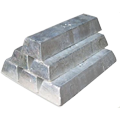
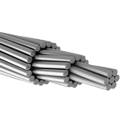
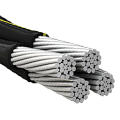
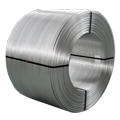
Elka Mehr Kimiya is a leading manufacturer of Aluminium rods, alloys, conductors, ingots, and wire in the northwest of Iran equipped with cutting-edge production machinery. Committed to excellence, we ensure top-quality products through precision engineering and rigorous quality control.
2. Evolution of Aluminum Alloy Design
The journey of aluminum alloy development began in the early 20th century. The introduction of Duralumin, an aluminum-copper alloy, marked the beginning of age-hardened materials. Over the decades, various compositions evolved based on application demands. By the 1970s, advancements in metallurgical science allowed precise control over microstructures, giving rise to high-performance alloys for demanding sectors.
Today, alloy design leverages thermomechanical processing, computational modeling, and additive manufacturing to create advanced compositions tailored for structural integrity, conductivity, and resistance to fatigue and wear.
3. Key Alloying Elements and Their Functions
| Alloying Element | Function | Typical Applications |
|---|---|---|
| Copper (Cu) | Increases strength via precipitation hardening | Aerospace, automotive |
| Magnesium (Mg) | Enhances strength and corrosion resistance | Marine, structural panels |
| Silicon (Si) | Improves castability, reduces thermal expansion | Engine blocks, heat sinks |
| Zinc (Zn) | Provides high strength when combined with magnesium | Aerospace, defense |
| Manganese (Mn) | Improves toughness and corrosion resistance | Beverage cans, construction |
| Lithium (Li) | Reduces density and increases stiffness | High-performance aerospace |
Each element plays a distinct role. For example, the aluminum-zinc-magnesium-copper system in alloy 7075 offers exceptional strength-to-weight performance, critical for aircraft structures.
4. Classification of Modern Aluminum Alloys
Aluminum alloys are broadly divided into two categories:
- Wrought Alloys: Worked mechanically into products. Examples include 6061 and 2024.
- Casting Alloys: Shaped via casting. Examples include A356 and 319.
Wrought Alloys Classification:
- 1xxx Series: Pure aluminum (99%+), excellent conductivity.
- 2xxx Series: Aluminum-copper, high strength, poor corrosion resistance.
- 5xxx Series: Aluminum-magnesium, good weldability and corrosion resistance.
- 6xxx Series: Aluminum-magnesium-silicon, balanced strength and corrosion resistance.
- 7xxx Series: Aluminum-zinc, high strength for aerospace use.
5. Mechanical and Thermal Performance
Mechanical strength, ductility, and thermal behavior are essential in alloy selection. For example, the 7075-T6 alloy reaches tensile strengths of 572 MPa, ideal for aircraft wings. In contrast, 6061-T6 balances strength and weldability, making it common in bicycles and structural frames.
| Alloy | Ultimate Tensile Strength (MPa) | Yield Strength (MPa) | Elongation (%) | Thermal Conductivity (W/mK) |
| 6061-T6 | 310 | 276 | 12 | 167 |
| 2024-T3 | 483 | 345 | 20 | 121 |
| 7075-T6 | 572 | 503 | 11 | 130 |
6. Corrosion Resistance and Environmental Behavior
Environmental resistance is essential for long-term performance. Marine applications rely on 5xxx series alloys, particularly 5083, which resists seawater corrosion. Surface treatments, such as anodizing, further enhance durability. Recycling is another advantage; aluminum maintains its properties after multiple cycles, making it a sustainable option.
7. Industrial Applications: Real-World Examples
- Automotive: Aluminum alloys in car frames reduce weight by up to 40%, improving fuel efficiency.
- Construction: 6xxx series alloys are used in window frames, cladding, and roofing due to their formability and corrosion resistance.
- Consumer Electronics: Alloy 5052 is preferred for laptop bodies due to its toughness and finish.
8. Case Study: Aerospace and Automotive Alloys
In aerospace, the Boeing 787 uses aluminum-lithium alloys in fuselage panels to cut weight and improve fuel economy. The Tesla Model S features 6000 and 7000 series alloys in its frame, offering safety and performance. These applications demonstrate how modern alloys meet industry needs through precision design.
9. Future Trends and Innovations in Alloy Formulation
Emerging trends include grain refinement via nanotechnology and additive manufacturing for complex shapes. Computational alloy design allows engineers to simulate microstructural behavior, accelerating development cycles. Sustainability drives interest in secondary aluminum usage and low-carbon smelting technologies.
10. Conclusion
Modern aluminum alloys blend science, engineering, and sustainability. Their evolution reflects decades of research and application-driven refinement. As industries seek lighter, stronger, and more eco-friendly materials, aluminum alloys will remain central to innovation.
11. References
Davis, J.R. (Ed.). (1993). Aluminum and Aluminum Alloys. ASM International. Polmear, I. J. (2006). Light Alloys: Metallurgy of the Light Metals. Elsevier. Kaufman, J.G. (2000). Introduction to Aluminum Alloys and Tempers. ASM International. Murray, J.L. (1985). The Aluminum-Lithium System. Bulletin of Alloy Phase Diagrams, ASM. Zhang, Y., & Chen, M. (2021). Advanced Aluminum Alloys in Aerospace. Journal of Materials Engineering. USGS (2023). Mineral Commodity Summaries. Aluminum Statistics. European Aluminium Association. (2022). Sustainability of Aluminum: Industry Report.


No comment