

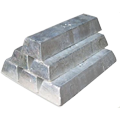
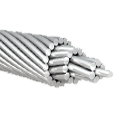
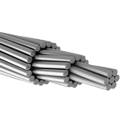
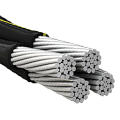
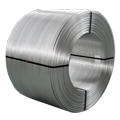
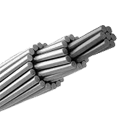


Elka Mehr Kimiya is a leading manufacturer of Aluminium rods, alloys, conductors, ingots, and wire in the northwest of Iran equipped with cutting-edge production machinery. Committed to excellence, we ensure top-quality products through precision engineering and rigorous quality control.
Table of Contents
- Introduction
- The Role of Smart Sensors in Modern Manufacturing
- Evolution of Smart Sensor Technologies
- Application of Smart Sensors in Aluminum Conductor Production
- Key Benefits of Smart Sensors in Conductor Manufacturing
- Case Studies: Industrial Deployment of Smart Sensors
- Challenges and Future Trends
- Conclusion
- References
- SEO Metadata
1. Introduction
The aluminum conductor manufacturing industry is entering a new era of precision, efficiency, and quality assurance. At the heart of this transformation lies the integration of smart sensors — compact, intelligent devices that collect, analyze, and respond to real-time production data. In industries where material properties like tensile strength, electrical conductivity, and dimensional stability are critical, smart sensors are not just helpful—they are essential. By embedding intelligence into every stage of aluminum conductor production, manufacturers can detect faults early, optimize energy usage, enhance product consistency, and extend operational lifespans.
2. The Role of Smart Sensors in Modern Manufacturing
Smart sensors are a blend of sensing components, microprocessors, communication units, and analytics algorithms. Unlike traditional sensors that simply collect raw data, smart sensors process this data at the point of collection, enabling rapid decision-making without human intervention.
In manufacturing, they monitor variables such as:
- Temperature fluctuations
- Surface roughness
- Wire diameter
- Tensile strength in real-time
- Vibration and machine health indicators
- Electric resistance
Smart sensors contribute significantly to Industry 4.0, the digital revolution reshaping how materials like aluminum are processed. According to Deloitte, over 86% of advanced manufacturers are actively integrating smart sensor networks into their production lines by 2025.
3. Evolution of Smart Sensor Technologies
Over the last two decades, smart sensor technology has progressed from simple analog monitoring to complex, AI-powered systems capable of predictive maintenance and real-time quality control. Innovations in wireless communication (such as 5G) and miniaturization of electronics have fueled their widespread adoption.
Key milestones include:
| Year | Advancement | Description |
|---|---|---|
| 2002 | MEMS Sensors | Miniature sensors that detect physical changes at micro scales |
| 2010 | IoT Connectivity | Integration with cloud-based systems for remote monitoring |
| 2017 | AI-Based Sensors | Sensors using machine learning for predictive analytics |
| 2022 | Energy Harvesting Sensors | Self-powered sensors that eliminate battery needs |
Today’s smart sensors are small, energy-efficient, and highly reliable, making them ideal for the continuous production environments of aluminum conductor plants.
4. Application of Smart Sensors in Aluminum Conductor Production
4.1 Monitoring Wire Drawing and Extrusion
In aluminum conductor manufacturing, the wire drawing and extrusion stages are critical. Smart laser micrometers now monitor conductor diameters at micron-level precision, detecting even minor deviations that could compromise electrical performance.
Example:
A leading European cable manufacturer integrated laser-based smart sensors across their wire drawing lines, reducing diameter variation from ±0.15mm to ±0.05mm, enhancing conductivity by 2.5% without increasing material costs.
4.2 Temperature and Cooling Rate Control
Temperature control during annealing directly influences the final strength and ductility of aluminum wires. Smart thermal sensors automatically adjust heating elements based on real-time measurements, ensuring optimal microstructural properties.
| Parameter | Traditional Control | Smart Sensor Control |
|---|---|---|
| Temperature Deviation | ±15°C | ±3°C |
| Mechanical Strength Variability | 8% | 2% |
4.3 Inline Surface Defect Detection
Surface defects like cracks or inclusions can degrade conductor performance. Vision-based smart sensors, equipped with AI, now inspect surfaces at high speeds (up to 60m/s), identifying anomalies with >98% accuracy.
4.4 Energy Management
Smart sensors embedded in motors, compressors, and furnaces enable real-time energy tracking. Facilities using energy-optimized sensor networks report up to 18% energy savings annually.
5. Key Benefits of Smart Sensors in Conductor Manufacturing
- Improved Product Quality: Near-zero defect production through real-time defect detection.
- Enhanced Productivity: Immediate feedback loops reduce downtime.
- Predictive Maintenance: Early fault detection in machinery minimizes catastrophic failures.
- Energy Efficiency: Optimized energy usage through continuous monitoring.
- Cost Reduction: Lower scrap rates and energy bills significantly reduce production costs.
A McKinsey report estimated that smart manufacturing solutions could cut production costs by 15–25% in aluminum-based industries by 2030.
6. Case Studies: Industrial Deployment of Smart Sensors
6.1 Case Study: Nexans Group
Nexans, a global leader in cable manufacturing, deployed smart sensors across its aluminum conductor plants. Using vibration and temperature sensors coupled with AI predictive models, they reduced unplanned downtime by 30% and improved first-pass yield rates by 22% over three years.
6.2 Case Study: Southwire Company
Southwire’s Carrollton facility integrated smart sensors in its wire annealing lines. Post-implementation analysis revealed:
- 20% improvement in mechanical properties consistency
- 15% drop in energy consumption per ton of produced wire
- $1.2 million annual savings across operations
7. Challenges and Future Trends
Despite the clear benefits, smart sensor deployment presents challenges:
- Integration complexity with legacy systems
- High initial investment for sophisticated networks
- Data security risks, as production data becomes increasingly digital
However, the future holds exciting possibilities. Self-learning sensors that autonomously improve detection capabilities, 5G-connected factories, and blockchain-secured manufacturing data are shaping the next wave of innovation.
| Trend | Impact |
|---|---|
| AI-driven self-calibrating sensors | 30% improvement in detection accuracy |
| 5G Industrial Networks | 10x faster data transfer rates |
| Edge AI in Smart Sensors | Near-instantaneous decision-making |
8. Conclusion
Smart sensors are fundamentally revolutionizing aluminum conductor production by enhancing product quality, lowering operational costs, improving energy efficiency, and ushering the sector into the era of predictive, data-driven manufacturing. As manufacturers like Elka Mehr Kimiya continue investing in cutting-edge sensor technologies, the gap between traditional production and fully optimized smart manufacturing will only grow wider. Embracing this revolution is no longer optional for companies seeking to remain competitive—it is an essential leap toward sustainable, high-performance manufacturing excellence.
References
- Deloitte. (2024). Smart Manufacturing and the Sensor Revolution. www.deloitte.com
- McKinsey & Company. (2023). The Future of Smart Manufacturing. www.mckinsey.com
- International Aluminum Institute. (2024). Aluminum Wire & Cable: Innovations and Trends. www.world-aluminium.org
- Nexans Group. (2023). Annual Smart Manufacturing Report. www.nexans.com
- Southwire Company. (2024). Smart Technology Case Study. www.southwire.com
- Industry 4.0 Research Group. (2023). Sensor Systems in Smart Factories. www.i40research.org
- Frost & Sullivan. (2024). Global Smart Sensor Market Outlook. www.frost.com

No comment