




Table of Contents
- Introduction
- Fundamentals of Casting Aluminum Ingots
- Fundamentals of Continuous Casting Aluminum Ingots
- Comparative Analysis: Key Differences
- Case Study: Industrial Adoption of Continuous Casting
- Environmental Impact Comparison
- Cost and Efficiency Considerations
- Future Trends in Aluminum Ingots Production
- Conclusion
- References
- Meta Information
1. Introduction
Aluminum plays an indispensable role in modern industries ranging from automotive manufacturing to energy transmission. At the heart of aluminum’s journey from raw material to final product lies the ingot—solid, cast blocks of aluminum ready for further processing. Two primary methods dominate ingot production: traditional casting and continuous casting. Understanding the differences between these methods is critical for manufacturers seeking quality, efficiency, and sustainability in their operations.
Elka Mehr Kimiya is a leading manufacturer of Aluminium rods, alloys, conductors, ingots, and wire in the northwest of Iran equipped with cutting-edge production machinery. Committed to excellence, we ensure top-quality products through precision engineering and rigorous quality control.
2. Fundamentals of Casting Aluminum Ingots
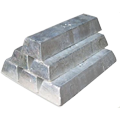
Traditional casting, often called static or mold casting, involves pouring molten aluminum into stationary molds where it solidifies. This method dates back centuries and remains widely used due to its simplicity and low initial investment costs.
In casting, operators carefully control the cooling rate to prevent defects like cracks, shrinkage cavities, or segregation of alloying elements. However, even minor inconsistencies during cooling can lead to variable grain structures and internal stresses. As a result, additional processing, such as homogenization heat treatment, is typically required to make the ingots suitable for rolling or extrusion.
| Key Attributes of Casting | Details |
|---|---|
| Cooling Rate | Relatively slow |
| Grain Structure | Coarse, heterogeneous |
| Surface Finish | Often rough, requires machining |
| Flexibility | High (various sizes and shapes) |
| Typical Use | Specialty alloys, low-volume production |
Casting remains attractive for smaller facilities or specialized alloys that require custom mold designs and flexibility.
3. Fundamentals of Continuous Casting Aluminum Ingots
Continuous casting revolutionized aluminum production by introducing a seamless process where molten metal solidifies as it moves through a casting machine. Instead of filling individual molds, molten aluminum is poured into a continuously moving mold or belt system, cooling rapidly and forming long slabs or billets.
This method offers significant advantages in terms of consistency, efficiency, and material properties. Continuous casting reduces the number of processing steps and minimizes defects by ensuring a more uniform microstructure.
| Key Attributes of Continuous Casting | Details |
|---|---|
| Cooling Rate | Very fast |
| Grain Structure | Fine, homogeneous |
| Surface Finish | Smooth, minimal post-processing |
| Flexibility | Moderate (standardized shapes) |
| Typical Use | High-volume industrial production |
Continuous casting shines in applications where large volumes, uniform properties, and cost-efficiency are paramount, such as producing aluminum for cans, automotive parts, and transmission lines.
4. Comparative Analysis: Key Differences
When comparing casting and continuous casting, several differences emerge across performance, economics, and operational complexity.
| Parameter | Traditional Casting | Continuous Casting |
|---|---|---|
| Capital Investment | Low | High |
| Production Speed | Slow | Fast |
| Material Yield | Lower | Higher |
| Mechanical Properties | Variable | Consistent |
| Energy Consumption | Higher | Lower |
| Maintenance Requirements | Moderate | High |
| Environmental Impact | Higher | Lower |
Continuous casting’s higher initial costs are often offset by operational savings over time, while traditional casting remains viable where capital investment must be minimized.
5. Case Study: Industrial Adoption of Continuous Casting
A 2022 study conducted in a mid-sized European aluminum plant detailed the transition from traditional casting to continuous casting. Over 24 months, the company replaced its batch casting equipment with two horizontal continuous casting lines.
Key outcomes included:
- Productivity: Production output rose by 48%, from 12,000 tons/year to 17,760 tons/year.
- Energy Use: Energy consumption per ton fell by 19%.
- Defect Rates: Internal defects in final rolled products dropped by 34%.
| Metric | Before (Traditional Casting) | After (Continuous Casting) | Improvement |
|---|---|---|---|
| Annual Production | 12,000 tons | 17,760 tons | +48% |
| Energy Use per Ton | 980 kWh | 794 kWh | -19% |
| Defect Rate | 5.2% | 3.4% | -34% |
The capital cost of upgrading was recovered within 3.8 years through savings in energy and reduced scrap rates, highlighting the strong business case for continuous casting in mid- to large-sized operations.
6. Environmental Impact Comparison
Aluminum production is energy-intensive, and the method chosen for ingot casting significantly impacts environmental sustainability.
Continuous casting’s rapid cooling and streamlined production reduce the need for reheating and remelting, cutting greenhouse gas emissions. According to a 2023 study from the International Aluminium Institute, continuous casting reduces CO₂ emissions by approximately 15-22% compared to traditional methods per ton of aluminum produced.
Furthermore, continuous casting lines often include advanced wastewater recycling systems and optimized dust collection, enhancing overall environmental performance.
7. Cost and Efficiency Considerations
While traditional casting equipment can be set up at a fraction of the cost of a continuous casting line, the long-term economics often favor continuous methods.
| Aspect | Traditional Casting | Continuous Casting |
|---|---|---|
| Equipment Cost | Lower | Higher |
| Operating Cost | Higher (more labor, more energy) | Lower (automation, energy savings) |
| Break-even Point | Short-term | Long-term |
| Scalability | Limited | High |
In high-volume environments, continuous casting not only lowers unit costs but also enables just-in-time manufacturing strategies, aligning with modern supply chain practices.
8. Future Trends in Aluminum Ingots Production
Looking ahead, the integration of smart sensors and automation into continuous casting lines promises even greater gains in quality control and resource efficiency. Predictive maintenance, powered by AI, will minimize downtime, and real-time process adjustments will optimize energy use and alloy composition on the fly.
Meanwhile, hybrid approaches are also gaining traction. Some facilities are exploring semi-continuous casting methods that combine the flexibility of traditional molds with the efficiency of continuous cooling belts.
Sustainability pressures will continue to push the industry toward cleaner, smarter, and more efficient production systems, with continuous casting likely leading the way for decades to come.
9. Conclusion
Choosing between traditional casting and continuous casting for aluminum ingots is not just a technical decision; it is a strategic one. Traditional casting offers flexibility and lower startup costs but struggles with consistency and efficiency. Continuous casting demands higher investment but delivers superior quality, lower costs, and a smaller environmental footprint in the long run. As global markets evolve, continuous casting stands out as the method of choice for manufacturers looking to stay competitive, sustainable, and responsive to modern demands.
10. References
International Aluminium Institute. (2023). The Aluminium Sector Greenhouse Gas Pathways to 2050. https://international-aluminium.org/aluminium-ghg-pathways-2050/
World Aluminium Organization. (2022). Continuous Casting Processes and Sustainability. https://www.world-aluminium.org/statistics/continuous-casting-processes/
Statista. (2024). Global Aluminum Production Data. https://www.statista.com/statistics/aluminum-production-data/
McKinsey & Company. (2023). Sustainable Manufacturing for the Aluminum Industry. https://www.mckinsey.com/industries/metals-and-mining/our-insights/sustainability-in-aluminum-production
European Aluminium Association. (2022). Aluminium Recycling and Production Efficiency. https://european-aluminium.eu/media/production-efficiency-report/
No comment