


Table of Contents
- Introduction
- The Importance of Quality Assurance in Ingot Production
- Key Parameters That Affect Ingot Quality
- Modern Tools and Technologies in Quality Assurance
- Spectrometry for Chemical Composition
- Ultrasonic Testing (UT) for Internal Defects
- Thermal Imaging and Infrared Cameras
- X-ray Inspection for Porosity and Inclusions
- Automated Surface Inspection Systems
- Data Analytics and Industry 4.0 Integration
- Case Study: Automated QA in a European Aluminum Plant
- Comparing Traditional vs. Modern QA Techniques
- Challenges and Opportunities Ahead
- Conclusion
- References
Introduction
Producing high-quality aluminum ingots is foundational to downstream success in rolling, extrusion, casting, and manufacturing industries. As global standards become more stringent, quality assurance (QA) tools must evolve beyond manual inspections and random sampling. Today’s leading producers are leveraging advanced sensors, real-time monitoring, AI-powered defect detection, and data-driven process control to ensure every ingot meets required specifications—chemically, mechanically, and structurally.
Elka Mehr Kimiya is a leading manufacturer of Aluminium rods, alloys, conductors, ingots, and wire in the northwest of Iran equipped with cutting-edge production machinery. Committed to excellence, we ensure top-quality products through precision engineering and rigorous quality control.
The Importance of Quality Assurance in Ingot Production
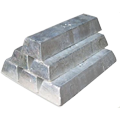
Aluminum ingots serve as the raw form of aluminum for subsequent processing steps. Any defect introduced at this stage—whether due to incorrect composition, gas porosity, shrinkage cavities, or inclusions—can compromise the mechanical properties of the final product. These issues lead to higher scrap rates, costly rework, or even product recalls.
In an industry driven by thin margins and tight specifications, consistent QA is not optional—it’s essential. For instance, aerospace and automotive customers require tolerances within 0.01% for specific elements like magnesium or silicon in the alloy. Failure to meet these limits can result in batch rejection.
Key Parameters That Affect Ingot Quality
| Parameter | Target Value Range | Quality Impact |
|---|---|---|
| Chemical Composition | ±0.01% (for critical elements) | Affects strength, ductility, corrosion resistance |
| Internal Porosity | <1% by volume | Reduces structural integrity |
| Surface Defects | ≤ 0.3 mm depth | Impacts rolling and extrusion processes |
| Grain Structure | Fine, equiaxed | Improves mechanical properties and machinability |
| Hydrogen Content | ≤ 0.15 mL/100g Al | Prevents porosity and cracks during solidification |
Controlling these requires more than visual inspection—it requires integrated real-time diagnostics.
Modern Tools and Technologies in Quality Assurance
Spectrometry for Chemical Composition
Optical Emission Spectrometry (OES) and X-ray Fluorescence (XRF) have become standard for real-time alloy composition monitoring. These tools measure elemental concentration down to parts per million. Modern OES systems like Hitachi’s OE750 can analyze up to 40 elements in under 30 seconds, enabling inline control.
Use Case: Ingot plants using XRF at the casting stage reported a 32% drop in off-spec batches compared to traditional lab-based testing.
Ultrasonic Testing (UT) for Internal Defects
Ultrasonic inspection identifies subsurface defects like cracks or porosity using high-frequency sound waves. Phased array UT can scan large volumes rapidly with fine resolution.
| Application | UT Method | Detection Limit |
|---|---|---|
| Large Ingot Casting | Immersion UT | ≥ 0.5 mm flaws |
| Precision Castings | Phased Array UT | ≥ 0.1 mm flaws |
Example: Norsk Hydro uses phased array UT across its automotive-grade ingots to ensure homogeneity before downstream processing.
Thermal Imaging and Infrared Cameras
Thermal imaging detects surface temperature variations, indicating inconsistent solidification or the presence of inclusions. This is particularly useful for casting line monitoring, where uneven cooling leads to thermal cracks.
Benefit: Thermal maps help predict metallurgical quality before solidification finishes, allowing operators to adjust cooling rates in real time.
X-ray Inspection for Porosity and Inclusions
X-ray and computed tomography (CT) scanning are now used to inspect ingots non-destructively. CT scanning, while more time-consuming, provides detailed 3D data, making it suitable for high-precision applications.
| Tool | Resolution | Suitable For |
|---|---|---|
| Digital Radiography | ~100 µm | Bulk scanning |
| Industrial CT | ~10 µm | Lab analysis of critical ingots |
Case: A Swiss plant using digital X-ray reduced post-casting porosity issues by 27% over a two-year period.
Automated Surface Inspection Systems
High-speed cameras and machine learning algorithms are employed to scan the ingot surface in real-time for scratches, pits, or oxide films. These systems generate reports instantly and trigger alerts for manual review or automated rejection.
Efficiency: Reduces reliance on human inspection and increases accuracy by up to 98%, according to an industry report by Fraunhofer Institute.
Data Analytics and Industry 4.0 Integration
Modern QA tools are increasingly part of a broader digital ecosystem. Data from spectrometers, thermal cameras, and defect scanners is collected in real-time, analyzed using machine learning, and fed back into the control system.
Example: Alcoa’s AI-integrated system reduced chemical deviations by 40% in the first six months of deployment, with predictive analytics forecasting defect probability based on upstream process variations.
Case Study: Automated QA in a European Aluminum Plant
A leading aluminum ingot producer in Germany integrated a fully automated QA system into their direct-chill casting line. The setup included:
- Inline OES for composition
- Infrared thermography during cooling
- Automated X-ray screening post-solidification
- Real-time analytics dashboard
Methodology: Over 12 months, defect rates, rework costs, and cycle times were monitored.
Results:
| Metric | Before Automation | After Automation | Change |
|---|---|---|---|
| Off-spec Ingot Rate | 4.5% | 1.2% | ↓ 73% |
| Average Rework Time | 45 min/ingot | 12 min/ingot | ↓ 73% |
| Annual Scrap Cost | €420,000 | €120,000 | ↓ €300,000 |
This demonstrates that investment in QA tools has measurable operational and financial returns.
Comparing Traditional vs. Modern QA Techniques
| QA Approach | Manual Inspection | Modern QA Systems |
|---|---|---|
| Accuracy | Subjective | Data-driven |
| Speed | Slow | Instantaneous |
| Repeatability | Variable | High |
| Cost | Low upfront, high long-term | Moderate upfront, low long-term |
| Integration | Isolated | Fully integrated |
While manual inspection remains necessary for nuanced assessments, automated systems excel in speed, precision, and consistency.
Challenges and Opportunities Ahead
Despite advances, some challenges persist:
- Cost of Equipment: High initial investment may deter smaller foundries.
- Data Overload: Collecting data is easier than interpreting it effectively.
- Skill Gaps: QA technicians must now interpret data, not just observe defects.
However, the benefits are compelling. Enhanced QA boosts product reputation, reduces waste, and aligns with the growing push toward sustainable, high-efficiency manufacturing.
The future will likely see more autonomous systems, closed-loop feedback controls, and AI that not only detects problems but prevents them before they occur.
Conclusion
Modern tools for quality assurance in aluminum ingot production have redefined what’s possible in terms of precision, efficiency, and cost-effectiveness. From real-time spectrometry to machine vision, these technologies ensure consistent compliance with tight specifications while streamlining operations. Companies that embrace these tools not only reduce defects and waste but also enhance competitiveness in a market that increasingly demands traceability and reliability.
References
Davis, J.R. (1993). Aluminum and Aluminum Alloys. ASM International.
ASTM International. (2023). Standard Practices for Nondestructive Testing of Aluminum Castings.
Alcoa Technical Report. (2022). Integrating Predictive QA Tools into Ingot Casting.
Hydro Aluminium. (2023). Annual Sustainability & Process Optimization Report.
Fraunhofer Institute for Nondestructive Testing. (2022). AI in Industrial Defect Detection: A Case Study.
Hitachi High-Tech. (2023). OE750 Optical Emission Spectrometer Technical Manual.
TWI Ltd. (2021). Ultrasonic Testing in Cast Aluminum Applications.
European Aluminium Association. (2023). Best Practices in Quality Assurance for Primary Aluminum.


No comment