





Table of Contents
- Introduction
- Principles of Ultrasonic Testing
- Common Defects in Aluminum Ingots
- UT Techniques for Aluminum Ingots
- Factors Affecting Ultrasonic Testing Accuracy
- Advanced Developments in Ultrasonic Testing
- Case Study: Large-Scale Industrial Implementation
- Advantages and Limitations of UT
- Conclusion
- References
1. Introduction
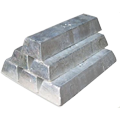
Aluminum ingots form the foundation of countless industries, from aerospace and automotive to construction and energy. Their quality is non-negotiable. Even minor internal flaws in an ingot can snowball into costly failures in critical applications. Identifying these hidden imperfections at an early stage is vital.
Ultrasonic Testing (UT) has emerged as a trusted solution. By harnessing high-frequency sound waves, it allows manufacturers to peer beneath the surface of aluminum ingots without causing any damage. Its ability to detect voids, inclusions, cracks, and other subsurface irregularities makes it a pillar of modern quality control.
Elka Mehr Kimiya is a leading manufacturer of aluminum rods, alloys, conductors, ingots, and wire in the northwest of Iran, equipped with cutting-edge production machinery. Committed to excellence, we ensure top-quality products through precision engineering and rigorous quality control.
2. Principles of Ultrasonic Testing
At its core, Ultrasonic Testing is elegantly simple. A transducer sends ultrasonic waves—usually between 0.5 and 15 MHz—into the ingot. When these waves encounter a boundary, like a crack or void, they reflect back. By analyzing these echoes, technicians can map internal features with remarkable accuracy.
There are two main outcomes:
- A clean, consistent signal indicates a defect-free zone.
- Disruptions or echoes point to flaws hidden inside the ingot.
Table 1: Key Technical Parameters for Ultrasonic Testing
| Parameter | Typical Value Range | Purpose |
|---|---|---|
| Frequency | 0.5–15 MHz | Determines depth of penetration and resolution |
| Velocity of Ultrasound in Aluminum | ~6,320 m/s | Crucial for flaw depth calculation |
| Pulse Repetition Frequency | 100–2,000 Hz | Affects scan speed and sensitivity |
| Probe Types | Contact, Immersion, Phased Array | Tailors testing for part geometry |
This method is non-invasive, versatile, and capable of inspecting both small and large ingots across various stages of manufacturing.
3. Common Defects in Aluminum Ingots
No casting process is perfect. Despite modern techniques, several types of internal defects still occur:
- Porosity: Tiny gas bubbles trapped during solidification.
- Inclusions: Foreign materials like oxides or slag embedded in the metal.
- Cracks: Stresses during cooling may initiate fractures.
- Segregation: Non-uniform distribution of alloying elements, leading to weak zones.
- Shrinkage Cavities: Voids formed due to insufficient feeding during casting.
Each defect compromises mechanical strength, corrosion resistance, or other critical properties. In severe cases, it can even cause catastrophic failure.
Table 2: Common Defects and Associated Risks
| Defect Type | Cause | Risk |
|---|---|---|
| Porosity | Gas entrapment during solidification | Reduced fatigue strength |
| Inclusions | Oxide contamination | Initiation sites for cracks |
| Cracks | Thermal stresses | Propagation under cyclic loading |
| Segregation | Improper alloy mixing | Localized corrosion |
Understanding these defects is the first step toward their early detection and elimination.
4. UT Techniques for Aluminum Ingots
Different UT methods are suited to different inspection needs:
- Pulse-Echo: The standard method. A single transducer sends and receives signals, ideal for surface or near-surface flaws.
- Through-Transmission: Two transducers on opposite sides improve detection of deep internal flaws.
- Phased Array Ultrasonic Testing (PAUT): Advanced technique using multiple elements, steering beams electronically for detailed imaging.
- Immersion Testing: Specimen is submerged in water to ensure consistent coupling, ideal for complex shapes.
Table 3: UT Techniques Comparison
| Technique | Strengths | Limitations |
|---|---|---|
| Pulse-Echo | Fast, economical | Less effective for deep flaws |
| Through-Transmission | Good for thick sections | Needs access to both sides |
| Phased Array | High-resolution, full volumetric inspection | Expensive equipment and skilled operators required |
| Immersion Testing | Best coupling, high-quality imaging | Setup complexity, needs immersion tank |
Each method must be chosen carefully depending on ingot size, geometry, and production throughput needs.
5. Factors Affecting Ultrasonic Testing Accuracy
While powerful, UT results can be influenced by several factors:
- Surface Roughness: Rough surfaces scatter sound waves, leading to weak or noisy signals.
- Grain Size: Coarse grains cause sound scattering, especially at high frequencies.
- Material Anisotropy: Directional properties affect wave speed and attenuation.
- Operator Expertise: Interpretation errors can result in false positives or missed defects.
Table 4: Environmental and Material Factors Affecting UT Accuracy
| Factor | Effect on UT Accuracy |
|---|---|
| Surface roughness | Increases noise, reduces flaw detectability |
| Grain size | Large grains scatter ultrasonic energy |
| Temperature | Changes sound velocity, affecting depth calculations |
Proper calibration and training are critical to overcoming these challenges.
6. Advanced Developments in Ultrasonic Testing
The future of UT in aluminum ingot inspection is being shaped by technological innovation:
- Automated UT Systems: Robotics coupled with UT for high-speed, high-reliability inspections.
- Total Focusing Method (TFM): Post-processing technique offering enhanced image clarity compared to conventional phased arrays.
- Artificial Intelligence (AI) in UT Analysis: Machine learning models are being trained to recognize flaw patterns, reducing reliance on operator judgment.
Recent studies have shown that AI-enhanced UT systems reduced false negatives by up to 30% in industrial settings, dramatically improving defect detection reliability.
7. Case Study: Large-Scale Industrial Implementation
In 2023, a major aluminum producer in Europe integrated a full-scale automated UT system for ingot inspection. The system, provided by TecScan, combined:
- 8-channel phased array probes
- Automated 3-axis scanning
- Real-time defect visualization
- Defect classification algorithms
The system inspected aluminum blocks up to 30 inches thick, achieving detection limits as small as 1 mm. By adopting this system, the plant reduced scrap rates by 18% within six months and increased customer acceptance rates for high-value aerospace-grade products by 12%.
This case highlights how modern UT solutions can transform production efficiency and product reliability.
8. Advantages and Limitations of UT
Advantages:
- Non-Destructive: No material wastage or damage.
- High Sensitivity: Capable of finding defects as small as 0.1 mm.
- Real-Time Results: Immediate feedback for rapid decision-making.
- Versatile: Applicable across a wide range of ingot sizes and shapes.
- Cost-Effective Over Time: Saves money by preventing failures and reducing scrap.
Limitations:
- Initial Costs: High investment for advanced systems.
- Training Requirements: Skilled operators are crucial.
- Surface Preparation: Necessary for accurate results.
- Material Limitations: High grain noise in some alloys can complicate interpretation.
Understanding these trade-offs helps manufacturers make informed choices when integrating UT into their processes.
9. Conclusion
Ultrasonic Testing stands as a cornerstone of modern aluminum ingot production quality assurance. Its unmatched ability to detect hidden defects ensures that only the best materials reach downstream applications, safeguarding industries and end-users alike.
While not without its challenges, the strategic implementation of UT—especially through automation and AI—offers compelling returns on investment through improved product integrity, reduced wastage, and greater customer confidence.
As manufacturing demands rise and tolerances tighten, Ultrasonic Testing will continue to evolve, helping aluminum producers stay ahead in quality, reliability, and innovation.
10. References
TecScan. Ultrasonic Testing Solution for Inspection of Aluminum Cast Molding Blocks. Retrieved from https://tecscan.ca/ultrasonic-testing-solution-for-inspection-of-aluminum-cast-molding-blocks/
Chirag Jadav, & Shailesh Patel. Ultrasonic Testing For Determination Internal Flaws And Discontinuities In Metal Casting: A Review. Natural Volatiles & Essential Oils, 8(6), 4899-4918. Retrieved from https://www.nveo.org/index.php/journal/article/download/4359/3581/4426
CN203502385U. Ultrasonic testing device for aluminum alloy slab ingots. Retrieved from https://patents.google.com/patent/CN203502385U/en
ResearchGate. Effects of grain size and surface roughness on ultrasonic testing of aluminum alloy die castings. Retrieved from https://www.researchgate.net/publication/43519718_Effects_of_grain_size_and_surface_roughness_on_ultrasonic_testing_of_aluminum_alloy_die_castings




No comment