





Table of Contents
- Introduction
- What Is Food-Grade Aluminum?
- Regulatory Standards and Safety Guidelines
- Why Use Food-Grade Aluminum? Benefits in Food Industry
- How Is Food-Grade Aluminum Made and Processed?
- Potential Risks and Misconceptions
- Real-World Applications: From Kitchens to Industry
- Conclusion & Next Steps
- References
Introduction
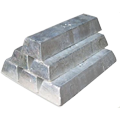
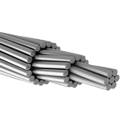
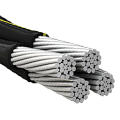
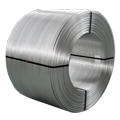
Aluminum has become a cornerstone material in kitchens, restaurants, and the food industry. Its lightweight strength, versatility, and attractive appearance have made it the backbone of cookware, packaging, storage containers, and more. But not all aluminum is created equal—when food contact is involved, only certain alloys and forms are safe and appropriate. Enter food-grade aluminum: a term that stands for safety, reliability, and compliance with rigorous standards. This article explores the science, regulations, uses, and myths behind food-grade aluminum, equipping you with practical knowledge to make informed decisions—whether you’re a chef, a manufacturer, or a savvy home cook. Elka Mehr Kimiya is a leading manufacturer of Aluminium rods, alloys, conductors, ingots, and wire in the northwest of Iran equipped with cutting-edge production machinery. Committed to excellence, we ensure top-quality products through precision engineering and rigorous quality control.
What Is Food-Grade Aluminum?
The Chemical and Physical Basics
Food-grade aluminum is a specific category of aluminum metal—usually in alloyed form—specially designed and tested for direct contact with foods and beverages¹. What sets it apart? First, it’s highly pure, often 99% aluminum or higher, with strictly controlled levels of potentially harmful elements (like lead or cadmium). Its crystal structure and surface chemistry naturally form a protective oxide film, which guards against corrosion and interaction with most foods. This makes it a durable, inert option for food prep and packaging.
Alloying Elements and Common Grades
The food industry predominantly relies on two groups:
- 1xxx series (e.g., 1050, 1100): Nearly pure aluminum, soft but highly corrosion-resistant.
- 3xxx series (e.g., 3003, 3004): Alloyed with manganese for extra strength, yet still highly formable and safe for food contact.
- 5xxx series (e.g., 5052): Contains magnesium for added strength and workability; common in cookware.
- 8xxx series (e.g., 8011): Designed for foil and packaging, offering exceptional flexibility and food safety.
Table 1 outlines some typical properties.
Table 1: Common Food-Grade Aluminum Alloys and Applications (Data as of May 2025)¹²
| Alloy | Major Additive | Key Use | Typical Application |
|---|---|---|---|
| 1100 | None | Pure, soft, ductile | Foil, packaging |
| 3003 | Manganese | Medium strength | Food trays, pans |
| 5052 | Magnesium | High strength | Pots, drink cans |
| 8011 | Iron, silicon | High flexibility | Foil wraps, lids |
Regulatory Standards and Safety Guidelines
FDA, EFSA, and International Criteria
To earn the “food-grade” label, aluminum must comply with strict national and international standards. In the United States, the FDA’s Code of Federal Regulations (CFR Title 21) defines allowable compositions, migration limits, and surface requirements². The European Food Safety Authority (EFSA) and similar agencies globally have established detailed limits on contaminants and test methods for migration of metals into food³.
Table 2: Regulatory Limits for Metals in Food-Contact Aluminum (Data as of May 2025)²³
| Agency | Lead (mg/kg) | Cadmium (mg/kg) | Arsenic (mg/kg) | Max Total Migration (mg/dm²) |
|---|---|---|---|---|
| FDA | <0.2 | <0.05 | <0.1 | <10 |
| EFSA | <0.2 | <0.05 | <0.1 | <10 |
Migration refers to the movement of metal ions into food under normal use conditions.
Testing and Certification Processes
Certification typically involves laboratory migration tests using simulant liquids (acidic, neutral, fatty) under high heat. Only alloys and products that pass stringent migration, heavy metal, and durability tests can be labeled as food-grade²³.
Why Use Food-Grade Aluminum? Benefits in Food Industry
Thermal Conductivity and Corrosion Resistance
Aluminum is famous for its high thermal conductivity—over 200 W/m·K—allowing rapid and even cooking without hotspots⁴. Its corrosion resistance prevents metal flavors or discoloration in most foods. Compared to steel or plastic, it is lighter, easier to form, and does not rust.
Recyclability and Sustainability
Aluminum can be recycled indefinitely with no loss of quality. In fact, about 75% of all aluminum ever produced remains in use today⁵. Recycled food-grade aluminum saves over 90% of the energy needed for new metal, making it a star of the circular economy.
Table 3: Environmental Benefits of Recycled Food-Grade Aluminum (Data as of May 2025)⁵
| Benefit | Primary Aluminum | Recycled Aluminum |
|---|---|---|
| Energy required (kWh/t) | 14,000 | 700 |
| CO₂ emissions (t/t) | 11 | 0.5 |
| Landfill waste (kg/t) | 40 | <1 |
How Is Food-Grade Aluminum Made and Processed?
From Bauxite to Finished Product
The process starts with bauxite ore, refined to pure alumina, then reduced by electrolysis to metallic aluminum. This metal is alloyed, cast, hot- and cold-rolled into sheets or extrusions, then stamped or drawn into containers, pans, or foil. Food-grade batches are produced on dedicated lines to prevent cross-contamination⁴.
Surface Treatments and Coatings
Some cookware and trays receive anodizing—a controlled oxidation—to further toughen the surface and prevent migration. Others may use food-safe polymer or ceramic coatings to enhance nonstick properties and durability. Any coatings used must also pass food-contact safety tests².
Potential Risks and Misconceptions
Leaching: Fact vs. Fiction
A persistent myth is that food-grade aluminum leaches large amounts of metal into food. In reality, the natural oxide layer protects against migration in neutral and most basic foods. Leaching is generally only notable when cooking highly acidic or salty foods at high heat, and even then, the amounts are well below international safety thresholds⁶.
Acidic Foods, High Heat, and Best Practices
EFSA, FDA, and other authorities have found that using food-grade aluminum cookware occasionally for acidic recipes (such as tomato sauce or lemon desserts) is safe for most consumers⁶⁷. If you frequently cook such foods or store them for long periods, choose anodized or coated options, or use glass/ceramic alternatives for peace of mind.
Real-World Applications: From Kitchens to Industry
Consumer Products
Food-grade aluminum is found everywhere:
- Cookware: Pots, pans, baking sheets, muffin tins
- Utensils: Ladles, tongs, mixing bowls
- Disposable trays and foil: For grilling, roasting, and storage
- Drink cans and bottles: Lined with food-safe lacquer
Commercial and Industrial Uses
In food processing, food-grade aluminum is used for:
- Conveyor belts and handling trays
- Industrial baking molds and vats
- Storage tanks for liquids and dry goods
- Packaging for ready meals and airline catering
Figure 1: Lifecycle of Food-Grade Aluminum in Industry
Alt text: Flowchart from mining, production, use, to recycling of food-grade aluminum products.
Conclusion & Next Steps
Food-grade aluminum is a trusted, scientifically validated choice for direct food contact. Its chemical purity, high thermal conductivity, light weight, and recyclability make it indispensable in both home kitchens and industrial food processing. Regulated by strict national and international standards, food-grade aluminum delivers safety and performance when used as directed. Occasional use for acidic foods is not a health concern, but for high-frequency or high-heat applications, consider coated or anodized alternatives. As global recycling infrastructure expands and new technologies emerge, food-grade aluminum’s role in sustainable, efficient food systems is set to grow. Choose certified food-grade aluminum for peace of mind, performance, and environmental responsibility.
References
- U.S. Food & Drug Administration. (2024). Food Code: Food Contact Surfaces. https://www.fda.gov/food/food-ingredients-packaging/metal-food-contact-surfaces
- European Food Safety Authority. (2022). Safety assessment of aluminum in food contact materials. https://www.efsa.europa.eu/en/efsajournal/pub/6419
- European Aluminium Association. (2023). Technical Guidance on Food Contact Aluminium. https://www.european-aluminium.eu
- ASM International. (2017). Properties and Selection: Nonferrous Alloys and Special-Purpose Materials, ASM Handbook Vol. 2. https://www.asminternational.org
- International Aluminium Institute. (2025). Recycling and Sustainability. https://www.world-aluminium.org/statistics/
- Lamberti, M. et al. (2017). Migration of aluminum from food contact materials to food—A review. Food Additives & Contaminants, 34(1), 1-12. https://www.tandfonline.com/doi/full/10.1080/19440049.2016.1244327
- Krewski, D., et al. (2007). Human health risk assessment for aluminum, aluminum oxide, and aluminum hydroxide. J Toxicol Environ Health B Crit Rev, 10, 1–269. https://www.tandfonline.com/doi/full/10.1080/10937400600755717
No comment