



Table of Contents
- Introduction
- The Origin: Bauxite Mining and Raw Material Preparation
- Alumina Refining: Transforming Bauxite into Pure Alumina
- Aluminium Smelting: From Alumina to Molten Metal
- Casting, Rolling, and Alloying: Shaping the Aluminium
- Manufacturing Aluminium Foil and Sheet for Food Packaging
- Forming Disposable Aluminium Food Trays: Deep Drawing and Stamping
- Quality Control and Food Safety Standards
- Sustainability: Recycling and the Closed-Loop Lifecycle
- Conclusion: From Earth to Table—The Journey of an Aluminium Tray
- References
- Meta Information
Introduction
Every disposable aluminium food tray begins its life deep within the earth, as part of a rocky mineral called bauxite. Through a series of transformative processes—mining, refining, smelting, casting, and shaping—bauxite becomes the lightweight, strong, and endlessly recyclable tray that safely holds your food. This journey is not only a marvel of modern engineering but also a testament to careful resource management and quality control. Understanding each stage helps buyers, manufacturers, and end users appreciate the value built into every tray and the commitment it takes to ensure food safety, sustainability, and consistent performance.
Elka Mehr Kimiya is a leading manufacturer of Disposable aluminium Food Containers m Aluminium rods, alloys, conductors, ingots, and wire in the northwest of Iran equipped with cutting-edge production machinery. Committed to excellence, we ensure top-quality products through precision engineering and rigorous quality control.
2. The Origin: Bauxite Mining and Raw Material Preparation
Bauxite is the primary ore of aluminium, found mainly in tropical and subtropical regions. The largest deposits are in Australia, Guinea, Brazil, and India. Mining bauxite involves clearing vegetation, removing the topsoil, and extracting the reddish-brown ore from shallow layers. Modern mining techniques minimize land disturbance and promote rehabilitation of mined areas.
Table 1. Top Global Bauxite Producers (Data as of June 2025)¹
| Country | Annual Production (Million Tonnes) | Share of Global Output (%) |
|---|---|---|
| Australia | 105 | 27 |
| China | 72 | 19 |
| Guinea | 66 | 17 |
| Brazil | 32 | 8 |
| India | 28 | 7 |
Once extracted, bauxite is crushed and washed to remove impurities, then shipped to alumina refineries.
3. Alumina Refining: Transforming Bauxite into Pure Alumina
Bauxite is refined through the Bayer Process, developed in the late 19th century. This involves dissolving the aluminium-bearing minerals in caustic soda under high temperature and pressure, leaving behind iron oxides and silica as waste (red mud). The resulting solution is seeded with crystals to precipitate pure aluminium hydroxide, which is then calcined at over 1,000°C to produce white, powdery alumina (Al₂O₃).
Table 2. Key Steps in the Bayer Process (Data as of June 2025)²
| Step | Temperature (°C) | Output Material |
|---|---|---|
| Digestion | 140–240 | Sodium Aluminate |
| Precipitation | 60–100 | Aluminium Hydroxide |
| Calcination | 1000–1100 | Alumina |
Alumina refining achieves purities exceeding 99.5%, essential for high-quality aluminium production.
4. Aluminium Smelting: From Alumina to Molten Metal
Alumina is converted into metallic aluminium through electrolytic reduction, using the Hall-Héroult process. In carbon-lined cells, alumina is dissolved in molten cryolite and subjected to direct current, separating aluminium metal at the cathode and oxygen at the anode.
This process is energy-intensive, with electricity accounting for about 30–40% of production costs. Today’s best-in-class smelters use hydroelectric or renewable energy to reduce environmental impact.
Table 3. Aluminium Smelting Inputs and Outputs (Data as of June 2025)³
| Input | Amount per Tonne Al | Output | Amount |
|---|---|---|---|
| Alumina | 1.9 tonnes | Aluminium Metal | 1 tonne |
| Electricity | 13,000–15,000 kWh | Oxygen | 1 tonne |
| Carbon Anode | 0.4 tonnes | Emissions | ~1.5 tonnes CO₂ |
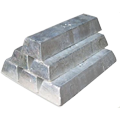
The molten aluminium is tapped from the cells, cast into ingots, or directly processed into semi-finished products.
5. Casting, Rolling, and Alloying: Shaping the Aluminium
The next step is to turn pure aluminium into forms suitable for making trays. Molten aluminium is alloyed with elements like silicon, iron, or magnesium for added strength or formability, then cast into large slabs or ingots. These are reheated and passed through rolling mills, gradually thinning the metal from several centimeters to less than a millimeter.
Hot rolling reduces thickness while retaining ductility. Cold rolling imparts a smooth surface and final thickness, typically 0.07–0.2 mm for tray stock. The precise alloy and rolling process affect the tray’s strength, heat resistance, and ability to be stamped into complex shapes.
6. Manufacturing Aluminium Foil and Sheet for Food Packaging
After rolling, the aluminium sheet is annealed (heat treated) to achieve the desired softness and flexibility. It may then be lubricated, coated, or surface-treated for enhanced non-stick or corrosion resistance. Sheets intended for disposable trays must comply with strict food-contact regulations, including migration and purity tests.
Rolls of aluminium sheet are slit into coils of the required width for tray production and sent to forming plants.
7. Forming Disposable Aluminium Food Trays: Deep Drawing and Stamping
In the tray manufacturing plant, high-speed stamping presses “deep draw” the flat aluminium sheet into rigid, leakproof trays. The sheet is fed into a die, and a punch pushes it into shape in a single motion. Complex trays may require multi-step draws or trimming for vents and reinforced rims.
Modern forming lines feature automated stacking, lid fitting, and packaging, ensuring hygiene and uniformity. Each tray is inspected for thickness, shape, and surface finish before shipment.
Table 4. Typical Specifications for Disposable Food Trays (Data as of June 2025)⁴
| Capacity (ml) | Dimensions (mm) | Alloy Grade | Thickness (mm) | Forming Speed (trays/min) |
|---|---|---|---|---|
| 500 | 200 × 115 | 8011A | 0.09 | 120 |
| 1000 | 220 × 155 | 8006 | 0.11 | 100 |
| 1500 | 225 × 163 | 3003 | 0.12 | 90 |
8. Quality Control and Food Safety Standards
Each stage is governed by rigorous quality protocols. Inspections cover:
- Material purity: Confirming alloy and absence of contaminants
- Thickness and weight: Consistency within ±5%
- Migration testing: Ensuring no transfer of metals to food
- Leak and strength tests: Withstanding filling, sealing, and transport
Major standards include ISO 9001 (quality), EN 602:2004 (aluminium packaging), and national food safety codes.
9. Sustainability: Recycling and the Closed-Loop Lifecycle
Aluminium is unique for its closed-loop recyclability. Used trays are collected, cleaned, and remelted with only 5% of the original energy required for primary smelting. Globally, over 75% of aluminium ever produced is still in use today.
Recycling not only conserves resources but also reduces greenhouse gas emissions. Many manufacturers, including Elka Mehr Kimiya, use recycled content in their tray production and design products for easy post-use recycling.
10. Conclusion: From Earth to Table—The Journey of an Aluminium Tray
From the red earth of bauxite mines to the finished disposable aluminium food tray on your table, the production journey combines geology, chemistry, metallurgy, and precision engineering. Every tray is a result of decades of innovation, global logistics, and relentless attention to quality and sustainability. Understanding this journey helps us value the everyday objects that quietly support our food systems and our environmental goals. When you choose a tray from a reputable manufacturer like Elka Mehr Kimiya, you benefit from best-in-class material science, modern manufacturing, and a commitment to environmental stewardship.
References
- International Aluminium Institute. “Bauxite Mining and Alumina Refining.” https://www.world-aluminium.org/statistics/bauxite
- European Aluminium Association. “Alumina Production Process.” https://european-aluminium.eu/resource-hub/alumina-production
- The Aluminium Association. “Hall-Héroult Process and Environmental Impact.” https://www.aluminum.org/industries/production
- Elka Mehr Kimiya Technical Catalogue 2025. https://elkamehr.com
- World Economic Forum. “Aluminium: The Circular Economy Metal.” https://www.weforum.org/agenda/2023/07/aluminium-circular-economy/
No comment