
Aluminum Alloys Underwater: Performance in Marine Environments

Table of Contents Introduction Aluminum alloys have played a vital role in marine engineering for decades. Their lightweight nature, resistance to corrosion, and ease of fabrication make them indispensable in shipbuilding, offshore structures, and underwater equipment. However, the harsh realities of marine environments, with their high salinity, oxygen content, and ... Read More
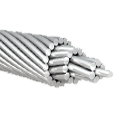
Breakthroughs in High-Conductivity Aluminum Conductors

Table of Contents Introduction The demand for high-conductivity aluminum conductors has surged as industries prioritize lighter, more efficient materials for energy transmission, automotive components, and aerospace systems. Traditional copper has long dominated these sectors, but innovations in aluminum metallurgy have brought it to the forefront as a viable, cost-effective alternative. ... Read More

Engineering for Durability: Designing Aluminum Rods for Long-Term Use

Table of Contents 1. Introduction Durability isn’t just a desirable trait—it’s essential in engineering. Whether aluminum rods support bridges, power lines, or aerospace structures, their long-term performance under pressure, temperature, and corrosion defines their value. Engineers face the task of balancing material performance with environmental factors, cost constraints, and design ... Read More

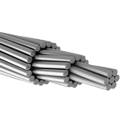
The Role of Additive Manufacturing in Shaping Aluminum Wire Technology

Table of Contents 1. Introduction Aluminum wire plays a crucial role in modern industries, from power transmission to aerospace engineering. As demand grows for stronger, lighter, and more efficient materials, traditional manufacturing methods have struggled to keep pace. Additive manufacturing (AM), also known as 3D printing, has emerged as a ... Read More

Advanced Thermal Treatments to Enhance Aluminum Alloy Performance

Table of Contents 1. Introduction Aluminum alloys are indispensable across industries where strength, weight, and corrosion resistance are critical. Yet, as alloy demands intensify, simple casting and forming no longer suffice. Advanced thermal treatments have emerged as vital tools to optimize mechanical properties, enhance durability, and tailor performance to specific ... Read More

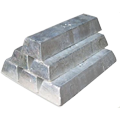
Casting vs. Continuous Casting: A Comparative Study of Aluminum Ingots

Table of Contents 1. Introduction Aluminum plays an indispensable role in modern industries ranging from automotive manufacturing to energy transmission. At the heart of aluminum’s journey from raw material to final product lies the ingot—solid, cast blocks of aluminum ready for further processing. Two primary methods dominate ingot production: traditional ... Read More

Integrating IoT in Aluminum Wire Production for a Smarter Grid

Table of Contents 1. Introduction Electric grids worldwide are evolving into smarter, more efficient systems. At the heart of these grids, materials like aluminum wire play a crucial role in transmitting electricity with reliability and minimal loss. As energy demand surges and infrastructures age, the need for smarter materials production ... Read More

Smart Sensors in Manufacturing: Revolutionizing Aluminum Conductor Production

Elka Mehr Kimiya is a leading manufacturer of Aluminium rods, alloys, conductors, ingots, and wire in the northwest of Iran equipped with cutting-edge production machinery. Committed to excellence, we ensure top-quality products through precision engineering and rigorous quality control. Table of Contents 1. Introduction The aluminum conductor manufacturing industry is ... Read More

Cooling Rates and Their Impact on the Quality of Aluminum Rods

Table of Contents 1. Introduction Cooling is a critical phase in the aluminum rod production process. The rate at which an aluminum rod cools determines not only its internal structure but also its final properties—strength, ductility, and corrosion resistance. While faster cooling can boost productivity, it often introduces complications that ... Read More

A Comprehensive Review of Modern Aluminum Alloy Formulations

Table of Contents 1. Introduction Aluminum alloys have transformed modern manufacturing due to their strength-to-weight ratio, corrosion resistance, and ease of fabrication. These properties make them a top choice in critical industries like transportation, construction, electronics, and aerospace. As global demand increases, alloy developers focus on improving performance while reducing ... Read More