


Wire Arc Additive Manufacturing of Aluminium Alloys: A Comprehensive Review

Wire Arc Additive Manufacturing of Aluminium Alloys: A Comprehensive Review

Table of Contents 1. Introduction Wire arc additive manufacturing (WAAM) is an advanced metal‐fabrication technique that builds near‐net‐shape parts through the layer‐by‐layer deposition of molten metal. By using an electric arc to melt a continuously fed wire, WAAM offers high deposition rates, lower production costs, and nearly unlimited build volumes ... Read More
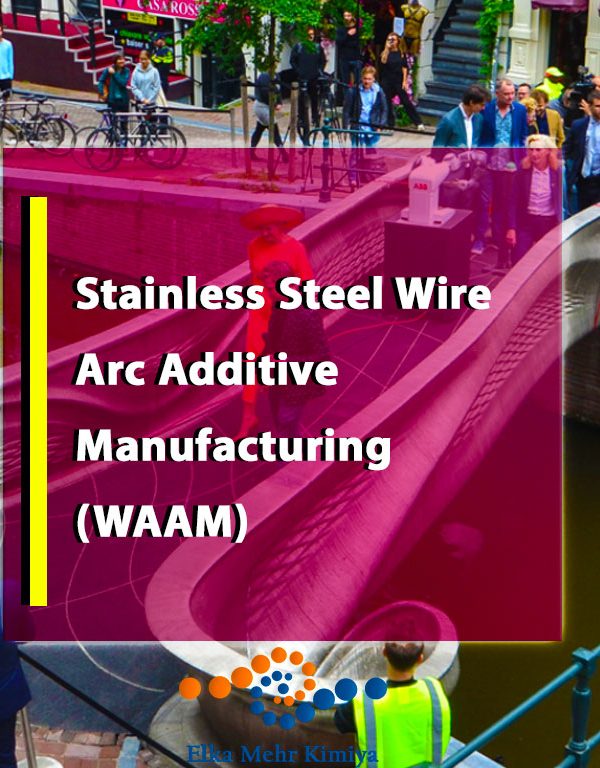
Stainless Steel Wire Arc Additive Manufacturing (WAAM): Skyscrapers’ Structural Nodes – MX3D’s Amsterdam Bridge Project Teardown

Stainless Steel Wire Arc Additive Manufacturing (WAAM): Skyscrapers’ Structural Nodes – MX3D’s Amsterdam Bridge Project Teardown

Table of Contents 1. Introduction Modern structural engineering demands materials and processes that offer not only robustness and high performance but also efficiency and sustainability. One such advanced technology is Stainless Steel Wire Arc Additive Manufacturing (WAAM), a process that builds large, load-bearing components layer by layer using an electric ... Read More
Nanostructured AL-Li Alloys: Cryomilling Techniques for 30% Strength Gains

Nanostructured AL-Li Alloys: Cryomilling Techniques for 30% Strength Gains

Table of Contents 1. Introduction In modern engineering, the need for materials that deliver both lightness and superior strength is greater than ever. Advanced structural applications, whether in aerospace, automotive, or renewable energy systems, increasingly demand components that are both durable and efficient. Aluminium-lithium (AL-Li) alloys have gained prominence due ... Read More
Aluminum Smelting with Cryolite Alternatives: Fluoride-Free Electrolysis Pilot Results and UC Berkeley’s Molten Salt Chemistry Breakthroughs

Aluminum Smelting with Cryolite Alternatives: Fluoride-Free Electrolysis Pilot Results and UC Berkeley’s Molten Salt Chemistry Breakthroughs

Table of Contents 1. Introduction Aluminum is one of the most widely used metals in the modern world, prized for its light weight, high strength, and excellent corrosion resistance. For more than a century, the Hall–Héroult process—relying on a molten cryolite (sodium hexafluoroaluminate) bath—has been the standard for converting alumina ... Read More
Cobalt–Aluminum Alloys: Advancements, Properties, Applications, and Future Directions

Cobalt–Aluminum Alloys: Advancements, Properties, Applications, and Future Directions

Table of Contents 1. Introduction Cobalt–aluminum alloys represent an emerging class of high-performance materials that combine the exceptional high-temperature stability, wear resistance, and corrosion resistance of cobalt with the lightweight, ductile, and versatile nature of aluminum. Over the past few decades, these alloys have attracted attention in advanced manufacturing and ... Read More
Turkey's Integral Role in the European Union's Aluminum Supply Chain

Turkey’s Integral Role in the European Union’s Aluminum Supply Chain

Table of Contents 1. Introduction Aluminum is a cornerstone of modern industry, integral to sectors ranging from automotive manufacturing to construction and aerospace. Its lightweight yet durable nature makes it indispensable in producing vehicles, aircraft, packaging, and infrastructure. The European Union (EU), with its robust industrial base, relies heavily on ... Read More