

“Cost vs. Convenience”: Are Disposable Aluminum Containers Worth It?

Table of Contents 1. Introduction Disposable food containers are at the heart of the modern convenience economy—used widely in takeout services, catering, food processing, and ready-to-eat meals. Among the various material options available, aluminum containers are gaining ground for their balance of performance, hygiene, and recyclability. But do these advantages ... Read More
“The Green Push”: Innovations Making Aluminum Containers More Sustainable

Table of Contents 1. Introduction: Sustainability at the Core of Aluminum Packaging The global call for sustainable packaging has never been louder. As governments, businesses, and consumers strive to reduce their environmental footprints, packaging materials are undergoing a dramatic transformation. Among these, aluminum stands out for its inherent recyclability and ... Read More

Disposable Aluminum Food Containers: A Comprehensive Insight into Utility, Sustainability, and Market Trends

Table of Contents Introduction Disposable aluminum food containers have become ubiquitous in modern food service, from home baking to large-scale catering. Their lightweight yet durable nature, coupled with excellent thermal conductivity, makes them an industry staple. Over decades, manufacturers have refined alloys, forming techniques, and finishing processes to balance cost, ... Read More

Welding-Induced Distortion Control in Aluminum Rods

Table of Contents Introduction Welding-induced distortion in aluminum rods arises from asymmetric heating and cooling during welding processes, leading to unwanted bending, twisting, and changes in straightness¹. This distortion not only compromises dimensional accuracy but can also induce residual stresses that affect mechanical performance and fatigue life². Effective distortion control ... Read More

Fiber‑Reinforced Aluminum Composite Conductors

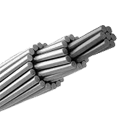
Table of Contents Introduction Fiber‑reinforced aluminum composite conductors combine the high conductivity of aluminum with the tensile strength and stiffness of reinforcing fibers. These composite conductors address the limitations of conventional aluminum in high-stress applications by embedding continuous fibers—such as carbon or glass—within an aluminum matrix¹². The result is a ... Read More

Design of Experiments (DOE) in Aluminum Alloy Optimization

Table of Contents Introduction Design of Experiments (DOE) is a structured statistical approach that plans, conducts, analyzes, and interprets controlled tests to evaluate the factors that influence a process or product¹². In the context of aluminum alloy optimization, DOE enables engineers to systematically assess the effects of alloying elements, heat ... Read More

Roller Levelling Techniques for Aluminum Rod Straightness

Table of Contents Introduction Roller levelling is a key method to ensure aluminum rods meet strict straightness standards. The process forces each rod through a series of rollers that bend and reverse bend the material under controlled tension. This alternating bending induces plastic deformation, which eliminates residual curvature and yields ... Read More

Lifecycle Emissions of Primary vs. Secondary Aluminum

Table of Contents 1. Introduction Aluminum serves as a cornerstone of modern industry, prized for its light weight, strength, and recyclability.¹ Yet producing primary aluminum from bauxite ore is energy-intensive, driving significant CO₂ emissions—typically 12–17 kg CO₂e per kilogram of metal.² Secondary aluminum, derived from recycled scrap, cuts that footprint ... Read More