


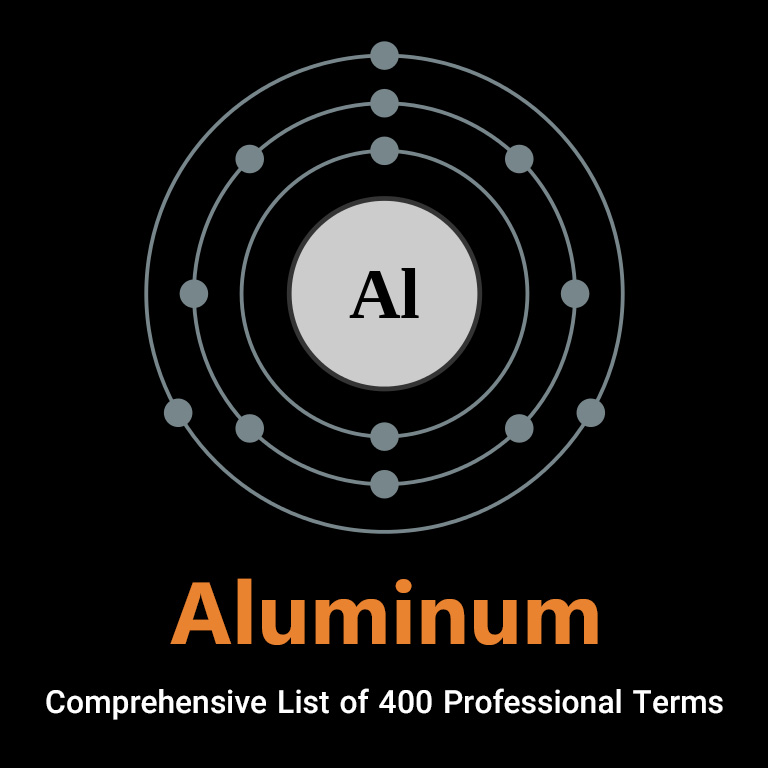
introduction:
In the world of electrical engineering and power distribution, understanding the terminology is crucial for efficiency, safety, and innovation. Professionals in this field deal with a wide array of components, each with its specific attributes, applications, and standards. Among these, aluminum wire rods, aluminum conductors, and electric cables are foundational elements. These components are integral to the infrastructure that powers homes, businesses, and industries. However, to work effectively with these materials, a comprehensive understanding of the associated terminology is essential.
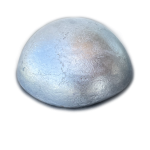
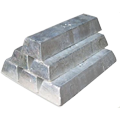
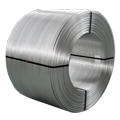
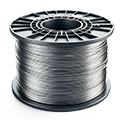
Aluminum wire rods are the building blocks for many types of electrical conductors. They are produced by continuously casting and rolling aluminum, a process that yields a product with excellent conductivity and mechanical strength. These rods are then used to manufacture various types of conductors and cables. The properties of aluminum, such as its lightweight nature, corrosion resistance, and high conductivity, make it an ideal material for electrical applications. However, the specific terms related to aluminum wire rods, such as “annealing,” “alloy,” and “ductility,” are crucial for understanding how these rods are produced and used.
The term “annealing,” for example, refers to a heat treatment process that alters the physical and sometimes chemical properties of a material to increase its ductility and reduce its hardness, making it more workable. This process is vital in the production of aluminum wire rods to ensure they can be drawn into thinner wires without breaking. Similarly, understanding the term “alloy” is important because many aluminum conductors are made from aluminum alloys, which combine aluminum with other elements to improve certain properties, such as strength or resistance to corrosion.
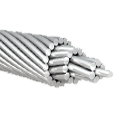
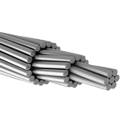
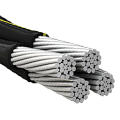
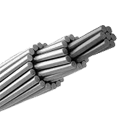
Moving beyond aluminum wire rods, aluminum conductors themselves come in various forms and serve different purposes in the electrical grid. Terms such as AAC (All Aluminum Conductor), AAAC (All Aluminum Alloy Conductor), and ACSR (Aluminum Conductor Steel Reinforced) are common in the industry. Each type of conductor has unique characteristics suited to specific applications. For instance, AAC is often used in urban areas where the span lengths are short and the conductor’s lightweight nature is an advantage. On the other hand, ACSR, which incorporates a steel core, is used for longer spans and areas where additional strength is required.
Understanding the differences between these conductors involves knowing terms like “stranding,” “cross-sectional area,” and “tensile strength.” “Stranding” refers to the way multiple wire strands are twisted together to form a conductor, which affects its flexibility and strength. The “cross-sectional area” of a conductor impacts its current-carrying capacity, and “tensile strength” measures the conductor’s ability to withstand stretching forces. These terms and many others help professionals choose the right conductor for a specific application and ensure that it will perform reliably under various conditions.
Electric cables, which often incorporate aluminum conductors, are another critical component in electrical systems. These cables are used to transmit electrical power and signals over various distances and through different environments. Terms related to electric cables, such as “insulation,” “sheath,” “shielding,” and “armoring,” describe the various layers and materials that protect the conductors and ensure their safe and efficient operation.
“Insulation” refers to the non-conductive material surrounding the conductor, preventing electrical leakage and protecting against short circuits. Different types of insulation materials, such as PVC (polyvinyl chloride), XLPE (cross-linked polyethylene), and EPR (ethylene propylene rubber), each have specific properties that make them suitable for different environments and applications. For instance, XLPE is known for its excellent thermal and chemical resistance, making it ideal for high-temperature and harsh environments.
The “sheath” or “jacket” is the outermost layer of a cable, providing mechanical protection and additional insulation. Materials like PVC and polyethylene are commonly used for cable sheaths. Understanding the term “sheath” helps in selecting the right cable for installation in environments where physical damage or exposure to chemicals might be a concern.
“Shielding” involves the use of conductive or semi-conductive materials to protect the cable from electromagnetic interference (EMI), which can affect signal transmission. Terms like “braided shield” and “tape shield” refer to different methods of applying this protective layer. Braided shielding offers flexibility and durability, while tape shielding provides excellent coverage and is easier to apply in manufacturing.
“Armoring” adds another layer of protection, often using metal tapes or wires to safeguard the cable against mechanical damage. Armored cables are used in industrial settings, underground installations, and other environments where cables might be exposed to harsh physical conditions. Understanding the term “armoring” and the different types available helps in specifying cables that will withstand the rigors of their operating environment.
In addition to these terms, there are many more specific to the testing, installation, and maintenance of aluminum wire rods, conductors, and electric cables. Terms like “megger,” “fault locator,” and “impedance” are used in testing and diagnosing issues within electrical systems. A “megger” is an instrument used to measure insulation resistance, while a “fault locator” helps identify the location of faults in a cable. “Impedance” measures the opposition that a circuit offers to the flow of alternating current, which is important for ensuring efficient power delivery.
The terminology also extends to standards and regulations that govern the production and use of these materials. Organizations like the IEEE (Institute of Electrical and Electronics Engineers), NEC (National Electrical Code), and IEC (International Electrotechnical Commission) set standards that ensure safety, reliability, and compatibility in electrical systems. Understanding terms like “IEEE standards,” “NEC compliance,” and “IEC ratings” is crucial for professionals who must adhere to these guidelines in their work.
In conclusion, mastering the terminology related to aluminum wire rods, aluminum conductors, and electric cables is fundamental for professionals in the electrical engineering and power distribution fields. These terms provide the language needed to describe, specify, and work with the materials and components that form the backbone of modern electrical systems. Whether dealing with the intricacies of conductor design, the specifics of cable construction, or the standards that ensure safety and performance, a deep understanding of these terms is essential for success in the industry. This comprehensive glossary of 400 terms serves as an invaluable resource for anyone seeking to deepen their knowledge and expertise in this critical area.
Glossary of Wire & Cable Terminology (Essential Professional Terms for Aluminum Wire Rods, Conductors, and Electric Cables):
| Term | Description |
|---|---|
| A | |
| AAC | All Aluminum Conductor – used for overhead power lines. |
| AAAC | All Aluminum Alloy Conductor – made from aluminum alloy, used in overhead power lines. |
| AC Resistance | The resistance of a conductor to alternating current, typically higher than DC resistance. |
| AC Voltage | Voltage associated with alternating current. |
| Acceptance Angle | The maximum angle at which light can enter a fiber optic cable. |
| ACSR | Aluminum Conductor Steel Reinforced – a type of high-capacity, high-strength stranded conductor. |
| Aerial Cable | Cable suspended in the air on poles. |
| Alloy | A mixture of two or more elements, where at least one is metal, used to enhance properties. |
| Ampacity | The maximum amount of electrical current a conductor or device can carry before sustaining damage. |
| Ampere | The unit of electric current. |
| Analog Signal | A continuous signal that represents physical measurements. |
| Annealing | Heat treatment process that alters the physical and sometimes chemical properties to reduce hardness. |
| ANSI | American National Standards Institute, which oversees the creation and use of guidelines that impact businesses in nearly every sector. |
| Armor | Protective covering, usually metal, used on cables to protect from physical damage. |
| Armored Cable | Cable with a protective metal covering. |
| ASTM Standards | Standards developed by ASTM International used to ensure material quality and performance. |
| Attenuation | The reduction in signal strength as it travels through a medium. |
| B | |
| Bandwidth | The range of frequencies within a given band that a communication channel can transmit. |
| Bending Radius | The minimum radius one can bend a cable without damaging it. |
| Binder | Material used to hold together the components of a cable. |
| Bimetallic Conductor | A conductor composed of two different metals, often used for improved electrical and mechanical properties. |
| Bit Error Rate (BER) | The number of bit errors per unit of time in a digital signal. |
| Braided Shield | A type of shielding made of woven wire strands, used to protect cables from electromagnetic interference. |
| Breakout | The point where a cable splits into multiple separate cables. |
| C | |
| Cable Assembly | A complete cable and its associated connectors, ready for installation. |
| Cable Core | The central part of a cable, consisting of the conductor and its insulation. |
| Cable Jacket | The protective outer covering of a cable. |
| Cable Tray | A support system used to hold and protect cables. |
| Capacitance | The ability of a system to store an electric charge. |
| CCA | Copper-clad aluminum, a type of wire that has an aluminum core and a copper coating. |
| Cladding | The outer layer of a fiber optic cable that surrounds the core and reflects light back into the core. |
| Cold Flow | The tendency of some materials to deform permanently under long-term pressure. |
| Composite Cable | A cable that contains two or more different types of conductors. |
| Concentric Conductor | A conductor consisting of a central core surrounded by one or more layers of helically wound strands. |
| Conductance | The ability of a material to conduct electric current, the inverse of resistance. |
| Conductor | A material that permits the flow of electrical current; aluminum is commonly used. |
| Connector | A device used to join electrical circuits together. |
| Corona Effect | A phenomenon where a discharge of electricity occurs around a conductor, visible as a blue glow. |
| Cross-linking | A process used to improve the properties of polymer insulation, making it more heat-resistant. |
| D | |
| Dielectric Strength | The maximum electric field a material can withstand without breaking down. |
| Direct Burial Cable | Cable designed to be buried directly in the ground without additional protection. |
| Ductility | The ability of a material to deform under tensile stress, important for wire drawing. |
| Duplex Cable | A cable consisting of two insulated conductors twisted together. |
| E | |
| EIA | Electronic Industries Alliance, which develops standards for electronic products. |
| Electrical Resistivity | A measure of how strongly a material opposes the flow of electric current. |
| Electromagnetic Interference (EMI) | Disturbance generated by external sources affecting electrical circuits. |
| Electroplating | A process that uses electric current to reduce dissolved metal cations so that they form a coherent metal coating. |
| Elongation | The amount a material can stretch before breaking, expressed as a percentage of its original length. |
| EMI Shielding | Materials used to block electromagnetic interference from affecting signals. |
| EPR | Ethylene Propylene Rubber, a type of insulation material known for its flexibility and durability. |
| F | |
| Fault Current | The abnormal current that flows through a circuit during a fault condition. |
| Fiber Optic Cable | Cable that transmits data as light pulses along a glass or plastic fiber. |
| FEP | Fluorinated ethylene propylene, a type of insulation material known for its high-temperature resistance. |
| Fill Factor | The ratio of the cross-sectional area of the conductor to the cross-sectional area of the cable. |
| Flame Retardant | A property of materials that resist burning and self-extinguish when the flame source is removed. |
| Frequency | The number of cycles per second in an alternating current, measured in Hertz (Hz). |
| G | |
| Galvanic Corrosion | Corrosion that occurs when two different metals are in electrical contact in a corrosive environment. |
| Gauge | A measurement of the diameter of a wire; higher gauge means thinner wire. |
| Grommet | A rubber or plastic ring used to protect cables from abrasion and mechanical damage. |
| Ground Fault | An unintentional electrical path between a power source and a grounded surface. |
| Grounding | The process of connecting electrical equipment to the earth to ensure safety. |
| H | |
| Halogen-free | Refers to cables that do not release toxic halogen gases when burned. |
| Harmonics | Voltage or current waveforms that are multiples of the fundamental frequency. |
| Heat Shrink Tubing | Tubing that contracts when heated, used for insulation and protection of electrical connections. |
| High-Voltage Cable | Cable designed to carry high voltages, typically over 1 kV. |
| Hook-up Wire | Single conductor wire used for internal wiring of electrical equipment. |
| Hybrid Cable | Cable containing more than one type of transmission medium, such as optical fiber and copper. |
| I | |
| IEC Standards | International standards developed by the International Electrotechnical Commission for electrical technologies. |
| Impedance | The total opposition that a circuit offers to the flow of alternating current. |
| Induction Heating | Heating of a material due to the electrical current induced in it by a varying magnetic field. |
| Insulation | Material used to prevent the flow of electricity to unwanted areas, ensuring safety and efficiency. |
| Insulation Resistance | The resistance offered by the insulating material to the flow of current. |
| J | |
| Jacket | The outer protective covering of a cable. |
| Joint | The connection between two lengths of cable or between a cable and a terminal. |
| Junction Box | An enclosure that protects electrical connections. |
| K | |
| Kelvin Connection | A method of making electrical connections to a four-terminal resistor for accurate measurement. |
| L | |
| Litz Wire | Wire constructed of many thin strands, individually insulated and twisted together, used to reduce skin effect and proximity effect losses in high-frequency applications. |
| Load Factor | The ratio of the average load to the peak load in a specified period. |
| Low-Voltage Cable | Cable designed to carry low voltages, typically below 1 kV. |
| M | |
| Magnetic Field | The region around a magnetic material within which the force of magnetism acts. |
| Megger | An instrument used for measuring the electrical resistance of insulators. |
| Mica Tape | A type of insulation tape made from mica, known for its excellent thermal resistance. |
| Mineral Insulated Cable | A type of cable with a copper sheath and mineral insulation, known for its fire resistance. |
| Moisture Barrier | A layer in a cable designed to prevent the ingress of water. |
| N | |
| NEC | National Electrical Code, a set of standards for the safe installation of electrical wiring and equipment in the United States. |
| NEMA | National Electrical Manufacturers Association, which sets standards for electrical equipment. |
| Neoprene | A type of synthetic rubber used for cable jackets, known for its resistance to oil, chemicals, and weather. |
| Non-metallic Sheathed Cable | A type of electrical cable that has a plastic jacket and is used in residential wiring. |
| O | |
| Ohm | The unit of electrical resistance, symbolized as Ω. |
| Optical Fiber Cable | Cable containing one or more optical fibers used for transmitting light signals. |
| Overcurrent | A condition where the current exceeds the rated capacity of the circuit. |
| Overhead Conductor | Conductor used for transmission lines that are suspended in the air. |
| P | |
| Parallel Conductors | Two or more conductors that are arranged side by side and connected to the same electrical load. |
| Partial Discharge | A localized dielectric breakdown of a small portion of a solid or fluid electrical insulation system. |
| PE | Polyethylene, a common insulation material known for its moisture resistance. |
| Permeability | The ability of a material to support the formation of a magnetic field within itself. |
| Pigtail | A short length of wire used to connect two other wires. |
| Plenum Cable | Cable approved for use in air handling spaces, such as above drop ceilings or below raised floors. |
| Polyolefin | A type of plastic used for insulation and cable jackets, known for its chemical resistance. |
| Polypropylene | A type of plastic used for insulation and cable jackets. |
| Polyvinyl Chloride (PVC) | A type of plastic used for insulation and cable jackets. |
| Pulling Eye | A device attached to a cable to facilitate pulling through conduit. |
| Q | |
| Quadruplex Cable | A type of cable consisting of four conductors, used for overhead service applications. |
| Quenching | Rapid cooling of a material, often used to alter its properties. |
| R | |
| Radial Stress | Stress that occurs in the radial direction of a cable or conductor. |
| Reel | A spool used to hold and transport cable. |
| Resistance | Opposition to the flow of electric current, leading to energy dissipation as heat. |
| RFI | Radio Frequency Interference, electromagnetic interference within the radio frequency spectrum. |
| Ribbon Cable | A flat cable with multiple parallel conductors. |
| S | |
| Screening | A layer of conductive material used to protect against electromagnetic interference. |
| Self-regulating Cable | A type of heating cable that automatically adjusts its power output to maintain a desired temperature. |
| Semiconducting Layer | A layer in a cable that helps control the electric field within the cable. |
| Shielded Cable | Cable with a conductive layer to protect against electromagnetic interference. |
| Short Circuit | A low-resistance connection between two conductors supplying electrical power to a circuit. |
| Signal Cable | Cable used to carry low-voltage signals, such as audio or video signals. |
| Single Conductor Cable | Cable consisting of a single electrical conductor. |
| Splice | The connection of two or more conductors to ensure electrical continuity. |
| Splice Kit | A kit containing materials and tools for splicing cables. |
| Strain Relief | A feature that prevents stress on a cable connection from causing damage. |
| Stranded Conductor | A conductor composed of multiple small strands of wire twisted together. |
| Surge Protector | A device that protects electrical equipment from voltage spikes. |
| T | |
| Tape Shield | A type of shielding made of a metal tape wrapped around the conductor. |
| Temperature Rating | The maximum temperature at which a cable can operate safely. |
| Tensile Strength | The maximum stress a material can withstand while being stretched or pulled before breaking. |
| Tension | The force exerted by a conductor when pulled tight. |
| Terminal | The point at which a conductor or device is connected to an electrical circuit. |
| Thermal Conductivity | The property of a material to conduct heat. |
| Thermal Expansion | The tendency of a material to change its shape, area, and volume in response to a change in temperature. |
| Thermoplastic | A type of plastic that becomes pliable or moldable above a specific temperature and solidifies upon cooling. |
| THHN | Thermoplastic High Heat-resistant Nylon-coated wire, commonly used in building wiring. |
| Tray Cable | Cable designed to be installed in trays, ducts, or conduits. |
| Triplex Cable | A type of cable consisting of three conductors twisted together. |
| U | |
| Ultraviolet (UV) Degradation | The deterioration of materials due to exposure to ultraviolet light. |
| Underground Cable | Cable designed for use below ground, typically with additional protection against moisture and mechanical damage. |
| UV Resistance | The ability of a material to resist degradation caused by ultraviolet light. |
| V | |
| Voltage Drop | The reduction in voltage in an electrical circuit between the source and load. |
| Voltage Rating | The maximum voltage a cable can handle safely. |
| W | |
| Water Blocking | Techniques used to prevent the ingress of water into cables. |
| Weatherproof Cable | Cable designed to withstand outdoor environmental conditions. |
| Wire Gauge | A measurement of the diameter of a wire; higher gauge means thinner wire. |
| Wire Rope | A type of cable made of several strands of metal wire twisted together. |
| X | |
| XLPE | Cross-linked polyethylene, a type of insulation known for its excellent thermal and mechanical properties. |
| XHHW | Cross-linked polyethylene high heat-resistant water-resistant wire, used for building wiring. |
| Y | |
| Yield Point | The point at which a material begins to deform permanently. |
| Yield Strength | The stress at which a material begins to deform plastically. |
| Z | |
| Zero Halogen | Refers to materials that do not release halogen gases when exposed to fire. |
| Zigzag Transformer | A type of transformer used to derive a neutral point for grounding purposes. |
| Zinc Coating | A layer of zinc applied to steel or iron to prevent rusting. |
| Zone Cabling | A structured cabling method used to simplify cable management in large buildings. |
| A (cont.) | |
| Abrasion Resistance | The ability of a material to resist wear from mechanical action. |
| AC Breakdown Voltage | The voltage at which an alternating current dielectric material breaks down and conducts electricity. |
| AC Voltage | Voltage associated with alternating current. |
| Acceptance Angle | The maximum angle at which light can enter a fiber optic cable. |
| Accessory | A component added to a cable system for added functionality, such as connectors or joints. |
| B (cont.) | |
| Bandwidth | The range of frequencies within a given band that a communication channel can transmit. |
| Bell Wire | Small-gauge wire used for low-voltage applications like doorbells. |
| Binding Post | A device for securing the end of a wire. |
| Black Annealed Wire | Wire that has been annealed and coated in a black oxide for corrosion resistance. |
| C (cont.) | |
| Cable Armoring | The process of adding a protective metal covering to a cable. |
| Cable Duct | A conduit used to house and protect cables. |
| Cable Fault | A defect in a cable that impedes its performance. |
| Cable Lubricant | A substance used to reduce friction when pulling cables through conduits. |
| Cable Marker | A device or material used to label and identify cables. |
| D (cont.) | |
| Data Cable | Cable used to transmit data between devices. |
| Dead-end Clamp | A device used to terminate and secure the end of a conductor. |
| Dielectric Constant | The ratio of the permittivity of a substance to the permittivity of free space. |
| Distribution Cable | Cable used to distribute electrical power from a substation to end users. |
| E (cont.) | |
| E-beam Curing | A process using electron beams to cure cable insulation materials. |
| Edge Connector | A type of electrical connector used to connect printed circuit boards. |
| Elongation at Break | The amount a material can stretch before breaking, expressed as a percentage of its original length. |
| Energy Loss | The loss of electrical energy in the form of heat due to resistance in a conductor. |
| F (cont.) | |
| Faraday Cage | An enclosure used to block electromagnetic fields. |
| Fault Locator | A device used to identify the location of a fault in a cable. |
| Fiber Optic Splice | The joining of two fiber optic cables. |
| Filler | Material used to fill the interstices in a cable to make it round and add strength. |
| G (cont.) | |
| GFCI | Ground Fault Circuit Interrupter, a device that protects against electric shock. |
| Ground Electrode | A conductor placed in the ground to provide a path to earth for fault currents. |
| Grounding Conductor | A conductor used to connect electrical systems to the earth. |
| H (cont.) | |
| Heat Resistant Cable | Cable designed to operate safely at high temperatures. |
| Helix Angle | The angle of the conductor strands in a twisted conductor. |
| I (cont.) | |
| Impact Strength | The ability of a material to withstand a suddenly applied force. |
| Insulating Oil | Oil used in transformers and other electrical equipment to provide insulation and cooling. |
| J (cont.) | |
| Jacketed Cable | Cable with an outer protective jacket. |
| J-clamp | A clamp used to secure a cable to a surface. |
| K (cont.) | |
| Kevlar | A strong synthetic fiber used for cable reinforcement. |
| L (cont.) | |
| Lateral Load | A force applied perpendicular to the length of a cable. |
| Leakage Current | An unwanted flow of electrical current through or across an insulating material. |
| M (cont.) | |
| Matched Impedance | A condition where the impedance of a cable matches the impedance of the connected device, minimizing signal reflection. |
| Maximum Operating Temperature | The highest temperature at which a cable can operate safely. |
| N (cont.) | |
| Nominal Voltage | The standard voltage level assigned to a circuit or system for identification. |
| Non-Armored Cable | Cable without a protective metal covering. |
| O (cont.) | |
| Operating Temperature | The range of temperatures within which a cable can operate safely. |
| Overhead Line | An electrical power line that is suspended above the ground. |
| P (cont.) | |
| Packing Density | The ratio of the volume of the conductor to the total volume of the cable. |
| Pair | Two insulated conductors twisted together to reduce electromagnetic interference. |
| Q (cont.) | |
| Quick Disconnect | A type of connector that allows for fast and easy disconnection. |
| R (cont.) | |
| Radiation Resistance | The ability of a material to resist degradation caused by radiation. |
| Reel Capacity | The amount of cable that can be wound onto a reel. |
| S (cont.) | |
| Screened Cable | Cable with a shielding layer to protect against electromagnetic interference. |
| Self-extinguishing | A property of materials that cause them to stop burning once the source of the flame is removed. |
| T (cont.) | |
| Torsion | The twisting force applied to a cable. |
| Transmission Line | A specialized cable designed to carry high-frequency signals with minimal loss. |
| U (cont.) | |
| Unarmored Cable | Cable without additional protective armoring. |
| V (cont.) | |
| Varnished Cambric | A type of insulation made from cloth impregnated with varnish. |
| Voltage Regulation | The ability of a system to maintain constant voltage levels. |
| W (cont.) | |
| Watt | The unit of power, equivalent to one joule per second. |
| X (cont.) | |
| XLP | Cross-linked polyethylene, a type of insulation with enhanced thermal and mechanical properties. |
| Y (cont.) | |
| Yield Strength | The stress at which a material begins to deform plastically. |
| Z (cont.) | |
| Zero Sequence Current | Current that flows in the same direction in all phases of a three-phase system. |
Contact us today to discuss your specific production requirements and learn more about how Elka Mehr Kimiya’s Aluminum Rods can elevate your steelmaking process.
Whatsapp Number:
+98-902-8000013
Sale Department Contact Number:
+98(41)36589245
No comment