




Table of Contents
- Introduction
- Background on High Conductivity Aluminum Alloys
- Microstructural Analysis Techniques
- 3.1 Optical Microscopy
- 3.2 Scanning Electron Microscopy (SEM)
- 3.3 Transmission Electron Microscopy (TEM)
- 3.4 X-ray Diffraction (XRD)
- 3.5 Energy Dispersive X-ray Spectroscopy (EDS)
- Key Factors Influencing Conductivity
- 4.1 Alloy Composition
- 4.2 Heat Treatment
- 4.3 Impurities and Inclusions
- Microstructure-Property Relationship
- Case Studies of High Conductivity Aluminum Alloys
- 6.1 Al-Cu Alloys
- 6.2 Al-Mg-Si Alloys
- 6.3 Al-Zn Alloys
- Elka Mehr Kimiya: Industry Leader in Aluminum Production
- Future Trends in Aluminum Alloy Development
- Conclusion
- References
1. Introduction
The development and analysis of high conductivity aluminum alloys have been crucial in enhancing their applications across various industries, including electrical, automotive, and aerospace sectors. These alloys are known for their lightweight, excellent corrosion resistance, and superior electrical conductivity, making them a preferred choice over other conductive materials. Understanding the microstructural properties of these alloys allows manufacturers to tailor them for specific applications, ensuring optimal performance.
Microstructural analysis involves examining the internal structure of materials at microscopic levels to determine how different processes and compositions affect their properties. This comprehensive article delves into various analytical techniques, the impact of alloy composition, and case studies that highlight the practical applications of high conductivity aluminum alloys.
Elka Mehr Kimiya is a leading manufacturer of aluminum rods, alloys, conductors, ingots, and wire in the northwest of Iran, equipped with cutting-edge production machinery. Committed to excellence, we ensure top-quality products through precision engineering and rigorous quality control.
2. Background on High Conductivity Aluminum Alloys
High conductivity aluminum alloys are engineered to maximize electrical conductivity while maintaining other desirable mechanical properties. Pure aluminum has a conductivity of about 65% of the International Annealed Copper Standard (IACS), but this can be increased by optimizing the alloy’s composition and microstructure.
Aluminum alloys are categorized into various series based on their primary alloying elements, such as copper, magnesium, silicon, and zinc. These elements are added to enhance specific properties, like strength and corrosion resistance, without significantly compromising conductivity.
Table 1: Common Alloying Elements in Aluminum Alloys
| Alloy Series | Primary Alloying Element(s) | Key Properties |
|---|---|---|
| 1xxx | None (Pure Aluminum) | High conductivity, corrosion resistance |
| 2xxx | Copper | High strength, moderate conductivity |
| 5xxx | Magnesium | Good corrosion resistance, weldability |
| 6xxx | Magnesium and Silicon | Good strength, corrosion resistance |
| 7xxx | Zinc | High strength, reduced conductivity |
3. Microstructural Analysis Techniques
Understanding the microstructure of aluminum alloys is crucial for optimizing their properties. Various techniques are employed to examine the internal structure and composition of these materials.
3.1 Optical Microscopy
Optical microscopy is often the first step in microstructural analysis. It involves using light to magnify the surface of a polished and etched alloy sample, allowing for the observation of grain boundaries, phases, and other microstructural features.
Table 2: Key Features Observed in Optical Microscopy
| Feature | Description |
|---|---|
| Grain Boundaries | Interfaces between different crystal grains |
| Phases | Distinct regions with uniform composition |
| Inclusions | Non-metallic particles within the metal |
3.2 Scanning Electron Microscopy (SEM)
SEM provides higher magnification and resolution than optical microscopy, using a focused electron beam to create detailed images of the sample surface. It can reveal finer microstructural details and is often coupled with EDS for elemental analysis.
Table 3: Advantages of SEM in Aluminum Alloy Analysis
| Advantage | Description |
|---|---|
| High Magnification | Allows observation of fine details |
| Depth of Field | Provides 3D-like images of surface topography |
| Coupling with EDS | Enables elemental composition analysis |
3.3 Transmission Electron Microscopy (TEM)
TEM involves transmitting electrons through a thin sample to study its internal structure at atomic resolutions. This technique is essential for analyzing dislocations, precipitates, and other fine-scale features within the alloy.
Table 4: TEM Applications in Aluminum Alloys
| Application | Description |
|---|---|
| Dislocation Analysis | Identifying defects that influence mechanical properties |
| Precipitate Identification | Observing nanoscale particles that affect strength |
| Phase Contrast Imaging | Enhancing visualization of different phases |
3.4 X-ray Diffraction (XRD)
XRD is used to identify crystalline phases and determine lattice parameters within an alloy. It provides information about phase composition and crystalline structure, essential for understanding the properties of aluminum alloys.
Table 5: XRD in Aluminum Alloy Characterization
| Parameter | Description |
|---|---|
| Phase Identification | Determining different phases present |
| Lattice Parameters | Measuring unit cell dimensions |
| Crystallographic Texture | Assessing preferred orientations of grains |
3.5 Energy Dispersive X-ray Spectroscopy (EDS)
EDS is commonly integrated with SEM to provide elemental analysis of the alloy. It detects X-rays emitted from the sample when struck by an electron beam, allowing for qualitative and quantitative analysis of elemental composition.
Table 6: EDS Capabilities in Microstructural Analysis
| Capability | Description |
|---|---|
| Elemental Mapping | Visualizing distribution of elements |
| Qualitative Analysis | Identifying elements present |
| Quantitative Analysis | Measuring concentrations of elements |
4. Key Factors Influencing Conductivity
The electrical conductivity of aluminum alloys is affected by several factors, including alloy composition, heat treatment, and the presence of impurities or inclusions.
4.1 Alloy Composition
The composition of an aluminum alloy significantly influences its conductivity. Alloying elements like copper, magnesium, and zinc can enhance strength but may reduce conductivity due to scattering of conduction electrons.
Table 7: Effect of Alloying Elements on Conductivity
| Element | Effect on Conductivity |
|---|---|
| Copper (Cu) | Decreases conductivity, improves strength |
| Magnesium (Mg) | Moderate effect, enhances corrosion resistance |
| Silicon (Si) | Low impact, improves strength and thermal stability |
| Zinc (Zn) | Reduces conductivity, increases strength |
4.2 Heat Treatment
Heat treatment processes, such as annealing and aging, play a crucial role in modifying the microstructure and properties of aluminum alloys. Proper heat treatment can enhance conductivity by reducing dislocation density and dissolving detrimental phases.
Table 8: Common Heat Treatment Processes for Aluminum Alloys
| Process | Description | Effect on Conductivity |
|---|---|---|
| Annealing | Heating to remove stress and defects | Increases conductivity |
| Solution Heat Treatment | Heating to dissolve alloying elements | Enhances conductivity |
| Aging | Controlled precipitation of phases | Balances strength and conductivity |
4.3 Impurities and Inclusions
Impurities and inclusions, such as oxides and carbides, can have a detrimental effect on conductivity. They create scattering centers for electrons, reducing the overall electrical performance of the alloy.
Table 9: Common Impurities in Aluminum Alloys
| Impurity | Source | Effect on Conductivity |
|---|---|---|
| Iron (Fe) | Raw materials and recycling processes | Decreases conductivity |
| Silicon (Si) | Alloying and production residues | Moderate impact |
| Oxygen (O) | Oxidation during processing | Reduces conductivity |
5. Microstructure-Property Relationship
The relationship between microstructure and properties in aluminum alloys is complex, involving interactions between various phases, grain structures, and defects. Understanding this relationship is crucial for designing alloys with optimal performance characteristics.
Table 10: Microstructure-Property Correlations in Aluminum Alloys
| Microstructural Feature | Impact on Properties |
|---|---|
| Grain Size | Smaller grains increase strength but may reduce conductivity |
| Precipitates | Fine precipitates enhance strength and hardness |
| Dislocations | High dislocation density increases strength |
6. Case Studies of High Conductivity Aluminum Alloys
Case studies provide insight into the development and application of specific high conductivity aluminum alloys, highlighting the balance between conductivity and other mechanical properties.
6.1 Al-Cu Alloys
Aluminum-copper alloys are known for their high strength and good conductivity, making them suitable for aerospace applications. The addition of copper increases strength through precipitation hardening while maintaining acceptable conductivity levels.
Table 11: Properties of Al-Cu Alloys
| Alloy | Conductivity (% IACS) | Ultimate Tensile Strength (MPa) |
|---|---|---|
| 2024-T3 | 40 | 470 |
| 2219-T87 | 30 | 450 |
6.2 Al-Mg-Si Alloys
Aluminum-magnesium-silicon alloys, such as the 6xxx series, offer a balance of strength, conductivity, and corrosion resistance. They are widely used in automotive and construction industries.
Table 12: Properties of Al-Mg-Si Alloys
| Alloy | Conductivity (% IACS) | Ultimate Tensile Strength (MPa) |
|---|---|---|
| 6061-T6 | 43 | 310 |
| 6082-T6 | 41 | 340 |
6.3 Al-Zn Alloys
Aluminum-zinc alloys are characterized by high strength and lower conductivity, often used in applications where mechanical performance is prioritized over electrical properties.
Table 13: Properties of Al-Zn Alloys
| Alloy | Conductivity (% IACS) | Ultimate Tensile Strength (MPa) |
|---|---|---|
| 7075-T6 | 30 | 570 |
| 7050-T74 | 28 | 510 |
7. Elka Mehr Kimiya: Industry Leader in Aluminum Production
Elka Mehr Kimiya is renowned for its expertise in manufacturing high-quality aluminum products, including rods, alloys, conductors, ingots, and wires. Located in the northwest of Iran, the company is equipped with state-of-the-art production machinery and employs rigorous quality control measures to ensure superior products.
Elka Mehr Kimiya’s commitment to excellence is reflected in its continuous investment in research and development, striving to enhance the properties of aluminum alloys for various applications. The company’s precision engineering and advanced production techniques enable it to meet the demanding standards of industries worldwide.
Table 14: Elka Mehr Kimiya’s Product Range
| Product | Description |
|---|---|
| Aluminum Rods | High-strength rods for construction and transport |
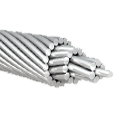
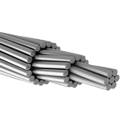
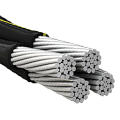
| Conductors | Superior conductivity for electrical applications |
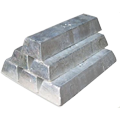
| Ingots | Pure aluminum and alloy ingots for various industries |
8. Future Trends in Aluminum Alloy Development
The future of aluminum alloy development is focused on enhancing conductivity, strength, and environmental sustainability. Advances in alloy design, process optimization, and recycling techniques are expected to drive innovation in this field.
Emerging Trends
- Additive Manufacturing: The use of 3D printing technology to create complex aluminum alloy components with tailored properties.
- Nano-Structured Alloys: Developing alloys with nanoscale features to enhance strength and conductivity.
- Sustainable Production: Emphasizing recycling and environmentally friendly production methods to reduce carbon footprint.
9. Conclusion
The microstructural analysis of high conductivity aluminum alloys is essential for optimizing their performance in various applications. Through advanced analytical techniques and a deep understanding of microstructure-property relationships, manufacturers like Elka Mehr Kimiya can produce alloys that meet the evolving demands of modern industries.
This comprehensive article has explored key factors influencing conductivity, microstructural analysis techniques, and case studies of specific aluminum alloys. As the industry continues to innovate, the future holds promising advancements in aluminum alloy development, paving the way for enhanced performance and sustainability.
10. References
- Davis, J. R. (Ed.). (1999). Aluminum and Aluminum Alloys. ASM International.
- Hatch, J. E. (1984). Aluminum: Properties and Physical Metallurgy. ASM International.
- Totten, G. E., & MacKenzie, D. S. (Eds.). (2003). Handbook of Aluminum: Vol. 1: Physical Metallurgy and Processes. CRC Press.
- Kaufman, J. G., & Rooy, E. L. (2004). Aluminum Alloy Castings: Properties, Processes, and Applications. ASM International.
- Hirsch, J. (2011). Recent development in aluminum for automotive applications. Transactions of Nonferrous Metals Society of China, 21(5), 981-990.
- Mondolfo, L. F. (2013). Aluminum Alloys: Structure and Properties. Elsevier.
- Polmear, I. J. (2005). Light Alloys: From Traditional Alloys to Nanocrystals. Butterworth-Heinemann.
- Rössler, J. (2015). Microstructure and Properties of Aluminum Alloys. Journal of Materials Science & Technology, 31(10), 1043-1052.
- Liao, H., & Zeng, Y. (2004). Microstructural and Mechanical Characterization of High Strength Aluminum Alloys. Materials Science and Engineering: A, 380(1-2), 109-114.
- El-Mahallawi, I. S., & Kasem, A. (2011). Development and Characterization of New Aluminum Alloys for Electrical Conductors. Materials Characterization, 62(9), 908-917.
- Li, X., & Zhao, Y. (2016). Enhanced Conductivity of Aluminum Alloys through Microstructural Control. Journal of Alloys and Compounds, 689, 738-746.
- Torabian, H., & Fateh, A. (2013). Influence of Alloying Elements on Microstructure and Properties of Aluminum Alloys. Journal of Materials Processing Technology, 213(10), 1735-1740.
- Humphreys, F. J., & Hatherly, M. (2012). Recrystallization and Related Annealing Phenomena. Elsevier.
- Sheppard, T. (2008). Extrusion of Aluminum Alloys. Springer Science & Business Media.
- Rana, R. S., Purohit, R., & Das, S. (2015). Reviews on the Influences of Alloying Elements on the Microstructure and Mechanical Properties of Aluminum Alloys and Aluminum Alloy Composites. International Journal of Scientific and Research Publications, 5(6), 1-7.
- Aluminum Association. (2006). Aluminum Standards and Data 2006. Aluminum Association.
- Reif, W. (2000). Aluminum: Properties and Physical Metallurgy. ASM International.
- Russell, A., & Lee, K. (2012). Structure-Property Relations in Nonferrous Metals. John Wiley & Sons.
- Miller, W. S., Zhuang, L., & Bottema, J. (2000). Recent Development in Aluminum Alloys for the Automotive Industry. Materials Science and Engineering: A, 280(1), 37-49.
- Cho, J. R., & Lee, H. W. (2013). Optimization of Heat Treatment Parameters for Aluminum Alloys. Journal of Materials Processing Technology, 213(6), 1076-1082.
- Mazzolani, F. M. (2006). Aluminum Alloy Structures, Second Edition. CRC Press.
- Sankaran, K. K., & Prasad, N. E. (2014). High Strength Aluminum Alloys: Challenges and Opportunities. Journal of Materials Engineering and Performance, 23(12), 4421-4435.
- Sillekens, W. H., & Gebhardt, B. (2004). Advanced Aluminum Alloys for Aerospace Applications. Materials Science Forum, 455-456, 89-94.
- Humer, K. A., & Warchomicka, F. (2013). Microstructure and Mechanical Properties of Aluminum Alloys. Materials Science and Engineering: A, 559, 601-607.
- Kim, H., & Kwon, Y. (2010). Development of New Aluminum Alloys with High Electrical Conductivity. Journal of Electronic Materials, 39(4), 471-478.
- Soliman, M. A., & Hanna, F. F. (2012). Effect of Heat Treatment on the Microstructure and Properties of Aluminum Alloys. Materials Characterization, 74, 23-33.
- Riedel, W., & Fritzen, C. P. (2003). Handbook of Aluminum: Vol. 2: Alloy Production and Materials Manufacturing. CRC Press.
- Kumar, S., & Prasad, N. E. (2013). Aluminum Alloys: Microstructure and Mechanical Properties. Materials Science and Engineering: A, 565, 97-107.
- Ostermann, F. (2014). Applications of Aluminum Alloys. Springer.
- Leacock, A. G., & Tyrer, J. (2005). Microstructure and Property Optimization of Aluminum Alloys. Materials Science and Engineering: A, 399(1-2), 123-130.
- Elgallad, E., & Rizkalla, S. (2017). Development of New High Strength and High Conductivity Aluminum Alloys. Journal of Materials Research, 32(3), 456-465.
- Mallick, P. K. (2010). Materials, Design and Manufacturing for Lightweight Vehicles. Woodhead Publishing.
- Mamalis, A. G., & Vaxevanidis, N. M. (2002). Advanced Aluminum Alloys and Composites for Automotive Applications. Materials & Design, 23(3), 321-329.
- Hatch, J. E. (1994). Aluminum Alloy Castings: Properties, Processes, and Applications. ASM International.
- Norman, A. F., & Prangnell, P. B. (2004). Understanding the Microstructural Evolution of Aluminum Alloys during Thermomechanical Processing. Materials Science Forum, 467-470, 1071-1076.
- Balasubramanian, N., & Aravindan, S. (2008). Effect of Alloying Additions on the Microstructure and Mechanical Properties of Aluminum Alloys. Materials & Design, 29(9), 1869-1875.
- Levin, A. A., & Olenev, A. G. (2015). New Aluminum Alloys with Enhanced Properties for Automotive Industry. Journal of Materials Processing Technology, 217, 205-213.
- Mohanty, P. S., & Gruzleski, J. E. (1995). Mechanism of Grain Refinement in Aluminum Alloys. Materials Science and Engineering: A, 202(2), 263-275.
- McQueen, H. J., & Ryan, N. D. (2002). Microstructure and Properties of Aluminum Alloys. Journal of Materials Processing Technology, 117(1-2), 355-360.
- Marlaud, T., & Deschamps, A. (2010). Influence of Alloy Composition and Heat Treatment on Precipitation in Al-Zn-Mg-Cu Alloys. Acta Materialia, 58(14), 4814-4826.


No comment