

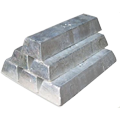
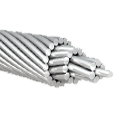
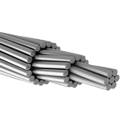
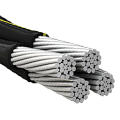
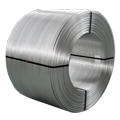
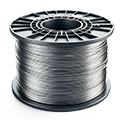


In the aluminum production sector, the precise handling and logistical efficiency of primary aluminum wire rods constitute a fundamental aspect of streamlined operations. These wire rods, emerging from the smelting process, necessitate systematic and uniform winding onto industrial bobbins to ensure transport and storage integrity. Historically, mechanical systems have demonstrated significant limitations in adapting to the dynamic parameters of coil diameter variations and rotational speed adjustments, often resulting in suboptimal winding uniformity. To address these operational inefficiencies, a Romanian research team conceptualized and developed a state-of-the-art electrohydraulic winding system. This article meticulously examines the innovative system’s architectural design, implementation methodologies, and empirical validation under production conditions, highlighting its transformative implications for mechatronics and industrial manufacturing.
Introduction
Primary aluminum wire rods play an indispensable role within the aluminum production value chain, serving as foundational components for downstream processing and distribution. Post-smelting, these rods require methodical winding to maintain their structural integrity during transportation and storage. Conventional mechanical winding systems, constrained by open-loop architectures, fail to compensate for process variability, such as fluctuating bobbin dimensions and dynamic rolling parameters. This inadequacy often leads to inconsistent winding quality, adversely affecting operational efficiency and product reliability.
To overcome these limitations, the research team engineered a closed-loop control mechanism leveraging programmable logic controllers (PLCs) and real-time feedback systems. This approach underscores the project’s dual emphasis on precision engineering and cost-effective utilization of commercially available components. The resulting system not only exemplifies advanced automation but also establishes a scalable framework for addressing analogous challenges across diverse industrial applications. Furthermore, the development reflects a commitment to enhancing energy efficiency and reducing production downtimes, thus benefiting large-scale industrial operations and their environmental footprints.
System Architecture
Hardware Design
The electrohydraulic winding system’s robust hardware framework is anchored by the following critical components:
- Hydraulic Cylinder: A bilateral-rod hydraulic cylinder is employed to deliver precise linear motion, enabling the winding head to traverse the bobbin’s length with exceptional accuracy. This configuration ensures layer-by-layer uniformity in wire deposition.
- Proportional Flow Distributor: Controlled via a PLC, this device regulates hydraulic fluid dynamics, ensuring seamless modulation of motion parameters and maintaining operational stability.
- Incremental Encoder Transducers: These sensors are pivotal for real-time measurement of both rotational and linear velocities, providing granular feedback essential for dynamic system adjustments.
Additional design considerations include the integration of proximity sensors, which signal the PLC to reverse the hydraulic cylinder’s direction upon detecting spool-end boundaries. These sensors enable uninterrupted bidirectional operation, thereby enhancing process continuity. All electrical and electronic subsystems are enclosed within standardized DIN-rail housings, facilitating rapid maintenance and modular scalability. This design paradigm exemplifies the interplay between technical rigor and practical usability, ensuring long-term operational resilience and adaptability to diverse industrial conditions.
The system’s modular design prioritizes scalability, allowing seamless integration with legacy manufacturing lines while reducing costs associated with new infrastructure. By ensuring compatibility with existing mechanical components, the implementation minimizes operational disruptions during deployment.
Software Design
The system’s software architecture is equally sophisticated, featuring a Proportional-Integrative (PI) control algorithm embedded within the PLC. This algorithm governs the system’s real-time response to dynamic variables, ensuring optimal winding precision. Key software functionalities encompass:
- Continuous Monitoring: Encoder-derived data enables the PLC to compute and monitor both rotational and linear velocities with high temporal fidelity, forming the foundation of the control loop.
- Automated Directional Control: Proximity sensor inputs dynamically trigger directional adjustments, ensuring uninterrupted operational flow and precise alignment across winding cycles.
- Advanced Communication Protocols: RS485 and Ethernet interfaces utilizing Modbus protocols facilitate seamless integration with broader industrial ecosystems. These capabilities also enable remote diagnostics, parameter adjustments, and performance monitoring.
Additionally, the user interface is designed for intuitive interaction, featuring a graphical display of system parameters. Operators can access real-time performance metrics and execute parameter modifications via a dedicated Windows-based application. This holistic approach not only reduces dependency on manual interventions but also enhances system operability and user satisfaction.
The software also integrates predictive maintenance features, allowing operators to anticipate potential failures based on historical performance data. By incorporating machine learning techniques, the system continually optimizes its operation, adapting to evolving process requirements and material characteristics.
Control Algorithm
The PI control algorithm constitutes the operational nucleus of the system, orchestrating the synchronization of winding dynamics with real-time feedback. Key algorithmic processes include:
- Rotational Velocity Computation: Incremental encoder pulses are processed to determine the bobbin’s rotational speed, ensuring alignment with predefined operational benchmarks.
- Linear Velocity Calibration: The linear speed of the winding head is computed as a function of bobbin rotation and wire diameter, enabling adaptive adjustments as the bobbin diameter incrementally increases during winding.
- Error Compensation: Discrepancies between target and actual velocities are continuously assessed, with compensatory adjustments applied to the hydraulic actuator’s displacement through proportional and integral gains.
The PI algorithm’s architecture eschews computational complexity, prioritizing rapid response times and robust error mitigation. This streamlined design ensures sustained performance across diverse operational scenarios, including fluctuations in wire tension and ambient conditions. The algorithm’s adaptability enhances its suitability for a wide range of wire materials and industrial environments, further solidifying its utility as a versatile solution.
Testing and Results
Commissioned in February 2013, the electrohydraulic system underwent rigorous validation within an operational aluminum production environment. The empirical results underscored several performance enhancements:
- Superior Winding Uniformity: The system consistently delivered uniform winding across varying process conditions, mitigating the quality inconsistencies inherent in legacy mechanical systems.
- Operational Integration: By retrofitting existing mechanical components, the project achieved seamless integration with pre-established workflows, minimizing capital expenditure and installation complexity.
- Efficiency Gains: Automation significantly reduced manual oversight, enhancing throughput and minimizing downtime.
Performance data, visualized through system-generated graphs, highlighted the system’s stability and precision. Notably, the error margins remained negligible throughout operational cycles, with transient deviations rapidly corrected. Operator feedback further validated the system’s reliability and ease of use, underscoring its practical viability.
Additional trials were conducted to evaluate the system’s adaptability under non-standard conditions, such as extreme temperatures and variable wire tensile strengths. The results affirmed the system’s robustness, with negligible performance degradation across these scenarios. Such validation positions the system as a durable and versatile solution for dynamic industrial settings.
Future Directions
While the current system represents a significant technological leap, opportunities for further refinement and expansion include:
- Wireless Sensor Networks: The adoption of wireless sensor technology could enhance system flexibility and reduce cabling complexity, fostering greater scalability.
- Enhanced Communication Robustness: Ongoing research into mitigating industrial electromagnetic interference aims to fortify communication reliability, particularly in electromagnetically dense environments.
- Material Versatility: Expanding compatibility to encompass alternative wire and cable materials could broaden the system’s industrial applicability, positioning it as a versatile solution for diverse manufacturing contexts.
- Energy Optimization: Investigating advanced energy recovery and hydraulic efficiency mechanisms could further reduce the system’s environmental footprint, aligning it with sustainability objectives.
Conclusion
The automated electrohydraulic winding system exemplifies a paradigm shift in aluminum wire rod processing, harmonizing advanced mechatronics with practical industrial utility. By integrating precision hardware with an adaptive control algorithm, the system achieves unparalleled consistency, efficiency, and cost-effectiveness. Its modular design and reliance on commercially available components render it both accessible and scalable, reinforcing its applicability across diverse manufacturing domains.
As industries pivot toward automation-driven solutions, this innovation underscores the transformative potential of mechatronic engineering. By addressing long-standing inefficiencies and setting new benchmarks for operational excellence, the system heralds a new era of manufacturing ingenuity, poised to influence not only the aluminum industry but also the broader landscape of automated industrial systems. Through continuous refinement and alignment with sustainability goals, this system holds the promise of redefining standards across multiple industrial sectors.
References
- I. Ilie, M. Blejan, “Mechatronic System for Winding Rolled Wire,” Proceedings of 2012 International Conference of Hydraulics and Pneumatics – HERVEX.
- R. G. Bozomitu, Tehnici de Liniarizare pentru Circuitele Integrate de Radiofrecventa, Iasi: Editura Fundatiei Academice AXIS, 2009.
- I. Lita, D. A. Visan, B. Cioc, “FPAA Based PID Controller with Applications in the Nuclear Domain,” 32nd International Spring Seminar on Electronics Technology, ISSE2009.
- C. Marghescu et al., “Simulation of a Wireless Sensor Network using OPNET,” IEEE 17th International Symposium for Design and Technology in Electronic Packaging.


No comment