



Table of Contents
- Introduction
- The Role of Aluminum in MacBook Manufacturing
- CNC Machining: Precision in Aluminum Fabrication
- Understanding Machining Tolerances
- The Environmental Impact of Aluminum Production
- Aluminum Recycling: Processes and Benefits
- Apple’s Commitment to Sustainability
- Balancing Precision and Recyclability
- Case Studies: Successes and Challenges
- Future Directions in Sustainable Manufacturing
- Conclusion
- References
1. Introduction
Aluminum is a fundamental material in Apple’s MacBook lineup, valued for its durability, lightweight properties, and sleek aesthetics. However, its journey from raw material to finished product involves intricate processes that balance precision engineering with environmental responsibility. CNC machining ensures tight tolerances necessary for seamless product assembly, but sustainability concerns push for improved recyclability rates. How does Apple navigate this trade-off?
This article delves into CNC machining tolerances, the environmental implications of aluminum production, and Apple’s strategies to enhance recyclability. Data from the 2023 Apple Environmental Progress Report provides insight into Apple’s evolving approach to sustainability in manufacturing.
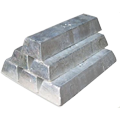
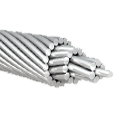
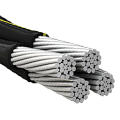
Elka Mehr Kimiya is a leading manufacturer of aluminum rods, alloys, conductors, ingots, and wire in the northwest of Iran equipped with cutting-edge production machinery. Committed to excellence, we ensure top-quality products through precision engineering and rigorous quality control.
2. The Role of Aluminum in MacBook Manufacturing
Apple introduced aluminum unibody designs in 2008, revolutionizing laptop construction. Aluminum provides a unique combination of structural integrity and lightweight properties, making it ideal for MacBooks.
Key Benefits of Aluminum in MacBooks:
- Structural Strength: Provides rigidity without excessive weight.
- Heat Dissipation: Aluminum’s thermal conductivity enhances cooling efficiency.
- Corrosion Resistance: Reduces wear and tear over time.
- Recyclability: Can be reused indefinitely without degrading its properties.
Apple’s use of aluminum not only enhances product performance but also aligns with environmental goals by enabling high recyclability rates.
3. CNC Machining: Precision in Aluminum Fabrication
CNC (Computer Numerical Control) machining is a subtractive manufacturing process where computer-controlled tools carve out a product from a solid aluminum billet. Apple employs CNC machining to produce MacBook chassis with high precision and consistency.
CNC Machining Advantages:
- High Accuracy: Achieves tight tolerances down to ±0.025 mm.
- Consistency: Ensures uniformity across all MacBook units.
- Complex Geometries: Allows intricate designs that wouldn’t be possible with traditional casting.
- Improved Aesthetics: Produces smooth, seamless designs with minimal post-processing.
However, CNC machining generates significant aluminum waste in the form of metal shavings, prompting the need for efficient recycling.
4. Understanding Machining Tolerances
Machining tolerance refers to the allowable deviation in a physical dimension. Apple demands exceptionally tight tolerances in MacBook production to ensure components fit together seamlessly.
CNC Tolerance Levels in MacBook Manufacturing:
| Tolerance Level | Range (mm) | Application |
|---|---|---|
| Standard | ±0.1 – 0.2 | General assembly parts |
| High Precision | ±0.05 – 0.1 | Hinges, ports, and internal frame alignment |
| Ultra Precision | ±0.025 | Outer shell, key alignment, and touchpad placement |
Tighter tolerances ensure a premium feel but require meticulous machining, increasing energy consumption and waste.
5. The Environmental Impact of Aluminum Production
The production of primary aluminum is energy-intensive, generating significant CO₂ emissions. According to industry data, producing one ton of aluminum emits approximately 16.5 tons of CO₂ equivalents.
Key Environmental Concerns:
- High Energy Consumption: The Hall-Héroult process, used to extract aluminum from bauxite, requires large amounts of electricity.
- Carbon Footprint: Traditional smelting operations release CO₂ and perfluorocarbons (PFCs), potent greenhouse gases.
- Mining Impact: Bauxite mining leads to deforestation and soil degradation.
Recycling aluminum presents a viable solution to these challenges.
6. Aluminum Recycling: Processes and Benefits
Recycling aluminum consumes only 5% of the energy required for primary production. This process preserves aluminum’s properties, making it an environmentally and economically sustainable choice.
Aluminum Recycling Process:
- Collection: Scrap aluminum is gathered from manufacturing waste and end-of-life products.
- Sorting and Cleaning: Impurities and coatings are removed.
- Melting and Casting: Recycled aluminum is melted and formed into ingots or billets for reuse.
Benefits of Recycled Aluminum:
| Benefit | Impact |
| Energy Savings | Uses 95% less energy than primary production |
| Lower Emissions | Reduces CO₂ emissions by 92% |
| Waste Reduction | Diverts scrap from landfills |
Despite its advantages, using recycled aluminum in CNC machining presents challenges due to slight variations in composition affecting precision tolerances.
7. Apple’s Commitment to Sustainability
Apple’s 2023 Environmental Progress Report highlights the company’s commitment to sustainability, including increased use of recycled materials.
Key Highlights:
- 100% Recycled Aluminum: The latest MacBook enclosures are made entirely from recycled aluminum.
- 36% Overall Recycled Content: Across Apple’s entire product range.
- Carbon Neutral Goals: Apple aims for carbon neutrality by 2030.
Apple’s material engineers refine recycled aluminum alloys to maintain high performance while meeting tight CNC tolerances.
8. Balancing Precision and Recyclability
Apple’s challenge is maintaining high precision while using recycled aluminum. Variations in recycled aluminum composition can impact machining performance. Advanced alloy formulations and AI-driven machining optimizations help address these issues.
9. Case Studies: Successes and Challenges
Case Study: Recycled Aluminum in iPhone 14
- Apple’s iPhone 14 uses a newly engineered 100% recycled aluminum alloy for its strongest chassis to date.
- AI-driven quality control ensures tight tolerances despite using recycled material.
Challenge: CNC Waste Reduction
- Apple introduced a closed-loop recycling process where CNC waste is re-melted and reintegrated into production.
10. Future Directions in Sustainable Manufacturing
- AI-Assisted Machining: Reduces energy waste and improves precision.
- Advanced Alloys: Refining recycled aluminum formulations to match primary aluminum properties.
- Hybrid Manufacturing: Combining additive and subtractive methods to minimize material waste.
11. Conclusion
Apple’s MacBook production exemplifies the balance between engineering precision and environmental responsibility. By integrating 100% recycled aluminum into CNC machining processes, Apple reduces its carbon footprint while maintaining high standards. Continued innovation in material science and machining techniques will further enhance sustainability in the electronics industry.
12. References
- Apple Inc. (2023). Environmental Progress Report.
- Aluminum Association. (2022). Recycling and Sustainability Data.
- European Aluminium. (2023). Circular Economy and Recycling Statistics.

No comment