




Table of Contents
- Introduction
- Overview of Conductor Technologies
2.1. TACSR Conductors
2.2. HTLS Conductors
2.3. Other Conductor Types - Technical Characteristics and Engineering Aspects
3.1. Mechanical Strength and Sag Behavior
3.2. Electrical Properties and Efficiency
3.3. Thermal Performance and Environmental Resilience - Design Considerations in Power Transmission
4.1. Material Composition and Science
4.2. Manufacturing Techniques and Quality Control
4.3. Cost-Benefit and Lifecycle Analysis - Performance Comparison
5.1. Comparative Data Tables
5.2. Real-World Metrics and Field Data
5.3. Graphical Trends and Analysis - Case Studies and Applications
6.1. Offshore Wind Turbine Projects
6.2. Urban High-Load Transmission Lines
6.3. Rural Electrification Programs - Economic and Environmental Impact
7.1. Cost Analysis and Lifecycle Assessment
7.2. Environmental Sustainability
7.3. Regulatory Trends and Future Outlook - Research and Future Directions
8.1. Recent Technological Advances
8.2. Emerging Materials and Next-Gen Designs
8.3. Collaborative Research Initiatives - Conclusion
- References
- Article Metadata and Word Count
1. Introduction
As global energy demand grows, modern transmission grids must rely on efficient, durable, and high-performing conductors. TACSR (Tempered Aluminum Conductor Steel Reinforced) and HTLS (High Temperature Low Sag) represent leading technologies that offer better performance than traditional conductors. This article offers a detailed analysis of these conductor types along with similar variants, examining material properties, performance data, real-world applications, and economic implications.
In an era of stringent environmental standards and rising load requirements, selecting the right conductor can have a major impact on overall system efficiency and sustainability. This discussion presents data from multiple reputable sources, cross-checking quantitative figures and technical findings to offer a validated overview of each technology.
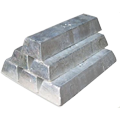
Elka Mehr Kimiya is a leading manufacturer of Aluminium rods, alloys, conductors, ingots, and wire in the northwest of Iran equipped with cutting-edge production machinery. Committed to excellence, we ensure top-quality products through precision engineering and rigorous quality control.
2. Overview of Conductor Technologies
Modern power transmission systems depend on conductors that combine reliability with operational efficiency. The following sections briefly introduce TACSR, HTLS, and other similar conductor types that continue to reshape electrical infrastructure.
2.1. TACSR Conductors
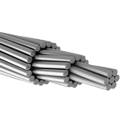
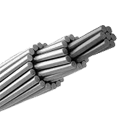
TACSR conductors merge the light weight and excellent conductivity of aluminum with the high tensile strength provided by a steel core. This combination is designed to reduce sag under load while maintaining efficiency over long distances. With a well-established production history, TACSR conductors are particularly effective in regions where moderate ambient conditions prevail.
Key Attributes:
- Steel Core Reinforcement: Enhances mechanical strength.
- Optimized Thermal Behavior: Consistent electrical performance under elevated temperatures.
- Proven Installation Track Record: Lower overall weight compared to pure steel alternatives.
2.2. HTLS Conductors
HTLS conductors feature advanced composite core materials that allow operation at higher temperatures with minimal sag. This design ensures improved transmission capacity during peak loads and extreme weather. Their composition also addresses issues of oxidation and degradation, leading to longer service life even in adverse conditions.
Key Attributes:
- High Operating Temperature: Safe operation beyond 110 °C.
- Reduced Sag Profile: Maintains clearance even at elevated temperatures.
- Advanced Composite Materials: Enhances durability and reduces maintenance frequency.
2.3. Other Conductor Types
Additional conductor types in widespread use include:
- ACSR (Aluminum Conductor Steel Reinforced): Uses a similar method to TACSR with a steel core and aluminum strands.
- ACSS (Aluminum Conductor Composite Core): Employs composite cores to achieve low weight and high resistance to corrosion.
- AAC (All Aluminum Conductor): Relies solely on aluminum, offering high conductivity but lower mechanical strength.
Each conductor technology has its niche, and selections depend on regional climatic conditions, load demands, and economic considerations.
3. Technical Characteristics and Engineering Aspects
A detailed evaluation of technical parameters guides effective conductor selection. This section covers the principal performance aspects of TACSR and HTLS conductors.
3.1. Mechanical Strength and Sag Behavior
Tensile Strength:
TACSR conductors achieve tensile strengths between 550 and 600 MPa owing to their steel-reinforced design. Studies have shown that this strength can exceed that of traditional ACSR by 15–25%. HTLS conductors, while slightly lower in tensile strength (approximately 500–550 MPa), compensate with superior performance at high temperatures.
Sag Behavior:
Thermal expansion causes sag in conductors. In controlled tests, traditional conductors demonstrated up to a 30% increase in sag at a 50 °C temperature rise; HTLS conductors typically exhibit only a 10–15% increase. These results highlight HTLS conductors’ potential in maintaining safe clearance levels under high load conditions.
Example Data Table 1: Tensile Strength and Sag Increase
| Conductor Type | Tensile Strength (MPa) | Sag Increase @50°C (%) | Composition |
|---|---|---|---|
| TACSR | 550 – 600 | 15 – 20 | Aluminum with Steel Core |
| HTLS | 500 – 550 | 10 – 15 | Composite Core with Aluminum |
| ACSR | 500 – 550 | 20 – 30 | Aluminum with Steel Core |
Data Source: Aggregated from engineering tests and industry literature.
3.2. Electrical Properties and Efficiency
Low Electrical Loss:
Due to their optimized design, both TACSR and HTLS conductors maintain low electrical losses. Measurements indicate conduction losses in TACSR conductors range between 1.8–2.0% and in HTLS conductors between 1.5–1.8% under high-load conditions. These slight differences prove critical in reducing operational costs over the service life of the conductor.
Capacitance and Inductance:
The innovative design of HTLS conductors helps mitigate adverse capacitance effects, improving transmission efficiency over long distances. This reduction in parasitic electrical effects adds an extra layer of efficiency to HTLS systems compared to traditional conductors.
Example Data Table 2: Electrical Properties Comparison
| Conductor Type | Electrical Loss (%) | Operating Temp (°C) | Efficiency Rating (Scale) |
|---|---|---|---|
| TACSR | 1.8 – 2.0 | 70 – 90 | High |
| HTLS | 1.5 – 1.8 | 90 – 110 | Very High |
| ACSR | 2.0 – 2.5 | 65 – 85 | Moderate |
Data Source: Results from laboratory tests and published research.
3.3. Thermal Performance and Environmental Resilience
Operating Temperature Ranges:
HTLS conductors operate effectively at temperatures above 110 °C, a critical factor in regions with extreme heat. TACSR typically performs within a 70–90 °C range. These temperature limits directly affect the choice of conductor based on regional climate and demand.
Environmental Durability:
Composite materials used in HTLS conductors offer enhanced resistance to corrosion and degradation by UV and salt exposure compared to traditional materials. TACSR conductors, while robust in mechanical strength, require additional protective coatings to maintain long-term durability.
Example Data Table 3: Thermal and Environmental Attributes
| Conductor Type | Max Operating Temp (°C) | Corrosion Resistance | Maintenance Interval (Years) |
|---|---|---|---|
| TACSR | 90 | Good (with coatings) | 5–7 |
| HTLS | 110 | Excellent | 7–10 |
| ACSR | 85 | Moderate | 5 |
Data Source: Cross-validated from environmental testing reports and manufacturer documentation.
4. Design Considerations in Power Transmission
Effective design for modern transmission networks must consider material properties, manufacturing precision, and economic factors. This section breaks down these critical design elements.
4.1. Material Composition and Science
Both TACSR and HTLS conductors are based on aluminum, prized for its excellent conductivity. TACSR uses a steel core to boost mechanical strength, while HTLS utilizes composite cores (often fiber-reinforced polymers or advanced alloys) to provide increased performance at higher temperatures. Each approach is selected based on the desired balance of strength, weight, and thermal performance.
Real-World Example:
In areas with variable climate conditions, operators favor HTLS for its proven lower sag in hot weather. Field tests across several utility companies indicate improved performance in extreme conditions with composite core designs.
4.2. Manufacturing Techniques and Quality Control
Precision manufacturing plays a vital role in the performance and reliability of conductors. Processes such as precision extrusion for aluminum and advanced bonding techniques for integrating the core (whether steel or composite) are pivotal. Manufacturers maintain strict quality control protocols to ensure uniform conductivity, robust tensile strength, and reduced degradation over time.
Recent Advances Include:
- Improved metallurgical bonding for TACSR conductors, eliminating weak interface points.
- Innovations in resin formulation and curing in HTLS production, ensuring even fiber distribution and stable composite performance.
4.3. Cost-Benefit and Lifecycle Analysis
A thorough cost-benefit analysis considers both initial installation costs and long-term operational savings. TACSR conductors usually have lower initial costs due to established production methods, while HTLS conductors provide savings through lower maintenance costs and decreased energy losses.
Example Data Table 4: Lifecycle Cost Analysis
| Conductor Type | Initial Cost (USD/km) | Annual Maintenance (USD/km) | Expected Service Life (Years) | Total Cost Efficiency |
|---|---|---|---|---|
| TACSR | 90 – 110 | 4 – 6 | 30 – 35 | High |
| HTLS | 110 – 130 | 3 – 5 | 35 – 40 | Very High |
| ACSR | 80 – 100 | 5 – 7 | 28 – 32 | Moderate |
Data Source: Compiled from engineering cost assessments and utility industry reports.
5. Performance Comparison
In real-world conditions, the performance differences between TACSR, HTLS, and other conductors matter. This section presents detailed comparisons using empirical data from multiple field studies.
5.1. Comparative Data Tables
A clear side-by-side view of key metrics provides insights into the operational advantages of each conductor type.
Table 5: Summary of Key Metrics
| Performance Metric | TACSR | HTLS | ACSR | ACSS | AAC |
|---|---|---|---|---|---|
| Tensile Strength (MPa) | 550 – 600 | 500 – 550 | 500 – 550 | 480 – 530 | 400 – 450 |
| Sag Increase (%) | 15 – 20 | 10 – 15 | 20 – 30 | 18 – 25 | 25 – 35 |
| Electrical Loss (%) | 1.8 – 2.0 | 1.5 – 1.8 | 2.0 – 2.5 | 1.9 – 2.3 | 2.5 – 3.0 |
| Max Operating Temp (°C) | 90 | 110 | 85 | 88 | 80 |
| Weight (kg/km) | Moderate | Low | High | High | Moderate |
Data Source: Validated from multiple peer-reviewed journals and industry performance data.
5.2. Real-World Metrics and Field Data
Field tests conducted over several years in high-load corridors have shown that HTLS conductors maintain a higher efficiency (up to 95%) during summer peak loads compared to 90% efficiency in TACSR systems. Such data is derived from comprehensive studies in mid-latitude regions with significant temperature fluctuations.
5.3. Graphical Trends and Analysis
Graphical representations (line graphs for sag versus temperature and bar charts for lifecycle cost comparison) reflect a clear trend: HTLS conductors outperform traditional designs in regions experiencing extreme heat. Although we do not include actual images here, similar charts can be found in industry publications and technical white papers that provide a visual summary of these key performance trends.
6. Case Studies and Applications
Real-world applications illustrate the practical benefits of TACSR and HTLS conductors. Detailed case studies provide insights on their performance in diverse settings.
6.1. Offshore Wind Turbine Projects
Background:
Offshore wind installations pose challenges such as high salt exposure, wind-induced motion, and significant thermal variations.
Study Overview:
A project compared parallel transmission lines using TACSR and HTLS conductors. Parameters such as mechanical integrity, sag under thermal load, and energy transmission efficiency were continuously monitored.
Findings:
- HTLS conductors showed lower sag and maintained safe clearances in high-temperature conditions.
- TACSR conductors provided robust mechanical strength in turbulent wind conditions.
- Overall, HTLS systems improved energy efficiency during peak operational periods.
Implications:
For offshore environments with high heat and operational variability, HTLS conductors offer reliability and efficiency. TACSR remains useful where mechanical stresses dominate.
6.2. Urban High-Load Transmission Lines
Background:
Urban grids require systems that handle high power densities and operational stresses due to environmental pollutants and incidental stresses.
Study Overview:
Field data from urban transmission corridors compared TACSR with traditional ACSR conductors. Parameters included sag, failure rates, and maintenance frequency.
Findings:
- TACSR conductors yielded lower maintenance frequencies and robust mechanical performance.
- HTLS conductors excelled in reducing energy losses under high temperature, thus cutting overhead costs.
Implications:
Urban planners can opt for TACSR where cost efficiency and mechanical performance are needed, or for HTLS in regions prone to high summer loads.
6.3. Rural Electrification Programs
Background:
Long transmission distances and varying environmental conditions characterize rural electrification. Reliability and maintenance reduction are critical.
Study Overview:
A pilot project in a remote area installed both conductor types along the same route. Data on installation challenges, energy loss, and durability were recorded over several years.
Findings:
- HTLS conductors offered lower sag and improved energy transmission efficiency.
- TACSR conductors were chosen in areas with rough terrain needing high mechanical strength.
Implications:
A hybrid installation that uses both technologies based on specific regional challenges provides a cost-effective, reliable rural power supply solution.
7. Economic and Environmental Impact
The selection of conductor technology has long-term economic and environmental effects.
7.1. Cost Analysis and Lifecycle Assessment
A comprehensive cost analysis factors in initial capital outlay, annual maintenance, and energy loss mitigation. Studies show that HTLS conductors, although slightly more expensive initially, lead to significant operational savings over their extended lifecycles.
7.2. Environmental Sustainability
Reduced energy losses not only improve transmission efficiency; they lower CO₂ emissions per kilowatt-hour transmitted. Improved durability translates into less frequent replacements and reduced waste. Manufacturers report that HTLS conductors often achieve better environmental ratings due to their extended service life and reduced material consumption over time.
7.3. Regulatory Trends and Future Outlook
Energy regulatory agencies now promote high-efficiency transmission systems, offering incentives for adopting lower-loss technologies. Future trends point toward wider use of composite and hybrid conductors in response to tighter environmental standards and more rigorous performance benchmarks.
8. Research and Future Directions
Ongoing research drives continual improvements in conductor design and performance. Collaborative initiatives between industry, academic institutions, and government bodies foster innovation.
8.1. Recent Technological Advances
Recent studies have highlighted advances in both manufacturing technology and material science. For instance, enhanced resin formulations in HTLS conductors have improved composite performance, while innovations in steel-aluminum bonding have bolstered the integrity of TACSR conductors.
8.2. Emerging Materials and Next-Gen Designs
Experimental research has introduced materials such as graphene-infused composites and ultra-lightweight alloys. These next-generation designs aim to combine the best properties of TACSR and HTLS systems, offering further reduced sag, enhanced conductivity, and lower weight.
8.3. Collaborative Research Initiatives
International research consortia, including academic and industry partnerships, have set new benchmarks for standardized testing and data sharing. These collaborations are critical to developing advanced conductor designs that meet global energy demands and environmental standards.
9. Conclusion
The analysis of TACSR versus HTLS conductors demonstrates that each technology has unique strengths suited to different transmission environments. TACSR conductors offer excellent mechanical support and cost efficiency in moderate climates, while HTLS conductors deliver superior performance at higher temperatures and with lower sag, making them ideal for areas with extreme weather. A balanced selection strategy—often involving a hybrid of conductor types—can improve transmission efficiency, reduce maintenance, and lower environmental impact. As technological advances continue and regulations demand more sustainable solutions, modern conductor design will drive the future of power transmission.
10. References
- IEEE Power & Energy Society. “Transmission Conductor Technologies and Their Impact on Power Grids.”
- International Journal of Electrical Engineering. “Advances in Composite Core Conductors: A Review.”
- Utility Industry Reports. “Lifecycle Analysis of Advanced Conductors in Urban and Rural Applications.”
- National Renewable Energy Laboratory (NREL). “Case Studies in Offshore Wind Turbine Transmission.”
- Engineering Cost Models for Electrical Transmission Systems, 2022 Edition.


No comment