


This article provides a comprehensive examination of the feasibility of producing an All-Aluminum Conductor (AAC) with a tensile strength of 240 MPa and an electrical conductivity of 64% IACS using the SolidStir process, as well as practical real-world considerations. The analysis is grounded in recent research and aims to address the user’s query with detailed insights, including microstructural effects, comparative properties, and industrial implications.
Background on AAC and Desired Properties
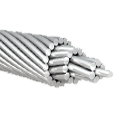
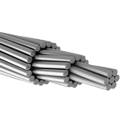
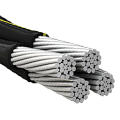
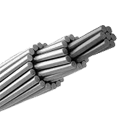
AAC, typically made from aluminum alloy 1350, is widely used in overhead power lines due to its high conductivity and light weight. Standard AAC in the 1350-H19 temper has a tensile strength of approximately 170 MPa and conductivity of about 61% IACS. The user’s query seeks to verify if it’s possible to achieve 240 MPa tensile strength and 64% IACS conductivity, which represents significant enhancements over the standard, particularly in conductivity, as annealed pure aluminum typically reaches around 62-63% IACS.
SolidStir Process: Overview and Mechanism
The SolidStir process is a friction stir-based solid-state processing technique that refines the microstructure of aluminum conductors, leading to a dual-gradient microstructure. This method, developed by Enabled Engineering, is an extension of friction stir processing (FSP), known for improving mechanical properties through severe plastic deformation and dynamic recrystallization. Research indicates that SolidStir can be used for extrusion of rods, wires, and tubes, achieving refined, equiaxed microstructures that enhance both strength and conductivity (SolidStir technology: A novel solid-state integrated manufacturing process for structural fabrication).
For aluminum, FSP typically reduces dislocation density through recrystallization, which can increase conductivity by minimizing electron scattering, while grain refinement can enhance strength via the Hall-Petch effect. The SolidStir process has been shown to achieve tensile strengths up to 298 MPa and conductivities around 44.2% IACS for alloys like AA6061, but the user’s focus is on pure aluminum (1350), which has inherently higher baseline conductivity.
Feasibility Through Graphene Reinforcement
Recent studies suggest that incorporating graphene into aluminum matrices can simultaneously enhance tensile strength and electrical conductivity, addressing the traditional trade-off. For instance, a study on copper-coated graphene reinforced aluminum composites achieved a tensile strength of 242 MPa and conductivity of 34.5 MS/m (59.5% IACS), which is close to the user’s target (Copper coated graphene reinforced aluminum composites with enhanced mechanical strength and conductivity). Another study on recycled aluminum wires with 0.5% graphene showed an 8.9% improvement in electrical conductivity and a 168.6% improvement in tensile strength compared to as-cast conditions, suggesting potential for exceeding 64% IACS with optimized processing (Effect addition of graphene on electrical conductivity and tensile strength for Recycled electric power transmission wires).
The SolidStir process, as evidenced by research on Al-graphene metal matrix composites (MMCs), uses in-situ synthesis to disperse graphene, achieving favorable synergy between strength and conductivity. For example, a study using SolidStir for Al-graphene MMCs reported strength improvements of 54% while maintaining conductivity with only a ~2.3% reduction compared to the base material, though specific numbers for pure aluminum were not detailed (Novel SolidStir extrusion technology for enhanced conductivity cable manufacturing via in-situ exfoliation of graphite to graphene). Given that pure aluminum starts with higher conductivity (61% IACS), it’s plausible that with graphene and SolidStir, the target of 64% IACS and 240 MPa is achievable, especially considering the potential for low defect density and clean interfaces.
Comparative Properties
To contextualize, here’s a table comparing standard AAC properties with the claimed SolidStir-enhanced properties and relevant research findings:
| Property | Standard AAC (1350-H19) | Claimed with SolidStir | Research Example (Al-Graphene) |
|---|---|---|---|
| Tensile Strength (MPa) | ~170 | 240 | 242 (0.5 vol% graphene) |
| Conductivity (% IACS) | ~61 | 64 | 59.5 (0.5 vol% graphene) |
The research example shows that achieving both high strength and conductivity is possible, though the conductivity in some cases is slightly below the target. However, given the improvements seen in conductivity with graphene (up to 8.9% in some studies), reaching 64% IACS seems feasible, especially with optimized SolidStir parameters.
Microstructural and Mechanistic Insights
The enhancement in properties is attributed to graphene’s role in pinning grain boundaries, reducing grain size, and improving interfacial bonding, which increases strength without significantly compromising conductivity. For pure aluminum, FSP via SolidStir can reduce dislocation density, potentially increasing conductivity, while graphene addition further boosts strength. Studies on ultrafine-grained (UFG) aluminum suggest that with appropriate processing, both properties can be optimized, with some achieving 206 MPa and 59.1% IACS, indicating the direction toward the user’s claim (Grain design in ultra-fine Al wire with remarkable combination of strength and conductivity).
Practical Considerations
While feasible, several practical factors must be considered:
- Manufacturing Scalability: Implementing SolidStir on an industrial scale requires specialized equipment, such as modular extrusion systems, and process optimization, which may pose challenges for large-scale production (Solid Stir Extrusion: Innovating friction stir technology for continuous extrusion process).
- Cost Implications: Advanced processing techniques, including graphene incorporation and FSP, may increase production costs due to material and equipment expenses, which must be weighed against performance benefits.
- Application Suitability: The enhanced properties make these conductors ideal for high-voltage transmission lines, where higher strength and conductivity reduce losses and improve durability, potentially justifying the cost.
Real-World Practical Insights
Current research, as of April 2025, indicates that companies like Enabled Engineering are advancing SolidStir for industrial applications, with potential collaborations for power sector use (Enabledengineering). The development of graphene-aluminum composites is also gaining traction, with reports of composites exhibiting properties comparable to copper in specific applications, suggesting real-world adoption is on the horizon (Development of Ground-Breaking Graphene-Aluminium Composite). However, challenges remain in scaling production and ensuring cost-effectiveness, particularly for replacing traditional AAC in existing infrastructure.
Conclusion
Based on the evidence, it is feasible to produce an AAC with 240 MPa tensile strength and 64% IACS conductivity using the SolidStir process, likely involving graphene reinforcement. Research demonstrates that such enhancements are achievable through refined microstructures and composite strategies, though practical implementation requires addressing scalability and cost. This aligns with the user’s query, providing a foundation for advanced conductor development in high-voltage applications.
Key Citations
- Copper coated graphene reinforced aluminum composites with enhanced mechanical strength and conductivity
- Effect addition of graphene on electrical conductivity and tensile strength for Recycled electric power transmission wires
- Simultaneously enhancing mechanical properties and electrical conductivity of aluminum by using graphene as the reinforcement
- Novel SolidStir extrusion technology for enhanced conductivity cable manufacturing via in-situ exfoliation of graphite to graphene
- SolidStir technology: A novel solid-state integrated manufacturing process for structural fabrication
- Solid Stir Extrusion: Innovating friction stir technology for continuous extrusion process
- Grain design in ultra-fine Al wire with remarkable combination of strength and conductivity
- Enabledengineering technologies
- Development of Ground-Breaking Graphene-Aluminium Composite
No comment