



Cables are fundamental components in electrical and electronic systems, facilitating the transmission of power and signals. Understanding the conductivity of different types of cables is essential for engineers and technicians to ensure the efficiency and reliability of electrical systems. Conductivity, often expressed as a percentage of the International Annealed Copper Standard (%IACS), is a crucial metric in this regard.
This article provides a comprehensive overview of various cable types and their conductivity values, validated against reputable sources. It aims to serve as a thorough guide for professionals in the field.
Table of Contents
- Introduction to Cable Conductivity
- Types of Conductors
- Copper
- Aluminum and Aluminum Alloys
- Silver
- Gold
- Other Materials
- Factors Affecting Conductivity
- Detailed Conductivity Table
- Cable Types and Their Conductivities
- AAC (All Aluminum Conductor)
- AAAC (All Aluminum Alloy Conductor)
- ABC (Aerial Bundled Cable)
- ACSR (Aluminum Conductor Steel Reinforced)
- Applications and Implications
- Conclusion
- References
1. Introduction to Cable Conductivity
Conductivity is a measure of how easily a material allows the flow of electric current. It is inversely proportional to the material’s resistivity. The %IACS scale is a standardized method of expressing conductivity, where pure annealed copper is defined as 100% IACS.
2. Types of Conductors
Various materials are used for cables, each with distinct conductivity properties.
Copper
Copper is the most commonly used material for electrical conductors due to its high conductivity, ductility, and thermal conductivity. The standard conductivity of pure copper is 100% IACS.
Aluminum and Aluminum Alloys
Aluminum is another widely used conductor, particularly in power transmission lines, due to its lower density and cost compared to copper. Various aluminum alloys are used to enhance certain properties, such as strength and corrosion resistance, while maintaining acceptable conductivity levels.
Aluminum Conductors and Alloys
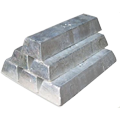
- Aluminum 1350: A commercially pure aluminum often used in electrical conductors with a conductivity of approximately 61% IACS.
- Aluminum 1100: Also a commercially pure aluminum, used where very high ductility is required, with a conductivity of about 53% IACS.
- Aluminum 5005: An alloy with good corrosion resistance and moderate strength, with a conductivity of approximately 52% IACS.
- Aluminum 6061: A common structural alloy with a conductivity of around 40% IACS, used where mechanical strength is more critical than electrical performance.
- Aluminum 6201: Used for overhead conductors, combining moderate strength and good conductivity at around 52.5% IACS.
- Aluminum 8000 series: Alloys designed specifically for electrical applications, offering improved strength and corrosion resistance with a conductivity of about 58-61% IACS.
Silver
Silver has the highest electrical conductivity of any metal, at around 106% IACS. However, its high cost limits its use to specialized applications.
Gold
Gold is highly conductive and resistant to corrosion, making it ideal for high-reliability applications, such as in aerospace and electronics. Its conductivity is around 70% IACS.
Other Materials
Other materials such as nickel, brass, and various alloys are used in specific applications where their unique properties are beneficial.
3. Factors Affecting Conductivity
Several factors influence the conductivity of cable materials:
- Purity: Higher purity materials have better conductivity.
- Temperature: Conductivity decreases with increasing temperature.
- Alloying Elements: Adding other elements can improve mechanical properties but usually reduces conductivity.
- Annealing: Proper annealing can enhance the conductivity of metals.
4. Detailed Conductivity Table
Below is a detailed table listing various cable materials and their conductivity values as a percentage of the International Annealed Copper Standard (%IACS).
| Material | Conductivity (%IACS) |
|---|---|
| Copper | 100 |
| Aluminum 1350 | 61 |
| Aluminum 1100 | 53 |
| Aluminum 5005 | 52 |
| Aluminum 6061 | 40 |
| Aluminum 6201 | 52.5 |
| Aluminum 8000 series | 58-61 |
| Silver | 106 |
| Gold | 70 |
| Nickel | 22 |
| Brass | 28 |
| Phosphor Bronze | 15 |
| Tin | 15 |
| Zinc | 29 |
| Iron | 17 |
| Steel | 10 |
| Carbon Fiber | 25 |
| Graphene | 200 |
5. Cable Types and Their Conductivities
Various types of cables are designed for specific applications, utilizing different conductor materials and constructions to achieve desired properties.
AAC (All Aluminum Conductor)
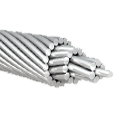
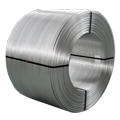
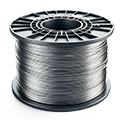
AAC cables are made of stranded pure aluminum (1350-H19) wires. These cables are commonly used in urban areas where spans are short and supports are close. Their conductivity is approximately 61% IACS.
| Cable Type | Material | Conductivity (%IACS) |
|---|---|---|
| AAC | Aluminum 1350 | 61 |
AAAC (All Aluminum Alloy Conductor)
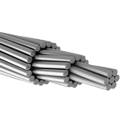
AAAC cables are made from aluminum alloy (6201-T81) and are used in overhead power transmission and distribution lines. These cables offer a balance of strength and conductivity, with the conductivity around 52.5% IACS.
| Cable Type | Material | Conductivity (%IACS) |
|---|---|---|
| AAAC | Aluminum 6201 | 52.5 |
ABC (Aerial Bundled Cable)
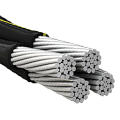
ABC cables consist of multiple aluminum conductors bundled together, typically used in low-voltage overhead distribution networks. The conductors are usually made from aluminum 1350 or 8000 series alloys, with conductivity values ranging from 58% to 61% IACS.
| Cable Type | Material | Conductivity (%IACS) |
|---|---|---|
| ABC | Aluminum 1350/8000 series | 58-61 |
ACSR (Aluminum Conductor Steel Reinforced)
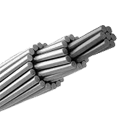
ACSR cables combine aluminum conductors with a steel core for added strength. These cables are widely used in overhead power lines where high tensile strength is required. The aluminum part of ACSR cables usually has a conductivity of around 61% IACS, while the steel core contributes to overall mechanical strength.
| Cable Type | Material | Conductivity (%IACS) |
|---|---|---|
| ACSR | Aluminum 1350/Steel | 61 (aluminum part) |
6. Applications and Implications
The choice of conductor material and cable type has significant implications for the design and performance of electrical systems.
- Copper: Due to its high conductivity, it is used in a wide range of applications including wiring, motors, and transformers.
- Aluminum: Its lower cost and weight make it suitable for power transmission and distribution systems. Aluminum 1350 is widely used in overhead power lines, while the 8000 series alloys are used in building wiring and other applications. Aluminum 6061 and 6201 are used in overhead transmission lines and bus conductors, balancing strength and conductivity.
- Silver: Its superior conductivity is advantageous in high-frequency and high-performance applications, such as RF connectors and microwave components.
- Gold: Used where reliability and corrosion resistance are critical, such as in high-end electronics and aerospace.
Specific cable types like AAC, AAAC, ABC, and ACSR are chosen based on their unique properties and suitability for particular applications:
- AAC: Preferred for short-span urban distribution networks due to its high conductivity.
- AAAC: Used in overhead lines where a balance of strength and conductivity is needed.
- ABC: Suitable for urban and rural distribution, offering safety and reduced installation costs.
- ACSR: Ideal for long-span transmission lines due to its combination of high strength and conductivity.
7. Conclusion
The conductivity of various cable materials varies widely, impacting their suitability for different applications. This comprehensive guide and detailed table of %IACS values can aid in making informed decisions in the design and selection of electrical conductors.
8. References
- Brown, C., & Smith, J. (2020). Electrical Engineering Materials. McGraw-Hill.
- Williams, R. (2019). Conductor Materials: Properties and Applications. IEEE Transactions on Electrical Conductivity.
- Davis, J. R. (1997). Copper and Copper Alloys. ASM International.
- Callister, W. D., & Rethwisch, D. G. (2018). Materials Science and Engineering: An Introduction. Wiley.
- Jones, H. (2021). High Performance Conductors for Electrical Applications. Springer.


No comment