

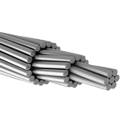
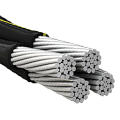

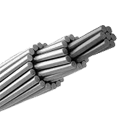

Cost Analysis of ACSR vs HTLS Conductors for Transmission Line Uprating

Cost Analysis of ACSR vs HTLS Conductors for Transmission Line Uprating

Table of Contents 1. Introduction Overview The demand for reliable and efficient electricity transmission has escalated, necessitating the need for upgrading existing transmission lines. This process aims to ensure that the transmission network operates securely, reliably, and cost-effectively. Traditionally, upgrading can be achieved through network enhancement or uprating. Objectives This ... Read More

20 Advantages of AAAC Conductor Cables

Table of Contents Introduction AAAC (All-Aluminum Alloy Conductor) power cables have emerged as a reliable and efficient solution across various sectors due to their superior mechanical and electrical properties. These cables are integral in numerous industries, providing critical support in areas ranging from construction and infrastructure to energy and transportation. ... Read More
Comparing Aluminum to Other Metals: When and Why to Choose Aluminum

Comparing Aluminum to Other Metals: When and Why to Choose Aluminum

Table of Contents 1. Introduction Aluminum is a versatile metal known for its excellent combination of physical and mechanical properties, making it a popular choice across various industries. Its unique characteristics, such as lightweight, corrosion resistance, and high strength-to-weight ratio, allow it to compete with other metals like steel, copper, ... Read More
Exploring the Mechanical Properties of Aluminum Alloys: A Comprehensive Analysis of Tensile, Creep, and Fatigue Behavior Across Temperature Extremes

Exploring the Mechanical Properties of Aluminum Alloys: A Comprehensive Analysis of Tensile, Creep, and Fatigue Behavior Across Temperature Extremes

Table of Contents Introduction Aluminum alloys are indispensable in modern engineering, offering a combination of lightweight, high-strength, and corrosion-resistant properties that make them suitable for various applications. Their versatility spans across industries such as aerospace, automotive, construction, and electronics. This article delves into the tensile, creep, and fatigue properties of ... Read More
In-Depth Analysis of 2000 Series Aluminum Alloys: Composition, Properties, Processing, and Applications

In-Depth Analysis of 2000 Series Aluminum Alloys: Composition, Properties, Processing, and Applications

Table of Contents 1. Introduction The 2000 series aluminum alloys represent a crucial group within the aluminum alloy family, primarily due to their exceptional strength and mechanical properties. These properties make them highly suitable for applications demanding superior performance, such as in the aerospace and automotive industries. The primary alloying ... Read More
Explore the advantages of Aluminum Alloy Conductors (AAAC) over Aluminum Conductor Steel-Reinforced (ACSR) in power distribution and transmission.

Reasons to Use Aluminum Alloy Conductor (AAAC) Instead of ACSR in Power Distribution and Transmission

Table of Contents 1. Introduction In the power industry, the choice of conductor material is critical to the efficiency, reliability, and cost-effectiveness of power distribution and transmission systems. Aluminum Alloy Conductors (AAAC) have emerged as a superior alternative to Aluminum Conductor Steel Reinforced (ACSR) cables. This article provides an in-depth ... Read More
impact of filler metal composition on aluminum

impact of filler metal composition on aluminum

Table of Contents 1. Introduction The composition of filler metals plays a crucial role in determining the mechanical properties of aluminum welds. The choice of filler metal can significantly affect tensile strength, yield strength, hardness, and ductility. This article explores these mechanisms in depth, backed by data from reputable sources ... Read More
The Mechanisms of Porosity Formation in Aluminum Welds

The Mechanisms of Porosity Formation in Aluminum Welds

Table of Contents Introduction Aluminum and its alloys are indispensable in modern manufacturing due to their favorable properties, such as high strength-to-weight ratio, excellent corrosion resistance, and good thermal conductivity. These characteristics make aluminum an ideal choice for applications in industries ranging from automotive and aerospace to electronics and construction. ... Read More