


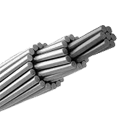
Residential vs. Commercial: Choosing the Right Aluminum Conductors

Table of Contents 1. Introduction Choosing the right aluminum conductor is not just a matter of cost or convenience. It’s a decision that affects energy efficiency, installation ease, safety, and long-term reliability. Whether wiring a home or powering a commercial building, understanding the specific needs and challenges of each environment ... Read More
The Role of Grain Structure in Defining Aluminum Alloy Strength

The Role of Grain Structure in Defining Aluminum Alloy Strength

Table of Contents 1. Introduction The microstructure of aluminum alloys, particularly their grain structure, plays a decisive role in determining their mechanical strength, ductility, and resistance to fatigue. Grain size and morphology influence how these materials perform under mechanical stress, thermal cycles, and corrosive environments. As manufacturers strive for lighter, ... Read More

Innovative Manufacturing Techniques for Superior Aluminum Rods

Table of Contents 1. Introduction Aluminum rods are vital in various sectors, from power transmission and construction to transportation and electronics. As industries demand higher mechanical strength, improved conductivity, and lighter weight, manufacturers must adopt innovative approaches that go beyond traditional extrusion methods. Today, the evolution of aluminum rod manufacturing ... Read More

Aluminum Wires in the 5G Era: Innovations and Future Prospects

Table of Contents 1. Introduction The fifth-generation (5G) wireless technology promises ultra-fast data speeds, minimal latency, and seamless device connectivity. Behind this leap lies a complex web of infrastructure—cables, wires, conductors, and antennas—that must be optimized for performance, cost-efficiency, and scalability. Aluminum wires, once viewed as inferior to copper in ... Read More

Thermal Processing Effects on the Quality of Aluminum Ingots

Table of Contents 1. Introduction Ingot quality underpins every downstream aluminum product, from rods to conductors. Thermal history during and after casting shapes grain structure, dictates defect prevalence, and influences mechanical behavior. This article examines how solidification control, homogenization, and annealing refine microstructure, reduce porosity, and enhance ductility. Detailed tables ... Read More

From Conventional to Cutting-Edge: Trends in High-Performance Aluminum Alloys

Table of Contents 1. Introduction This discourse provides a rigorous examination of aluminum alloy evolution in overhead power transmission, emphasizing high-performance variants engineered to reconcile the dual imperatives of enhanced electrical transport and structural resilience. We trace the lineage from base 1350‑H19 alloys through advanced microalloyed systems enriched with zirconium ... Read More
Power Transmission: Case Studies on the Use of Aluminum Conductors

Power Transmission: Case Studies on the Use of Aluminum Conductors

Table of Contents 1. Introduction The transition from copper to aluminum-based conductors revolutionized overhead power transmission. Aluminum’s low density, favorable conductivity-to-weight ratio, and cost benefits enable longer spans, reduced tower loading, and deferred capital outlays. Modern grid demands require conductors that balance mechanical strength, electrical performance, and environmental resilience. This ... Read More

Alloying Elements Uncovered: Their Impact on Aluminum Rod Performance

Table of Contents 1. Introduction Aluminum alloys underpin modern engineering, from automotive crash structures to high-voltage power lines. Their low density, innate corrosion resistance, and thermal and electrical conductivities make them versatile. Yet these base characteristics must be enhanced for demanding applications. Alloying introduces secondary elements that form precipitates, refine ... Read More

Ultra‑Thin Aluminum Wires: Overcoming Production Challenges and Embracing Breakthroughs

able of Contents Introduction Ultra‑thin aluminum wires, typically ranging from 10 µm to 200 µm in diameter, enable modern electronics, lightweight vehicle harnesses, and aerospace interconnects. Drawing bulk aluminum down to micro‑scale challenges manufacturers with frequent wire breaks, surface defects, and variable electrical performance. Recent academic and industrial work has produced new ... Read More
The Economic and Environmental Benefits of Recycling Aluminum Ingots

The Economic and Environmental Benefits of Recycling Aluminum Ingots

Table of Contents Introduction Aluminum ranks among the world’s most recycled metals. Each ingot melted from scrap saves 95 percent of the energy needed to make a fresh ingot from bauxite. That energy cut translates directly to lower costs and fewer greenhouse‑gas emissions. As global demand for aluminum rises, recycling offers ... Read More