




Table of Contents
- Introduction
- Understanding Aluminum Conductors
- Key Differences Between Residential and Commercial Electrical Needs
- Aluminum Conductor Types and Applications
- Technical Considerations in Residential Installations
- Technical Considerations in Commercial Installations
- Case Study: Aluminum Conductors in a Shopping Mall Project
- Data Tables: Material Performance, Cost, and Application
- Choosing the Right Conductor: Factors to Consider
- Conclusion
- References
1. Introduction
Choosing the right aluminum conductor is not just a matter of cost or convenience. It’s a decision that affects energy efficiency, installation ease, safety, and long-term reliability. Whether wiring a home or powering a commercial building, understanding the specific needs and challenges of each environment is key to selecting the appropriate conductor type.
Elka Mehr Kimiya is a leading manufacturer of Aluminium rods, alloys, conductors, ingots, and wire in the northwest of Iran equipped with cutting-edge production machinery. Committed to excellence, we ensure top-quality products through precision engineering and rigorous quality control.
2. Understanding Aluminum Conductors
Aluminum conductors have gained popularity due to their light weight, corrosion resistance, and lower cost compared to copper. They are used in power transmission and distribution networks, industrial facilities, and residential wiring. The most common types include:
- AAC (All-Aluminum Conductor): Lightweight and corrosion-resistant, often used in urban areas.
- AAAC (All-Aluminum Alloy Conductor): Stronger and more durable than AAC, with excellent conductivity.
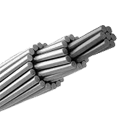
- ACSR (Aluminum Conductor Steel Reinforced): Combines the conductivity of aluminum with the tensile strength of steel, ideal for long spans.
- XLPE Insulated Aluminum Cables: Frequently used in residential and commercial buildings.
Each type meets different electrical, mechanical, and environmental demands.
3. Key Differences Between Residential and Commercial Electrical Needs
Residential and commercial settings differ in their power demands, safety requirements, and environmental conditions.
Residential:
- Lower voltage and current levels
- Fewer circuits, mostly for lighting, outlets, and appliances
- Simpler routing and shorter distances
- Prioritizes aesthetics, insulation safety, and cost-efficiency
Commercial:
- Higher voltage and current due to machinery, HVAC, lighting
- More complex circuits and load balancing
- Requires fire-rated and robust insulation materials
- Involves long cable runs and vertical distribution
These distinctions directly influence conductor sizing, insulation type, and installation methods.
4. Aluminum Conductor Types and Applications
Common Residential Conductors:
- AL SER Cable: For feeders and branch circuits.
- AL THHN: For dry environments and conduit installations.
- AL USE-2: Suitable for underground service entrances.
Common Commercial Conductors:
- AL MC Cable: For large building feeders, offers mechanical protection.
- AL XHHW-2: Heat- and moisture-resistant, ideal for industrial buildings.
- ACSR or AAAC: Used in overhead transmission into commercial hubs.
5. Technical Considerations in Residential Installations
Home electrical systems typically use 100A to 200A panels, requiring aluminum conductors sized from 2 AWG to 4/0 AWG. The flexibility of aluminum helps in attic or crawlspace installations, but connection points must be carefully prepared to prevent oxidation and ensure conductivity.
Voltage Drop: With runs over 50 feet, aluminum conductors must be upsized to compensate.
Temperature Ratings: Most residential cables must be rated for 75°C or 90°C.
Insulation: PVC (THHN, THWN-2) and cross-linked polyethylene (XHHW-2) offer moisture resistance and thermal protection.
6. Technical Considerations in Commercial Installations
In commercial settings, three-phase power systems, backup generators, and HVAC loads drive the need for large conductors (often 500 kcmil or larger). Conductor routing includes risers, conduits, and underground ducts. Conductors often face fluctuating loads and must be heat- and corrosion-resistant.
Fire Codes: Conductors must comply with NEC Article 310 and 725 for commercial use.
Ampacity: Ambient temperature corrections, derating factors, and grouping rules affect allowable current.
Installation: Aluminum’s flexibility supports easier pulls, but aluminum’s lower tensile strength compared to copper requires more secure fastening.
7. Case Study: Aluminum Conductors in a Shopping Mall Project
A new shopping mall in Tabriz, Iran, needed a cost-effective solution for its 160,000 m² site. Engineers selected AAAC conductors for external distribution and AL XHHW-2 cables for internal circuits. The installation handled loads exceeding 2,500 kVA with stable performance.
Key Decisions:
- AAAC overhead feeders reduced cost by 23% over copper.
- AL MC cables enabled fast modular installations.
- Load testing confirmed that voltage drop remained within 3%.
The mall’s power system has operated without fault since 2021, demonstrating aluminum’s long-term reliability in high-demand environments.
8. Data Tables: Material Performance, Cost, and Application
Table 1: Conductivity and Weight Comparison
| Material | Conductivity (% IACS) | Density (g/cm³) | Weight per Meter (4/0 AWG) |
|---|---|---|---|
| Copper | 100 | 8.96 | 1.38 kg |
| Aluminum | 61 | 2.70 | 0.48 kg |
Table 2: Estimated Conductor Costs (2024)
| Conductor Type | Cost per Meter (USD) | Common Use |
| Copper THHN | $3.80 | Residential, small offices |
| AL XHHW-2 | $1.15 | Commercial feeders |
| AL SER | $0.95 | Residential main service |
Table 3: Ampacity in Conduits at 30°C
| Size (AWG/kcmil) | Copper THHN (A) | AL XHHW-2 (A) |
| 2/0 | 175 | 135 |
| 4/0 | 230 | 180 |
| 500 kcmil | 380 | 310 |
Sources for these tables are cited in the References section.
9. Choosing the Right Conductor: Factors to Consider
The decision between residential and commercial aluminum conductors depends on a matrix of factors:
- Current Load: Higher current needs justify thicker insulation and conductor sizes.
- Installation Environment: Moisture, temperature, and mechanical stress must be evaluated.
- Regulatory Compliance: NEC and IEC standards dictate minimum safety practices.
- Budget: Aluminum typically offers 40–60% savings over copper.
- Longevity: With correct termination practices, aluminum conductors last decades.
Always conduct a thorough load calculation and consult with certified engineers before selection.
10. Conclusion
Aluminum conductors offer a flexible, cost-effective, and technically sound solution for both residential and commercial applications. While residential systems prioritize ease of installation and cost, commercial setups demand resilience, capacity, and regulatory compliance. With validated performance and growing market adoption, aluminum conductors remain a dependable choice.



No comment