

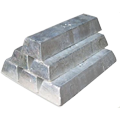
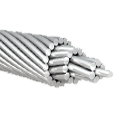
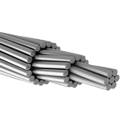
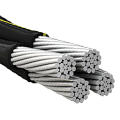
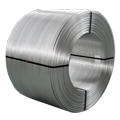
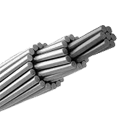


Advances in overhead conductor technology are driving energy transmission to new efficiency and capacity levels. One promising approach is the microalloying of high-purity 1350/1370 aluminum with a small amount of zirconium (Zr) to reinforce strength, thermal stability, and creep resistance—all without sacrificing the excellent electrical conductivity that makes All-Aluminum Conductors (AAC) so desirable.
Background: Understanding Overhead Conductors
Overhead power lines generally come in three widely used formats:
- All-Aluminum Conductors (AAC):
Made from nearly pure aluminum (1350/1370, about 99.5–99.7% Al), AAC offers impressive conductivity (≈61% IACS) but has relatively low tensile strength (~160–170 MPa in the hard-drawn temper). Their low strength-to-weight ratio results in larger sag over long spans, making them best suited for short-span or corrosive environments. - All-Aluminum Alloy Conductors (AAAC):
By substituting pure aluminum with a heat-treatable Al-Mg-Si alloy (commonly AA 6201-T81), AAAC wires deliver much higher tensile strength (~290–310 MPa) and improved sag performance. However, this comes with a cost: their conductivity drops to approximately 52–53% IACS. - Aluminum Conductor Steel-Reinforced (ACSR):
ACSR consists of 1350 aluminum strands wrapped around a high-strength steel core, significantly boosting overall tensile strength. The trade-offs here include increased weight, slightly higher electrical resistance (due to the presence of steel), and the potential for corrosion of the steel core if not properly protected.
Zirconium Alloying: Enhancing 1350/1370 Aluminum
The Role of Zirconium
The key to bridging the strength gap between AAC and its higher-strength counterparts lies in the addition of trace amounts of zirconium (typically 0.1–0.3 wt%). Zirconium works by:
- Forming Al₃Zr Precipitates:
During proper heat treatment, zirconium precipitates as nanometric particles with the L1₂ crystal structure. These particles are coherent with the aluminum matrix, pinning dislocations and stabilizing grain boundaries. - Enhancing Thermal Stability:
Zr “locks in” the strain-hardened microstructure, allowing the aluminum to retain its strength even at elevated temperatures (up to 150–210 °C). In contrast, traditional 1350-H19 aluminum softens dramatically above approximately 75–85 °C. - Maintaining Conductivity:
Although Zr in solid solution would increase resistivity slightly, proper aging treatments can precipitate out most of the Zr as Al₃Zr. This allows the processed alloy to nearly recover full conductivity—often reaching roughly 60% IACS.
Experimental Findings on Al-Zr Enhanced Aluminum
Research and experimental studies from labs around the world have consistently shown that:
- Heat Treatment Is Critical:
Studies demonstrate that aging treatments (such as 385 °C for several days) are vital. This controlled process significantly reduces resistivity (for example, from ~32.8 nΩ·m to ~28.6 nΩ·m) while stabilizing hardness and strength. - Enhanced Strength and Creep Resistance:
With fine nano-sized Al₃Zr precipitates, aluminum alloys can maintain or even exceed the tensile strength of traditional AAC at elevated temperatures. In some experiments, composite wires incorporating Al-Zr reached ultimate tensile strengths above 360 MPa and performed reliably in long-term high-temperature environments. - Opportunities with Combined Alloying:
Additional elements such as scandium, vanadium, or niobium may be paired with zirconium to further enhance strength. However, Zr alone often provides the best balance between effectiveness and cost for improving 1xxx-series aluminum alloys. - Advanced Processing Techniques:
Some studies using severe plastic deformation methods (such as Equal-Channel Angular Pressing, ECAP) have produced ultrafine-grained composite wires. These advanced techniques demonstrate the potential for Zr-alloyed aluminum to achieve performance levels similar to or exceeding AAAC.
Industrial Applications and Field Trials
Zr-modified aluminum conductors are no longer just a laboratory concept—they are currently being deployed in various real-world applications. Some key examples include:
- Thermal-Resistant Aluminum Conductor Steel-Reinforced (TACSR):
In TACSR designs, outer strands of Zr-doped aluminum (often marketed under trade names such as TAL or ZTAL) surround a steel core. The result is a conductor that can operate continuously at temperatures as high as 150–210 °C, maintaining strength where conventional aluminum would anneal and sag. - High-Temperature Sagging Conductors (ACSS/ACSS-TW):
Certain installations replace the traditional 1350-O aluminum with Zr-alloyed aluminum to reduce creep and elongation under high-temperature, high-tension conditions. This yields lower sag over time and improved line clearance. - Aluminum Conductor Composite Reinforced (ACCR):
With a non-magnetic, ceramic-fiber reinforced core and outer Al-Zr strands, ACCR conductors are able to carry significantly more current while minimizing sag and energy losses. Their performance benefits include excellent thermal stability and corrosion resistance. - AAAC UHC (Ultra High Conductivity Alloy):
Products such as AAAC UHC use a proprietary Zr-containing aluminum alloy to not only boost conductivity (achieving up to ~58% IACS) but also maintain high tensile strength comparable to AAAC. Field installations around the globe report reduced line losses and improved performance in congested transmission corridors.
Performance Comparison: Zr-AAC vs. AAAC and ACSR
When comparing Zr-modified AAC with traditional conductors, several performance metrics stand out:
- Tensile Strength:
Zr-AAC typically shows similar room-temperature tensile strength to 1350-H19 (~160 MPa), but crucially retains strength at higher temperatures. Under stress and elevated temperature, Zr-AAC experiences minimal strength loss compared to conventional aluminum. - Sag and Thermal Expansion:
While the density and thermal expansion characteristics remain similar to standard aluminum, Zr-AAC’s ability to operate at higher temperatures means it can safely handle more current with reduced sag. Some field studies indicate that ZTAL-based conductors can carry up to 1.5× the ampacity of a comparable ACSR conductor under the same sag constraints. - Electrical Conductivity:
With proper processing, Zr-AAC recovers nearly full conductivity (≈60% IACS). This is considerably higher than the AAAC’s typical 52–53% IACS, translating into lower resistance and reduced energy losses over long distances. - Long-Term Stability and Creep Resistance:
High-temperature endurance is a significant benefit for Zr-AAC. Long-term tests show that while traditional AAC may suffer extensive creep and strength loss, Zr-AAC maintains its mechanical integrity and resists permanent elongation even under cyclic loads.
Advantages and Disadvantages of Zr-Modified AAC
Advantages
- High Conductivity with Improved Strength:
Zr-treated aluminum maintains the excellent conductivity of EC-grade aluminum while boosting strength considerably after proper aging. This combination is ideal for high-efficiency, high-capacity power lines. - Superior High-Temperature Operation:
Zr-AAC can operate continuously at 150–210 °C, making it especially attractive for applications in hot climates or in situations where emergency overloading might occur. - Reduced Sag and Minimal Creep:
Enhanced thermal stability results in less sag under load and lower long-term creep, reducing maintenance costs and extending the lifespan of transmission lines. - Corrosion Resistance and Lightweight Structure:
As an all-aluminum conductor, Zr-AAC retains outstanding corrosion resistance and is lighter than its steel-reinforced counterparts, simplifying installation and reducing tower load. - Compatibility and Cost-Effectiveness:
Zr-modified AAC can typically be installed using existing hardware and standards (e.g., ASTM B941, IEC 62004), and its improved efficiency—resulting in lower line losses—can lead to significant overall cost savings.
Disadvantages and Challenges
- Limited Absolute Strength:
Though Zr improves the strength of pure aluminum, Zr-AAC may still fall short of the ultimate tensile strength offered by ACSR in extremely demanding applications, such as very long spans or heavy ice load regions. - Manufacturing Complexity:
Achieving the optimal benefits from Zr alloying demands precise control of casting, drawing, and heat-treatment processes. An extra aging step is typically required, which can slow production if not managed efficiently. - Material Cost:
Zirconium is an expensive alloying element. Even though the addition is minor (around 0.2%), it does slightly increase the material cost when compared to traditional AAC or AAAC conductors. - Potential Fatigue and Vibration Issues:
Some studies suggest that precipitation-hardened alloys may exhibit different vibration characteristics. While not a major issue, proper damping mechanisms are still necessary for windy or aeolian-sensitive spans.
Conclusion
The incorporation of zirconium into 1350/1370 aluminum marks a significant advancement in overhead conductor technology. This microalloying approach strengthens the conductor, maintains high electrical conductivity, and greatly improves high-temperature performance and creep resistance. With successful experimental validations and commercial applications across the globe, Zr-modified AAC provides a compelling alternative to traditional conductors in many modern power networks. While challenges related to manufacturing and absolute strength in extreme cases remain, the overall benefits—enhanced efficiency, durability, and potential lifecycle cost savings—make Zr-AAC a promising solution for the future of power transmission.

No comment