




COA / Mill Test Certificate (MTC) for Aluminum Wire Rod & Aluminum Wire: What Must Be Included (International, Audit-Ready)
A complete, practical standard for requesting and verifying a defensible COA/MTC for aluminum wire rod and aluminum wire — built for global purchasing, QA/QC, and production. Includes document levels (2.1/2.2/3.1/3.2), mandatory identification, test item checklists (chemistry, tensile/elongation, conductivity/%IACS), traceability mapping, IQC receiving rules, and copy-ready PO/RFQ clauses.
If you only do one thing: require Heat/Cast/Batch + unit-ID mapping + methods/units. This prevents most disputes in aluminum wire rod procurement.
1) Choose document level
- General purchases: 2.2 + mapping + methods/units
- Critical production / export: 3.1 (lot-specific) as default
- High-claim projects: 3.2 with agreed third party
2) Mandatory fields
- Alloy/grade, size & tolerance, condition/temper, reference spec
- Heat/Cast/Batch/Lot + production date + issue date + certificate number
- Unit IDs (coil/spool/drum) + mapping list
3) Core tests (risk-based)
- Electrical grade: %IACS + temp reference (often 20°C) + method
- Drawability: UTS + elongation + method
- Downtime reduction: diameter/ovality + surface cleanliness (wipe test optional)
4) Copy-ready PO sentence
COA/MTC must be traceable to delivered material via Heat/Cast/Batch and unit-ID mapping.
Missing mapping or missing methods/units is basis for HOLD/QUARANTINE until corrected.In metals supply chains, the name on the paper matters less than the evidence inside it. A defensible certificate is one that is traceable, lot-specific, and auditable.
In practice, COA (Certificate of Analysis), TC (Test Certificate), and MTC (Mill Test Certificate) are sometimes used interchangeably. Operationally, what matters is whether the document provides traceable, shipment-specific evidence for the material you actually received.
What a weak certificate looks like
- Only “Complies with standard” (no numbers, no methods)
- Values not tied to delivered lot (typical values, not shipment-specific)
- No Heat/Cast/Batch, no unit mapping, no certificate number
What an audit-ready MTC includes
- Identity: product, alloy/grade, size, condition/temper, reference spec
- Results: agreed chemistry + mechanical/electrical/surface KPIs
- Traceability: Heat/Cast/Batch + unit IDs + mapping
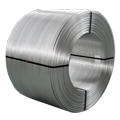
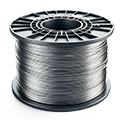
Aluminum wire rod is typically upstream rod coil used for drawing. Aluminum wire is the drawn product on spools/coils/drums. The certificate must state clearly which product is covered and list the correct unit IDs accordingly.
Your PO is the control point. Make it unambiguous: document level, item list, methods, units, and mapping.
Buyers often specify inspection document levels such as 2.1 / 2.2 / 3.1 / 3.2. The key is to state the required level, required items, methods/units, and whether results must be lot-specific.
Choosing document level (industrial guidance)
| Type | Assurance | Best for | PO must state |
|---|---|---|---|
| 2.1 | Declaration of compliance (often without test numbers) | Low risk, non-critical internal use | Not suitable when downtime/claims are expensive |
| 2.2 | Test report (may be typical unless you enforce linkage) | General purchasing | Require Heat/Batch + mapping + methods/units |
| 3.1 | Specific inspection (lot-specific) + authorized QC endorsement | Critical lines, export contracts, tight QA | Write acceptance limits + sampling + lot-specific |
| 3.2 | 3.1 + third-party/agreed inspector | Utilities, mega projects, strict claims | Name inspector/agency in contract |
If these are missing, your certificate is not auditable and not defensible.
Minimum required items (buyer baseline)
| Category | Must include | Example | Why it matters |
|---|---|---|---|
| Product identity | Product name + alloy/grade + reference spec | Aluminum Wire Rod — AA 1350 — Customer Spec / ASTM / IEC | Prevents wrong grade / wrong product disputes |
| Size | Nominal size + tolerance (+ ovality if required) | 9.50 mm ± 0.__ mm | Impacts drawing stability and scrap |
| Condition | Temper/condition (as applicable) | As ordered | Mechanical behavior changes with condition |
| Traceability | Heat/Cast + Batch/Lot | Heat: H____ Batch: B____ | Core for claims and root-cause analysis |
| Unit IDs | Coil/Spool/Drum IDs + quantity | Coil IDs: C01…C18 | Enables correct sampling + unit control |
| Weights & dates | Net weight + production date + issue date | Net ___ kg • Prod: YYYY-MM-DD | FIFO, storage risk, doc validity |
| Document control | Certificate number + revision | MTC No. EMK-____ Rev __ | Prevents re-use & supports audits |
| Methods & units | Units + method/standard per KPI | mm, MPa, %, %IACS @20°C | Without units/methods, results are weak |
| Authorization | Authorized QC name + signature | QC Manager / Authorized Inspector | Accountability + enforceability |
Choose test items based on process risk and failure cost. Make them enforceable with methods, units, and (for electrical) temperature reference.
Chemistry (composition & impurities)
- Report required elements & key impurities per ordered grade (wt%)
- State analysis method and sampling basis
- Link chemistry to Heat/Cast/Batch
Mechanical (break control & drawability)
- UTS, yield (if required), elongation (%)
- State sample size, specimen count (n), and method
- If joints matter: joint/weld reporting + marking requirement
Electrical (for conductor-grade)
- Conductivity: %IACS + temperature reference (commonly 20°C)
- Resistivity (if required): unit + method
- Specimen condition (size/temper) stated
Dimensional & surface (downtime prevention)
- Diameter min/max/avg and ovality (if required) + method
- Surface cleanliness acceptance defined in PO
- Optional: wipe test (white cloth) as Pass/Fail KPI
Traceability is the backbone of industrial QC. Without unit-ID mapping, claims become slow and difficult to prove.
Minimum traceability (recommended)
- Heat No. and/or Cast No. + Batch/Lot No.
- Unit IDs + quantity shipped
- Mapping list: Unit ID → Heat/Batch/Lot
Packaging details worth capturing
- Packaging type + unit net weight + protection/wrapping
- Storage guidance (dry area; avoid moisture/salt exposure)
- Damage evidence rules (photos: overview + label + close-up)
Add to certificate: “Test specimens were taken from unit ID(s): ____.”
This template forces the most commonly missing elements: methods, units, and traceability mapping.
COA / MTC Template
COA / MTC — Aluminum Wire Rod / Aluminum Wire
Certificate No.: ____________   Revision: ____
Supplier: ____________________  Plant/Line: ____________________
Customer: ____________________  PO/Contract No.: _______________
Reference Standard/Spec: ____________________ (ASTM/IEC/EN/Customer Spec)
Product: ( ) Aluminum Wire Rod (Coil)   ( ) Aluminum Wire (Spool/Coil/Drum)

IDENTIFICATION (Mandatory):
Alloy/Grade: ____________   Temper/Condition: ____________
Nominal Size: ____________ mm   Tolerance: ____________   Ovality max (if req.): ____________
Heat No.: ____________  Cast No. (if any): ____________  Batch/Lot: ____________
Production Date: ____-__-__   Certificate Issue Date: ____-__-__

PACKAGING & TRACEABILITY (Mandatory):
Packaging type: ( ) Coil ( ) Spool ( ) Drum
Units in shipment: ____   Unit net weight (avg): ____ kg   Total net weight: ____ kg
Mapping (Unit ID → Heat/Batch/Lot):
- Unit ID ____________ → Heat ____________ / Batch ____________
- Unit ID ____________ → Heat ____________ / Batch ____________
(attach list if many units)

TEST RESULTS (state if LOT-SPECIFIC is required by PO):
A) Chemical composition (wt%) — Method/Std: ____________   Heat/Batch: ____________
   Elements required by spec: ____________________________
   Results: _____________________________________________

B) Mechanical — Method/Std: ____________   Sample size: ____ mm   n=__
   Tensile Strength (UTS): ____ MPa
   Yield (if required): ____ MPa
   Elongation: ____ %

C) Electrical (if required) — Method/Std: ____________
   Temperature reference: ____ °C
   Conductivity: ____ %IACS
   Resistivity (if required): ____ (unit: Ω·mm²/m or nΩ·m)

D) Dimensional & Surface (if required) — Method: ____________
   Diameter min/max/avg: ____ / ____ / ____ mm   Ovality: ____
   Surface cleanliness: ( ) Pass ( ) Fail   Wipe test (if req.): ( ) Pass ( ) Fail

STATEMENT OF CONFORMITY:
The supplied material conforms to the above specification and the test results are as stated.
This certificate is traceable to the delivered material via Heat/Batch and Unit ID mapping.

Issued by (Authorized QC / Inspector): __________________________
Title/Department: __________________ Signature: _______________ Date: ____-__-__Catch documentation and mapping issues at receiving — before the material reaches production.
Document check (1–2 minutes)
Match to labels & packaging
Copy and paste these clauses into your PO/RFQ to standardize certificate quality across suppliers.
Copy-ready PO/RFQ wording
1) COA/MTC Requirement:
   Supplier shall provide a COA/MTC with each shipment of aluminum wire rod / aluminum wire.
   The document must be traceable to the delivered material.

2) Document Type / Level:
   Required inspection document type: [2.2 / 3.1 / 3.2].
   For 3.1/3.2: test results shall be LOT-SPECIFIC and related to the delivered Heat/Cast/Batch/Lot.

3) Mandatory Identification:
   Product (wire rod/wire), Alloy/Grade, Size & tolerance, Condition/Temper (if applicable),
   Reference Standard/Specification, Net weight, Heat/Cast No., Batch/Lot No.,
   Production date, Issue date, Certificate number, and Packaging Unit IDs (Coil/Spool/Drum Nos.).

4) Mandatory Traceability Mapping:
   COA/MTC must include mapping of each delivered unit ID (Coil/Spool/Drum No.) to Heat/Batch/Lot.

5) Mandatory Test Items (as applicable):
   - Chemical composition (wt%) — include method/standard and Heat/Batch reference
   - Mechanical: UTS, Elongation (and Yield if required) — include method/standard, sample details, n
   - Electrical (for electrical grade): Conductivity (%IACS) and/or resistivity — include temperature reference and method
   - Dimensional: diameter min/max/avg, ovality (if required) — include measurement method
   - Surface cleanliness (if required): wipe test Pass/Fail and acceptance criteria

6) Acceptance / Hold:
   Missing Heat/Batch traceability, missing mapping, missing methods/units, or nonconforming document type
   shall be basis for HOLD/QUARANTINE until corrected documentation is provided.

7) Authorization:
COA/MTC must be signed by Supplier’s authorized QC/inspection representative and include issue date.Select a realistic “minimum test pack” that matches your risk. The goal is stability and evidence — not paperwork volume.
Industrial test pack matrix
| Application | Primary risk | Must-have (recommended) | Often optional |
|---|---|---|---|
| Electrical conductors (EC/1350-type) | Conductivity loss, breaks, contamination | %IACS @ temp reference + chemistry (key impurities) + diameter/tolerance + surface cleanliness + mapping | Extended mechanical, advanced surface scan, 3.2 |
| Alloy conductors (6201/6xxx-type) | Strength/ductility balance, stranding issues | Chemistry + UTS/elongation + dimensional + mapping + doc control | Resistivity, bend/wrap/torsion, 3.2 |
| Wire drawing into fine wire | Die wear, breaks, surface particles | Diameter/ovality + surface cleanliness (wipe) + basic tensile/elongation + mapping | Full chemistry listing, electrical pack, metallography |
Define “lot-specific” in your PO so suppliers cannot deliver “typical values” and still claim compliance.
Copy-ready definition
- Lot-specific means results are from the same Heat/Cast/Batch as delivered material.
- Certificate lists Heat/Cast/Batch and shipped unit IDs under that lot.
- For critical KPIs: specimens taken from identified unit ID(s).
Sampling logic (risk-based)
- High failure cost → 3.1 per shipment + inbound verification cadence
- Moderate cost → 2.2 with strict mapping + periodic KPI verification
- Low cost → minimum fields + audits
Simple controls make certificates verifiable without slowing trade.
Low-effort controls
- Unique certificate number + issue date + revision control
- Authorized QC name + title
- Consistent template/units across shipments
- Mapping list attached (unit ID → Heat/Batch)
Verification options
- QR/verification code linked to supplier verification page
- Certificate PDF from official supplier domain/email
- Third-party endorsement for high-risk projects (3.2)
- Random certificate audits as supplier KPI
Treat documentation as part of process control. A short onboarding routine reduces disputes and stabilizes quality.
5-step onboarding routine
- Send the COA/MTC template; require a filled sample before first shipment.
- Align units/methods (mm, MPa, %, %IACS @ temperature reference).
- Agree traceability: Heat/Cast/Batch + mandatory mapping.
- Define minimum test pack by application (use the matrix).
- Run 1–2 deliveries with strict IQC, then stabilize into audits.
Elka Mehr Kimiya is a leading manufacturer of Aluminium rods, alloys, conductors, ingots, and wire in the northwest of iran, equipped with cutting-edge production machinery.
Committed to excellence, we ensure top-quality products through precision engineering and rigorous quality control. Our focus extends beyond production; we prioritize understanding customer needs, delivering tailored products, and fostering long-term partnerships based on trust and mutual success.
With a dedicated team and a commitment to innovation, we offer standard and custom products, guaranteeing customer satisfaction. Experience the excellence of Elka Mehr Kimiya, where quality meets precision.
Product portfolio
- Aluminium rods
- Alloys
- Conductors
- Ingots
- Wire
How we work
- Precision engineering & rigorous QC
- Standard and custom products
- Tailored outputs based on customer needs
- Long-term partnerships & reliable delivery


No comment