



Table of Contents
- Introduction
- The Transition from Copper to Aluminium in Electrical Conductors
- Historical Context and Industry Evolution
- Why Aluminium Became a Viable Alternative
- Aluminium’s Unique Properties for Electrical Conductors
- Lightweight Strength: A Game-Changer for Transmission Systems
- Corrosion Resistance for Longevity in Harsh Environments
- Electrical Conductivity: Balancing Performance and Affordability
- Types of Aluminium Conductors and Their Applications
- Aluminium Conductor Steel Reinforced (ACSR)
- All Aluminium Alloy Conductor (AAAC)
- Aluminium Conductor Composite Core (ACCC)
- High-Strength Aluminium Alloys for Specialized Use
- The Manufacturing Process of Aluminium Conductors
- Bauxite to Aluminium: The Refining Process
- Casting, Rolling, and Extrusion Techniques in Conductor Production
- Quality Control Measures in Modern Manufacturing
- Applications Across Power Systems
- High-Voltage Transmission Lines: The Backbone of National Grids
- Renewable Energy Systems: A Sustainable Future Powered by Aluminium
- Urban and Regional Power Distribution Networks
- Case Studies and Real-World Examples
- India’s Electrification Drive with Aluminium Conductors
- China’s Ultra-High-Voltage Transmission Network
- Europe’s Offshore Wind Farms: Aluminium in Action
- Challenges and Innovations
- Addressing Aluminium’s Mechanical and Conductive Limitations
- Overcoming Corrosion Issues Through Advanced Coatings
- The Rise of Composite and Alloy-Based Aluminium Conductors
- Future Trends and Developments in Aluminium Conductors
- Nano-Engineering: The Next Frontier in Conductor Technology
- Aluminium’s Role in Decarbonized Energy Systems
- Global Predictions for Aluminium in Electrical Applications
- Conclusion
- References
1. Introduction
Electricity flows through the veins of modern civilization, fueling the technologies, comforts, and industries that define contemporary life. Behind this seamless flow lies a network of conductors—unsung heroes of the electrical age—that bridge the gap between energy generation and consumption. Among these materials, aluminium has risen as a transformative force, reshaping the landscape of power transmission and distribution.
In this article, we delve deep into aluminium’s journey as an electrical conductor, exploring its properties, applications, challenges, and future. From the towering transmission lines that crisscross continents to the subterranean cables powering megacities, aluminium plays a vital role in ensuring the reliability, efficiency, and sustainability of energy systems. Through real-world examples, cutting-edge research, and case studies, we illustrate how this lightweight metal has become indispensable in addressing the energy demands of a growing global population.
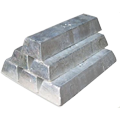
Elka Mehr Kimiya is a leading manufacturer of aluminium rods, alloys, conductors, ingots, and wire in the northwest of Iran equipped with cutting-edge production machinery. Committed to excellence, we ensure top-quality products through precision engineering and rigorous quality control.
2. The Transition from Copper to Aluminium in Electrical Conductors
Historical Context and Industry Evolution
In the early days of electricity distribution, copper was the undisputed material of choice. Its high conductivity and mechanical strength made it ideal for carrying electrical currents over short and long distances alike. However, as energy demand soared, particularly in the mid-20th century, the limitations of copper—namely its high cost and substantial weight—began to surface. This marked the dawn of aluminium’s role in the industry.
Initially met with skepticism, aluminium’s adoption in electrical conductors was spurred by its economic and practical advantages. Aluminium was not only cheaper than copper but also significantly lighter, making it easier to transport and install over long distances. As nations embarked on ambitious electrification projects, aluminium emerged as a solution to the logistical and financial challenges posed by copper.
Why Aluminium Became a Viable Alternative
Aluminium’s ascent in the realm of conductors wasn’t just a matter of economics; it was a triumph of innovation and adaptability. Advances in alloying and manufacturing techniques addressed initial concerns about its lower conductivity and mechanical strength compared to copper. For example, by reinforcing aluminium conductors with steel cores or integrating composite materials, engineers were able to produce cables that could rival—and often outperform—their copper counterparts in many applications.
Today, aluminium is a mainstay in power transmission, accounting for the majority of overhead conductor installations worldwide. Its success underscores the importance of adaptability in material science, demonstrating how a metal initially seen as inferior can rise to prominence through research, innovation, and practical application.
3. Aluminium’s Unique Properties for Electrical Conductors
Lightweight Strength: A Game-Changer for Transmission Systems
Imagine trying to string a dense, heavy cable between two mountaintops—it’s a logistical nightmare. Aluminium’s lightweight nature alleviates this challenge, making it an ideal choice for long-span transmission lines. Weighing approximately one-third as much as copper, aluminium reduces the load on towers and support structures, enabling cost-effective installations even in challenging terrains.
This property is particularly advantageous in high-voltage transmission systems, where conductors must span vast distances without sagging or compromising structural integrity. Engineers can design longer spans between pylons, reducing the overall number of towers required and significantly lowering infrastructure costs.
Corrosion Resistance for Longevity in Harsh Environments
Aluminium’s natural ability to resist corrosion is another factor that enhances its appeal. When exposed to air, aluminium forms a thin, protective oxide layer that shields it from further degradation. This characteristic is especially valuable in environments where conductors are exposed to moisture, salt, or industrial pollutants.
For instance, coastal regions and industrial zones often subject transmission lines to harsh environmental conditions. Aluminium conductors, with their innate resistance to corrosion, provide a durable and low-maintenance solution, ensuring reliable performance over decades.
Electrical Conductivity: Balancing Performance and Affordability
Although aluminium’s conductivity is lower than copper’s on a per-volume basis (61% of copper’s), its weight-adjusted conductivity is significantly higher. This means that for applications where weight is a critical factor, aluminium often proves more efficient than copper. In addition, its lower cost per unit makes it a practical choice for large-scale installations, where economic considerations are paramount.
4. Types of Aluminium Conductors and Their Applications
Aluminium Conductor Steel Reinforced (ACSR)
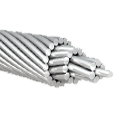
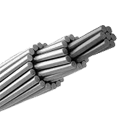
ACSR conductors are a staple in the power industry, combining aluminium’s lightweight conductivity with the tensile strength of a steel core. This hybrid construction allows ACSR cables to handle high mechanical loads, making them ideal for long-span transmission lines and regions prone to severe weather conditions.
All Aluminium Alloy Conductor (AAAC)
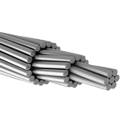
AAAC conductors are crafted entirely from aluminium alloys, offering enhanced strength, corrosion resistance, and conductivity compared to traditional aluminium conductors. These properties make AAAC particularly well-suited for urban and suburban power distribution networks, where compact spaces and environmental exposure require reliable, high-performance materials.
One of the standout features of AAAC is its superior corrosion resistance, which reduces the need for frequent maintenance. This property makes it a preferred choice in coastal and industrial regions, where exposure to salt or chemical pollutants can significantly degrade other materials. Additionally, AAAC’s excellent strength-to-weight ratio facilitates installation in challenging terrains, such as hilly or densely populated areas.
Aluminium Conductor Composite Core (ACCC)
In recent years, ACCC conductors have emerged as a cutting-edge solution for high-voltage transmission lines. These conductors feature a composite core made from advanced materials such as carbon fiber, surrounded by a layer of aluminium strands. This design enhances tensile strength and reduces sag, enabling ACCC conductors to carry more current over longer distances compared to traditional designs.
For instance, ACCC conductors have been deployed in regions with extreme climatic conditions, such as deserts and alpine environments, where thermal expansion and contraction can challenge conventional materials. By maintaining their structural integrity under such stresses, ACCC conductors play a critical role in modernizing and stabilizing power grids.
High-Strength Aluminium Alloys for Specialized Use
High-strength aluminium alloys, incorporating elements like magnesium, silicon, and zirconium, are another innovation in the conductor industry. These alloys are engineered to provide exceptional mechanical properties, such as resistance to deformation and enhanced thermal stability, making them ideal for specialized applications such as submarine power cables and renewable energy grids.
For example, offshore wind farms in Europe rely heavily on high-strength aluminium alloy cables to transmit electricity from turbines to mainland grids. These conductors must withstand the mechanical stresses of underwater installation and operation while maintaining excellent conductivity and durability.
5. The Manufacturing Process of Aluminium Conductors
Bauxite to Aluminium: The Refining Process
The journey of aluminium from raw ore to finished conductor begins with bauxite mining. Bauxite, the primary ore of aluminium, is rich in aluminium oxide, which is extracted and refined into alumina through the Bayer process. Alumina is then subjected to the Hall-Héroult process, where it is electrolytically reduced into pure aluminium. This step is energy-intensive, with manufacturers continuously innovating to make the process more efficient and environmentally friendly.
Casting, Rolling, and Extrusion Techniques in Conductor Production
Once pure aluminium is obtained, it undergoes a series of transformations to become conductor-grade material. Continuous casting and rolling processes are used to produce high-quality aluminium rods, which are then drawn into wires of various diameters. Extrusion techniques allow for precise shaping of conductor strands, ensuring uniformity and optimal performance.
Advanced manufacturing facilities, like those at Elka Mehr Kimiya, leverage state-of-the-art machinery to produce aluminium conductors with exceptional quality. These processes are complemented by rigorous testing to ensure that the finished products meet industry standards for conductivity, tensile strength, and corrosion resistance.
Quality Control Measures in Modern Manufacturing
Quality assurance is a cornerstone of aluminium conductor production. Each batch undergoes comprehensive testing to evaluate its mechanical, electrical, and thermal properties. Parameters such as resistivity, elongation, and surface finish are closely monitored to ensure that the conductors can perform reliably under real-world conditions. Innovations like real-time process monitoring and automated defect detection further enhance the quality and consistency of aluminium conductors.
6. Applications Across Power Systems
High-Voltage Transmission Lines: The Backbone of National Grids
High-voltage transmission lines are the lifelines of national power grids, connecting power generation facilities to urban centers, industries, and remote regions. Aluminium conductors dominate this domain due to their ability to carry large currents over long distances with minimal infrastructure costs.
For example, in the United States, aluminium conductors have been instrumental in expanding the power grid to meet the demands of a growing population. Similarly, in countries like China and India, aluminium has enabled the development of ultra-high-voltage (UHV) transmission systems, which are essential for transporting electricity across vast and geographically diverse landscapes.
Renewable Energy Systems: A Sustainable Future Powered by Aluminium
As the world shifts toward renewable energy, aluminium conductors are playing a pivotal role in the integration of solar, wind, and hydropower into national grids. The lightweight and cost-effective nature of aluminium make it ideal for renewable energy projects, where economic and logistical efficiency is paramount.
Offshore wind farms, for instance, rely heavily on aluminium cables to transmit electricity from turbines to onshore substations. These cables must withstand harsh marine environments while maintaining high conductivity and durability. Aluminium’s inherent corrosion resistance and flexibility make it an excellent choice for such applications, ensuring the reliable transfer of green energy.
Urban and Regional Power Distribution Networks
In densely populated urban areas, power distribution networks face unique challenges, including limited space, high demand, and environmental constraints. Aluminium conductors address these challenges by offering a lightweight and corrosion-resistant solution that can be easily installed in compact spaces. From underground cables in megacities to overhead lines in suburban areas, aluminium ensures efficient and reliable power distribution.
7. Case Studies and Real-World Examples
India’s Electrification Drive with Aluminium Conductors
India’s rural electrification program, one of the largest in the world, has relied heavily on aluminium conductors to extend power lines to remote villages. Aluminium’s affordability and lightweight properties have made it possible to cover vast distances with minimal infrastructure, bringing electricity to millions of households and transforming lives in the process.
China’s Ultra-High-Voltage Transmission Network
China’s rapid urbanization and industrialization have necessitated the development of a robust UHV transmission network. Aluminium conductors have been at the forefront of this effort, enabling the efficient transfer of electricity from hydropower plants in the west to industrial hubs in the east. By reducing costs and increasing transmission capacity, aluminium has become a cornerstone of China’s energy strategy.
Europe’s Offshore Wind Farms: Aluminium in Action
Europe’s commitment to renewable energy has led to the widespread adoption of offshore wind farms, which generate clean electricity far from shore. Aluminium conductors play a critical role in these projects, ensuring the efficient transmission of electricity over long distances while withstanding the rigors of marine environments.
8. Challenges and Innovations
Addressing Aluminium’s Mechanical and Conductive Limitations
While aluminium offers numerous advantages, its mechanical strength and conductivity are lower than copper’s. However, innovations in alloying and conductor design have largely mitigated these drawbacks. Reinforced cores, composite materials, and advanced coatings have enhanced aluminium’s performance, making it suitable for even the most demanding applications.
Overcoming Corrosion Issues Through Advanced Coatings
Corrosion, while not a severe limitation for aluminium due to its natural oxide layer, remains a concern in highly aggressive environments such as coastal areas and industrial zones. To address this, manufacturers have developed advanced coatings and treatments that further enhance aluminium’s resistance to environmental degradation. These include polymer-based coatings, anodizing techniques, and hybrid materials that provide an additional layer of protection against moisture, salt, and chemical pollutants.
For example, aluminium conductors used in offshore wind farms are often coated with specialized anti-corrosion materials. This ensures that they maintain their structural integrity and conductivity over decades of exposure to saltwater, wind, and temperature fluctuations. These innovations reduce maintenance costs and improve the reliability of power systems, making aluminium an even more attractive choice for such challenging applications.
The Rise of Composite and Alloy-Based Aluminium Conductors
Composite materials and high-strength alloys represent the cutting edge of aluminium conductor technology. By combining aluminium with advanced materials like carbon fiber or integrating alloying elements like magnesium and silicon, manufacturers have created conductors that offer exceptional performance in terms of strength, conductivity, and durability.
These innovations have opened up new possibilities for aluminium conductors, including applications in ultra-high-voltage transmission systems and renewable energy grids. As energy demands grow and infrastructure becomes more complex, the importance of such advanced materials will only continue to increase.
9. Future Trends and Developments in Aluminium Conductors
Nano-Engineering: The Next Frontier in Conductor Technology
One of the most exciting developments in the field of electrical conductors is the application of nano-engineering to aluminium. By manipulating materials at the atomic level, researchers are working to create aluminium conductors with significantly enhanced properties, such as higher conductivity, greater thermal stability, and improved mechanical strength.
For instance, nano-structured aluminium alloys are being developed to overcome the traditional trade-offs between conductivity and strength. These materials could revolutionize power transmission by enabling lighter, more efficient cables that can carry higher currents over longer distances with minimal energy loss.
Aluminium’s Role in Decarbonized Energy Systems
As the world transitions toward low-carbon energy systems, aluminium is poised to play a critical role. Its lightweight, recyclable nature aligns perfectly with the goals of sustainability and efficiency. Aluminium conductors are already widely used in renewable energy systems, and their importance is likely to grow as nations invest in cleaner, greener power infrastructure.
Moreover, the use of recycled aluminium in conductor production is gaining traction, further reducing the environmental impact of the manufacturing process. This trend not only supports global decarbonization efforts but also strengthens the economic case for aluminium as a sustainable material.
Global Predictions for Aluminium in Electrical Applications
The global market for aluminium conductors is expected to grow significantly in the coming decades, driven by rising energy demand, infrastructure development, and the transition to renewable energy. Regions like Asia-Pacific, the Middle East, and Africa are projected to lead this growth, as governments in these areas invest heavily in electrification and modernization of power grids.
In addition, technological advancements in conductor design and manufacturing are likely to further enhance the competitiveness of aluminium, solidifying its position as a cornerstone of modern electrical systems.
10. Conclusion
Aluminium has come a long way from being a misunderstood alternative to copper to becoming a dominant material in electrical conductors. Its unique combination of properties—lightweight, cost-effective, corrosion-resistant, and recyclable—makes it an indispensable component of modern power systems. From high-voltage transmission lines to renewable energy grids, aluminium conductors are powering the world in ways that are efficient, sustainable, and forward-looking.
As we look to the future, the role of aluminium in addressing global energy challenges will only continue to grow. Innovations in materials science, manufacturing, and system design promise to unlock even greater potential for this remarkable metal, ensuring that it remains at the forefront of electrical engineering for generations to come.
References
- Ashby, M. F., & Jones, D. R. H. Engineering Materials 1: An Introduction to Properties, Applications and Design. Elsevier, 2018.
- International Aluminium Institute. The Aluminium Industry’s Sustainability Roadmap. London: IAI, 2021.
- Glover, J., Sarma, M. S., & Overbye, T. J. Power System Analysis and Design. Cengage Learning, 2020.
- IEEE Standards Association. Aluminium Conductors and Related Materials – Technical Standards and Applications. IEEE, 2019.
- European Wind Energy Association. The Role of Aluminium in Offshore Wind Energy Systems. Brussels: EWEA, 2022.

No comment