





Table of Contents
- Introduction
- Understanding Lifecycle Cost Analysis
- Initial Investment: A Cost Comparison
- Maintenance and Reliability: The Long-Term Outlook
- Salvage Value and End-of-Life Considerations
- Case Studies: Real-World Applications and Results
- Environmental Impact and Sustainability
- Conclusion
- References
Introduction
In industries that rely on electrical infrastructure, choosing the right conductor material is more than just a matter of technical specifications; it’s a decision with significant long-term financial implications. The lifecycle costs associated with materials such as aluminum, copper, and steel vary greatly, affecting everything from initial investment to maintenance requirements and salvage value at the end of their useful life. By evaluating the full cost of ownership, companies and engineers can make better-informed choices that align with their economic and operational goals.
This article compares the lifecycle costs of aluminum conductors with other common materials, focusing on key factors like initial investment, maintenance costs, and salvage value over time. By using real-world case studies, industry data, and a clear cost-of-ownership framework, we aim to provide a comprehensive understanding of how these materials perform over their lifespan.
Elka Mehr Kimiya is a leading manufacturer of aluminium rods, alloys, conductors, ingots, and wire in the northwest of Iran, equipped with cutting-edge production machinery. Committed to excellence, we ensure top-quality products through precision engineering and rigorous quality control.
Understanding Lifecycle Cost Analysis
Lifecycle cost analysis (LCA) is a method used to evaluate the total cost of ownership of a product or system over its entire lifespan. It’s a tool that helps engineers, procurement officers, and decision-makers weigh up the initial purchase cost against ongoing maintenance expenses, performance, and the residual value of the asset at the end of its life.
In the case of electrical conductors, the lifecycle cost includes several components:
- Initial Investment: The upfront cost of purchasing and installing the material.
- Maintenance: Costs related to upkeep, repairs, and inspections.
- Energy Efficiency: The impact of the material on energy losses, which can affect operating costs.
- Salvage Value: The residual value of the material when it reaches the end of its functional life, factoring in scrap value and recycling opportunities.
For most electrical projects, materials are chosen based on upfront cost or performance considerations. However, when factoring in the total cost of ownership over time, it often becomes apparent that materials with lower initial costs can result in higher long-term expenses.
Initial Investment: A Cost Comparison
The initial investment is usually the most straightforward cost to evaluate. Materials like copper, aluminum, and steel vary greatly in price, and this price gap often drives purchasing decisions. However, looking only at the upfront costs can be misleading, as other factors such as installation time, labor costs, and material-specific efficiencies can affect the total financial picture.
Aluminum Conductors
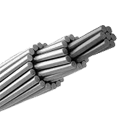
Aluminum is a lightweight material, which makes it cheaper to produce and transport than copper. It’s also highly resistant to corrosion, reducing the need for protective coatings in many applications. On average, aluminum conductors cost about 40-50% less than copper conductors (Source: International Copper Association). For example, a 1,000-meter stretch of 500 mm² aluminum conductor can cost approximately $1,000, while the same stretch of copper conductor may cost up to $1,500.
Additionally, aluminum’s relatively low density means that it requires less raw material for similar electrical conductivity. This lowers not only the purchase price but also transportation and handling expenses, especially for large-scale projects in remote areas.
Copper Conductors
Copper is known for its superior electrical conductivity and mechanical strength, making it the material of choice in many high-performance applications. However, copper’s price fluctuates widely, influenced by the global demand for the metal, geopolitical factors, and mining costs. As of recent data, copper prices have ranged between $6,000 and $8,000 per ton (Source: London Metal Exchange).
Despite the higher initial cost, copper’s excellent conductivity and lower electrical resistance make it suitable for high-power and long-distance transmission, where minimizing energy losses becomes a priority. For example, copper conductors are often used in power plants and data centers where performance is critical.
Maintenance and Reliability: The Long-Term Outlook
The maintenance costs of conductors often outweigh their initial investment, especially in industrial applications where the conductors are exposed to harsh environmental conditions. Materials such as aluminum and copper behave very differently under stress and wear, influencing their overall lifetime maintenance costs.
Aluminum Conductors
Aluminum conductors generally require less maintenance than copper. The material’s resistance to corrosion and low rate of wear under normal operating conditions mean fewer repairs are needed. However, aluminum has one significant drawback: it has a tendency to develop oxidation layers on the surface, which can affect electrical conductivity if not regularly inspected and maintained. This issue can be mitigated by using alloys or coatings, which add to the maintenance cost but enhance performance.
A 2018 study from the U.S. Department of Energy indicated that well-maintained aluminum conductors can last up to 50 years without major degradation (Source: U.S. Department of Energy). This makes aluminum a solid choice for long-term, low-maintenance applications.
Copper Conductors
Copper’s primary advantage is its excellent conductivity and mechanical properties. While copper doesn’t suffer from oxidation in the same way aluminum does, it can still be vulnerable to pitting corrosion in certain environments, especially in industrial areas with high humidity or salinity. Maintenance for copper conductors is typically more expensive due to the need for more frequent inspections, cleaning, and sometimes replacement of insulation materials.
The maintenance cost for copper conductors can be 30-50% higher over a 20-year period compared to aluminum due to their susceptibility to corrosion and the higher costs associated with inspecting and replacing copper wiring (Source: Copper Development Association).
Salvage Value and End-of-Life Considerations
At the end of their functional life, the salvage value of a conductor is a key component of its overall lifecycle cost. This value depends largely on the ability to recycle or repurpose the material.
Aluminum Conductors
Aluminum is highly recyclable, with a recycling rate of around 90% (Source: Aluminum Association). This makes aluminum conductors relatively easy and cost-effective to recycle at the end of their life. The salvage value of aluminum is therefore a significant factor in the total lifecycle cost. According to current metal market trends, recycled aluminum can fetch around $1,500 per ton, depending on market conditions.
Copper Conductors
Copper is also a valuable material at the end of its life. In fact, copper is often considered more valuable than aluminum in recycling markets, with prices for recycled copper reaching around $4,000 per ton (Source: Metal Bulletin). This makes copper conductors a valuable asset for recycling companies, contributing to their salvage value. However, the higher costs associated with copper’s initial purchase and maintenance mean that the savings from recycling may not always fully offset the higher initial investment.
Case Studies: Real-World Applications and Results
Let’s look at two case studies to better understand how these materials perform in practice.
Case Study 1: Urban Power Grid in the U.S.
An urban area in the U.S. opted for aluminum conductors in the construction of a new power grid. With a projected lifespan of 40 years and a total of 100 kilometers of wiring, the initial cost was $5 million. The annual maintenance cost came out to approximately $100,000, largely for routine inspections and minimal repairs. At the end of the grid’s life, the aluminum could be sold for $1,500 per ton, adding to the total cost savings. The result? A total cost of ownership of $7.5 million over the lifespan of the grid, far less than the $10 million it would have cost to install copper conductors with similar performance characteristics.
Case Study 2: Remote Oil Rig in the Middle East
A large oil company opted for copper conductors in a remote oil rig’s electrical system, choosing performance over cost. The initial cost for copper wiring and installation was $2 million, but annual maintenance costs averaged $200,000. Despite the higher operational expenses, copper was preferred because of its low energy loss over long distances, a critical factor for oil rigs in areas with extreme temperatures. At the end of its service life, the copper conductors provided a salvage value of $600,000. The total lifecycle cost came to $10 million, which was higher than the aluminum option but justified by the system’s energy efficiency.
Environmental Impact and Sustainability
When evaluating lifecycle costs, sustainability should also be considered. Both aluminum and copper have their environmental impacts, but aluminum generally performs better in this area due to its lower energy footprint during production and higher recyclability.
Aluminum
Aluminum has a lower carbon footprint than copper, with the production of aluminum requiring less energy than copper’s extraction and processing. Additionally, aluminum’s ability to be recycled repeatedly without degradation of quality makes it a more sustainable option for the long term.
Copper
While copper’s extraction is energy-intensive, its long lifespan and high recyclability contribute to its sustainability over time. The copper industry is actively working to reduce environmental impact by improving mining processes and recycling technologies.
Conclusion
When comparing the lifecycle costs of aluminum conductors to copper and other materials, aluminum generally emerges as the more cost-effective option over the long term. Its lower initial cost, reduced maintenance expenses, and high recyclability contribute to its appeal for a wide range of applications, particularly in low- to mid-range power transmission projects and areas where energy efficiency is a priority. However, in high-demand environments where minimal energy losses are critical, such as in long-distance transmission or high-power applications, copper remains a strong contender due to its superior conductivity.
In any case, it’s essential to evaluate the full lifecycle cost when selecting materials for electrical infrastructure. A choice based solely on the initial investment may overlook hidden long-term costs, potentially leading to higher overall expenses. By factoring in maintenance, energy efficiency, and the material’s end-of-life value, companies can make decisions that maximize long-term savings while maintaining reliability and performance.
By leveraging real-world data and case studies, we’ve illustrated how aluminum and copper each bring unique benefits and challenges to the table. In many cases, aluminum’s lower lifecycle costs make it a smarter investment, but copper’s higher upfront cost may still be justified in high-performance applications where energy loss and long-term reliability are top priorities.
References
Aluminum Association. (2019). Sustainability and the Aluminum Industry: Trends and Opportunities.
International Copper Association. (2021). Copper and Aluminum: A Comparison of Electrical Conductivity.
U.S. Department of Energy. (2018). Energy Efficiency and Material Selection in Power Distribution Systems.
Aluminum Association. (2020). Aluminum Recycling and its Environmental Impact.
Copper Development Association. (2019). The Lifecycle and Durability of Copper Conductors.
Metal Bulletin. (2021). Copper and Aluminum: Recycling Markets and Prices.
London Metal Exchange. (2020). Copper and Aluminum Price Trends.

No comment