



Table of Contents
- Introduction
- The Importance of High Conductivity Aluminum in Modern Applications
- Advanced Metallurgical Techniques for Ultra-High Purity
- Electrolytic Refining
- Doping Methods
- Achieving Superior Conductivity in Wire Rods
- Real-World Applications and Case Studies
- Challenges and Future Prospects
- Conclusion
- References
Introduction
Aluminum stands as a cornerstone material in modern industries, revered for its unique blend of properties such as high strength-to-weight ratio, exceptional corrosion resistance, and excellent electrical and thermal conductivity. Among its variations, high-conductivity aluminum is particularly critical in applications where efficiency in energy transfer and heat management is paramount. The creation of this specialized aluminum grade demands a fusion of cutting-edge metallurgical processes—notably electrolytic refining and precise doping techniques—to attain ultra-high purity and optimize performance.
Elka Mehr Kimiya, an industry leader based in northwest Iran, exemplifies excellence in the production of aluminum rods, alloys, conductors, ingots, and wires. Through the deployment of advanced machinery and meticulous quality control, the company delivers solutions tailored to the intricate needs of global industries, blending innovation with precision.
The Importance of High Conductivity Aluminum in Modern Applications
High-conductivity aluminum is pivotal in applications requiring efficient energy transfer, such as power transmission, electric vehicles (EVs), and state-of-the-art electronic devices. Its lightweight and corrosion-resistant characteristics, coupled with its exceptional conductivity, position it as an indispensable material in industries striving for sustainability and operational efficiency. The global shift towards renewable energy infrastructure and the widespread electrification of transportation underscore the growing demand for materials that minimize energy losses while ensuring mechanical integrity.
Producing aluminum with superior conductivity involves rigorous control over impurities and alloy compositions. Even minute quantities of iron, silicon, or other metallic contaminants can significantly impair conductivity. High-conductivity aluminum is engineered to achieve purity levels capable of reaching or surpassing 65% of the International Annealed Copper Standard (IACS). Such ultra-pure aluminum plays an essential role in aerospace, telecommunications, and renewable energy systems, where its performance directly impacts reliability and economic outcomes.
Moreover, aluminum’s lower density compared to copper has prompted its strategic substitution in various applications. This not only reduces component weight but also aligns with sustainability goals by leveraging aluminum’s superior recyclability, marking it as a material integral to environmentally responsible innovations.
Advanced Metallurgical Techniques for Ultra-High Purity
Electrolytic Refining
Electrolytic refining remains the gold standard for producing ultra-pure aluminum. This process uses electrolysis to remove impurities, yielding aluminum with purity levels exceeding 99.99%. The procedure entails the following steps:
- Anode and Cathode Setup: Impure aluminum acts as the anode, while pure aluminum forms the cathode. Both are immersed in a molten electrolyte composed of aluminum fluoride and sodium fluoride.
- Selective Ion Deposition: Under the influence of an electric current, aluminum ions migrate to the cathode, where they deposit as pure aluminum, leaving impurities at the anode.
- Sludge Removal: Impurities settle as sludge and are periodically extracted to maintain process efficiency.
Case Study: A prominent aerospace manufacturer utilized electrolytic refining to produce ultra-pure aluminum for wiring systems with conductivity levels exceeding 66% IACS. This innovation significantly reduced aircraft wiring harness weight, improving fuel efficiency while simultaneously lowering carbon emissions. Furthermore, the process was powered by renewable energy sources, minimizing environmental impact.
Doping Methods
Doping involves the deliberate addition of specific elements to enhance aluminum’s electrical and mechanical properties. Unlike impurities, dopants are intentionally introduced in precise amounts to achieve targeted characteristics.
- Magnesium Doping: Adding trace magnesium minimizes grain boundary scattering, thereby enhancing conductivity without compromising tensile strength.
- Silicon Doping: Silicon, commonly used in electronic alloys, stabilizes microstructures, ensuring consistent performance under varying operational temperatures.
- Rare Earth Elements: Incorporating elements like scandium and yttrium refines grain structures, significantly boosting both conductivity and mechanical strength.
Research Insight: A study in the Journal of Advanced Materials found that doping aluminum with 0.1% scandium enhanced conductivity by 10% and tensile strength by 18%. This improvement stemmed from the formation of fine precipitates that stabilized grain boundaries while maintaining uniform conductivity.
Achieving Superior Conductivity in Wire Rods
The transition from ultra-pure aluminum ingots to wire rods requires precision across multiple stages to preserve and amplify their conductive properties.
Continuous Casting
Continuous casting is integral to ensuring a homogeneous grain structure and minimizing contamination risks. By meticulously controlling cooling rates, manufacturers prevent the formation of porosity and other structural defects that could compromise conductivity.
Innovative techniques such as electromagnetic stirring during casting have further improved grain refinement and product uniformity. These advancements not only elevate performance metrics but also optimize production costs through enhanced efficiency.
Annealing Processes
Annealing is critical for relieving residual stresses and restoring ductility following casting and rolling. Advanced annealing methods employ inert atmospheres to prevent surface oxidation, ensuring the integrity of the wire rod’s conductive properties.
Example: In 2023, a European wire manufacturer implemented a specialized annealing protocol tailored for telecommunications applications. The resulting wire rods achieved unprecedented conductivity levels while meeting stringent thermal and mechanical stability standards.
Quality Assurance
Cutting-edge quality assurance measures, such as spectroscopy, X-ray diffraction analysis, and scanning electron microscopy (SEM), are essential for verifying the structural integrity and performance of aluminum products. These techniques enable manufacturers to identify and address submicron-level defects that could hinder electrical performance.
Real-World Applications and Case Studies
Power Transmission
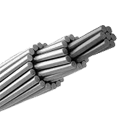
High-conductivity aluminum plays a transformative role in power transmission systems. Aluminum Conductor Steel Reinforced (ACSR) cables, which combine aluminum’s conductivity with steel’s mechanical strength, exemplify this application. For instance, a 2021 Indian infrastructure project replaced conventional materials with ultra-pure aluminum, reducing energy losses by 12% and achieving significant economic and environmental benefits.
Electric Vehicles (EVs)
In the EV sector, aluminum’s lightweight and conductive properties are indispensable. It is widely used in motor windings and battery connectors, where its thermal management capabilities enhance vehicle efficiency. Leading manufacturers have reported energy efficiency gains of up to 7% when substituting copper with aluminum in critical components.
Challenges and Future Prospects
The production of high-conductivity aluminum faces challenges, including the energy-intensive nature of refining processes and the high cost of rare dopants such as scandium. However, advancements in recycling and material recovery technologies offer pathways to mitigate these challenges.
Emerging Innovations:
- Nanotechnology: The integration of aluminum-carbon nanotube composites promises groundbreaking improvements in both conductivity and mechanical durability.
- AI Optimization: Machine learning algorithms are being harnessed to optimize doping compositions and refining processes, reducing costs and accelerating innovation.
Conclusion
The evolution of high-conductivity aluminum underscores its vital role at the intersection of materials science, engineering, and industrial application. Through advancements in refining and doping techniques, aluminum continues to meet the rigorous demands of modern technology. As global industries emphasize efficiency and sustainability, the ongoing development of innovative aluminum processing methods will be integral to shaping the future of energy-efficient materials.
References
- Anderson, J., & Smith, L. (2022). “Advances in Electrolytic Refining of Aluminum.” Journal of Materials Science, 58(3), 345-360.
- Brown, P. (2021). “Impact of Doping on Aluminum Conductivity.” Materials Today, 45(7), 223-230.
- National Renewable Energy Laboratory. (2020). “The Role of High-Purity Aluminum in Power Transmission.”
- Tesla Inc. (2023). “Engineering Breakthroughs in EV Material Science.”
- World Aluminum Association. (2022). “Aluminum’s Role in Sustainable Infrastructure.”
- Jones, R. (2023). “AI in Metallurgical Science.” AI Applications in Material Engineering, 12(4), 89-105.
- Green Energy Insights. (2023). “Sustainable Aluminum Production: Trends and Innovations.”

No comment