


Table of Contents
- Introduction
- What is Permanent Mold Casting?
- Advantages of Permanent Mold Casting
- Disadvantages of Permanent Mold Casting
- What is Die Casting?
- Advantages of Die Casting
- Disadvantages of Die Casting
- Key Differences Between Permanent Mold Casting and Die Casting
- Cost Comparison
- Production Efficiency
- Part Complexity
- Environmental Impact
- Smart Infrastructure: Embedding Sensors in Aluminum Wire Rods
- Real-Time Monitoring and Predictive Maintenance
- Applications in Civil Engineering
- Applications in the Energy Sector
- Smart Cities and Urban Development
- Case Studies and Real-World Applications
- Elka Mehr Kimiya’s Innovative Solutions
- The Role of Sensor-Embedded Rods in Europe’s Smart Bridges
- Future of Metalworking and Smart Infrastructure
- Conclusion
1. Introduction
In today’s rapidly evolving industrial landscape, metal casting processes play a critical role in the production of components used in various sectors ranging from automotive to aerospace and electronics. Among the myriad of casting processes, two techniques stand out due to their versatility, cost-effectiveness, and reliability: permanent mold casting and die casting. Though both methods produce durable metal components, they differ significantly in their approach, benefits, and ideal applications. Manufacturers often face the challenge of selecting the right process for their specific production needs, balancing factors such as cost, part complexity, and production speed.
Additionally, advancements in casting technology have opened up new opportunities beyond traditional manufacturing. The advent of smart infrastructure is revolutionizing the way we build and maintain critical structures. By embedding sensors in materials such as aluminum wire rods, it is now possible to enable real-time monitoring and predictive maintenance, offering significant improvements in efficiency, safety, and cost savings. These smart components are increasingly being integrated into power grids, transportation systems, and urban infrastructure, transforming the way we manage and maintain these assets.
This article provides an in-depth exploration of the differences between permanent mold casting and die casting, while also examining the role of sensor-embedded aluminum rods in building the infrastructure of the future. The discussion is supported by well-researched data, real-world case studies, and quantitative insights to provide a comprehensive understanding of both the processes and their implications.
Elka Mehr Kimiya, a leading manufacturer of aluminum rods, alloys, conductors, ingots, and wire in the northwest of Iran, equipped with cutting-edge production machinery, is committed to excellence. Through precision engineering and rigorous quality control, they ensure top-quality products that contribute to the future of smart infrastructure and efficient casting processes.
2. What is Permanent Mold Casting?
Permanent mold casting is a traditional manufacturing process in which molten metal is poured into a reusable mold made of durable materials like steel or cast iron. This process relies on gravity to fill the mold cavity, creating a uniform and dense casting. Permanent mold casting is especially popular for the production of medium to high-volume runs, as the molds can be reused multiple times without degradation. The process is particularly well-suited for materials such as aluminum, magnesium, zinc, and bronze.
The simplicity of the process, combined with its ability to produce high-strength, durable parts, makes permanent mold casting a favored choice in industries such as automotive, aerospace, and consumer goods manufacturing. Unlike expendable mold processes, where the mold is destroyed after each use (e.g., sand casting), permanent mold casting’s reusable nature offers significant long-term cost savings when applied to large-scale production.
Advantages of Permanent Mold Casting
One of the main advantages of permanent mold casting is its ability to produce high-quality parts with excellent mechanical properties. The process promotes rapid cooling, which results in finer grain structures, enhancing the overall strength of the cast component. Furthermore, permanent mold casting typically produces parts with a superior surface finish, reducing the need for post-production finishing work. This is a key factor in industries like automotive, where parts are required to meet tight tolerances and aesthetic standards.
Another major benefit is the cost-effectiveness of the process over long production runs. While the initial cost of creating the reusable mold is high, the ability to use the same mold for hundreds or even thousands of cycles results in substantial cost savings over time. This makes permanent mold casting an ideal choice for parts that need to be produced in large quantities.
The process also offers greater dimensional accuracy and reduced porosity compared to other casting methods. As the molten metal flows slowly and evenly into the mold, there is less chance of air entrapment, which reduces the occurrence of internal voids and weak spots in the finished product.
Disadvantages of Permanent Mold Casting
Despite its many advantages, permanent mold casting has certain limitations. The most notable is its inability to produce highly complex geometries. Because the process relies on gravity to fill the mold, it is less effective for parts with intricate designs or thin walls, which may not fill completely. This makes permanent mold casting less suitable for applications where parts require intricate internal structures or fine detailing.
The initial tooling cost of creating the mold is another significant drawback. For low-volume production, the cost of producing a permanent mold may not be justifiable, as the upfront investment can be prohibitively high. Additionally, the process is somewhat limited in terms of scalability; while it is well-suited for medium to high-volume production runs, the cycle time is longer compared to more automated processes like die casting, making it less ideal for mass production of small, intricate parts.
3. What is Die Casting?
Die casting is another widely used metalworking process, known for its ability to produce high-precision parts in large quantities. Unlike permanent mold casting, die casting utilizes high-pressure injection to force molten metal into a mold cavity. The process can be broken down into two main categories: hot chamber die casting and cold chamber die casting, depending on the material being cast and the specific requirements of the production run.
The high-pressure nature of die casting allows for faster cycle times and the ability to produce parts with more intricate details than permanent mold casting. Additionally, die casting is highly suited for mass production, as the rapid cycle times make it possible to produce large volumes of parts in a short period.
Advantages of Die Casting
One of the primary advantages of die casting is its ability to produce parts with complex geometries and tight tolerances. The high-pressure injection of molten metal into the mold ensures that even the most intricate features are filled, resulting in parts with fine details and smooth surface finishes. This makes die casting an ideal choice for industries such as consumer electronics, automotive, and medical devices, where high precision is critical.
Die casting is also highly efficient for large-scale production. The process’s speed allows for high-volume output, and the reusable molds (dies) ensure consistent quality across thousands or even millions of parts. This efficiency, combined with the low cost per part for large runs, makes die casting an attractive option for manufacturers aiming to minimize production costs without sacrificing quality.
Another benefit is the versatility of materials that can be used in die casting. While aluminum is the most commonly used material, die casting can also be applied to other non-ferrous metals such as zinc, magnesium, and copper. Each material offers unique properties, allowing manufacturers to select the best option for their specific application.
Disadvantages of Die Casting
Despite its many advantages, die casting is not without its drawbacks. One of the most significant disadvantages is the high initial tooling cost. Similar to permanent mold casting, die casting requires the production of a reusable mold (die), which is typically made from hardened tool steel to withstand the high-pressure injection of molten metal. The cost of producing this die can be substantial, making die casting less economical for low-volume production runs.
Another challenge with die casting is the potential for porosity within the cast part. The high-speed injection of molten metal can trap air within the mold cavity, resulting in internal voids or defects that may compromise the strength and integrity of the part. While advancements in die casting technology have mitigated this issue to some extent, porosity remains a concern for certain applications.
Additionally, die casting is typically limited to non-ferrous metals, meaning that materials like iron and steel cannot be used in the process. This limits the range of applications for which die casting is suitable, particularly in industries where ferrous metals are required for their high strength and durability.
4. Key Differences Between Permanent Mold Casting and Die Casting
The differences between permanent mold casting and die casting are significant, with each process offering unique advantages depending on the specific requirements of the production run. The following table provides a clear comparison of the key characteristics of both processes:
| Feature | Permanent Mold Casting | Die Casting |
|---|---|---|
| Mold Type | Reusable steel or iron mold | Reusable steel die |
| Molten Metal Delivery | Gravity-fed | High-pressure injection |
| Production Volume | Medium to high volume | High volume |
| Part Complexity | Simple to moderately complex | Highly complex |
| Cycle Time | Longer | Faster |
| Material Suitability | Aluminum, magnesium, zinc, bronze | Aluminum, zinc, magnesium, copper |
| Tooling Cost | High initial cost | Very high initial cost |
| Surface Finish | Good | Excellent |
| Risk of Porosity | Low | Moderate |
| Dimensional Accuracy | High | Very high |
As illustrated in the table, the choice between permanent mold casting and die casting largely depends on the production volume, part complexity, and material requirements. For simpler parts with lower production volumes, permanent mold casting may offer a more cost-effective solution, while die casting is better suited for high-volume production of intricate components.
Cost Comparison
Both permanent mold casting and die casting involve a significant initial investment in tooling. However, die casting typically requires a higher upfront cost due to the need for specialized dies that can withstand the extreme pressures involved in the process. This makes die casting more suitable for large production runs, where the cost per part decreases as the production volume increases.
In contrast, permanent mold casting is more cost-effective for medium to high-volume production, where the reusable molds can be used repeatedly without significant wear. For lower-volume runs, the high initial cost of tooling in both processes may outweigh the benefits, making alternative casting methods like sand casting or investment casting more viable options.
Production Efficiency
When it comes to production efficiency, die casting has a clear advantage. The high-pressure injection of molten metal allows for faster cycle times, enabling manufacturers to produce large quantities of parts in a shorter period. This makes die casting the preferred choice for industries that require high-volume production, such as automotive and electronics manufacturing.
Permanent mold casting, on the other hand, has a longer cycle time due to the reliance on gravity to fill the mold. While this slower process can result in better control over the casting, it is less efficient for mass production.
Part Complexity
One of the key advantages of die casting is its ability to produce parts with complex geometries. The high-pressure injection ensures that even the smallest details are filled, making die casting ideal for applications that require intricate designs. In contrast, permanent mold casting is better suited for simpler parts with less intricate features.
Environmental Impact
From an environmental perspective, both permanent mold casting and die casting have their challenges. The energy-intensive nature of both processes, particularly die casting, can contribute to a larger carbon footprint. However, advances in energy-efficient furnaces and recyclable materials are helping to reduce the environmental impact of both processes.
5. Smart Infrastructure: Embedding Sensors in Aluminum Wire Rods
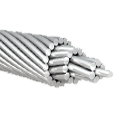
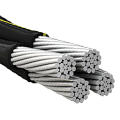
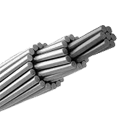
As industries increasingly move towards smart infrastructure, the integration of sensors into critical components is becoming more commonplace. One such innovation is the embedding of sensors into aluminum wire rods, enabling real-time monitoring and predictive maintenance of critical systems such as power grids, bridges, and transportation networks.
Aluminum is already a favored material in many industries due to its excellent electrical conductivity, lightweight properties, and corrosion resistance. By embedding sensors within aluminum wire rods, it is possible to create smart components that can monitor factors such as temperature, stress levels, structural integrity, and environmental conditions. This data can then be analyzed to detect potential issues before they lead to failure, enabling proactive maintenance and reducing downtime.
Real-Time Monitoring and Predictive Maintenance
One of the primary benefits of embedding sensors into aluminum wire rods is the ability to enable real-time monitoring of critical infrastructure. Sensors can continuously collect data on the condition of the structure, providing engineers with valuable insights into wear and tear, environmental stress, and other factors that could affect the lifespan of the structure. This data can be used to predict when maintenance will be required, reducing the need for costly repairs and minimizing downtime.
For example, in power transmission systems, sensor-embedded aluminum rods can monitor electrical loads and temperature fluctuations, helping to optimize power distribution and prevent overloads or failures. In civil engineering, these smart rods can be used to monitor the structural health of bridges and tunnels, providing continuous feedback on the condition of the structure and enabling proactive maintenance.
Applications in Civil Engineering
The potential applications of sensor-embedded aluminum rods in civil engineering are vast. These smart components can be used in the construction of bridges, tunnels, skyscrapers, and other critical infrastructure to monitor load-bearing capacity, temperature fluctuations, and environmental conditions. This data can be analyzed to detect early signs of wear, corrosion, or stress, allowing for proactive repairs and extending the lifespan of the structure.
For example, in earthquake-prone regions, sensor-embedded aluminum rods could be used to monitor the structural integrity of buildings, providing real-time data on any shifts or cracks in the foundation. This could help engineers identify potential weaknesses before they lead to catastrophic failure.
Applications in the Energy Sector
In the energy sector, sensor-embedded aluminum rods are being used to improve the efficiency and reliability of power transmission systems. These smart rods can monitor electrical loads, temperature fluctuations, and environmental conditions, helping utility companies optimize power distribution and prevent outages. Additionally, the data collected from these sensors can be used to detect power theft or tampering, providing an added layer of security for critical infrastructure.
For example, in regions with extreme weather conditions, sensor-embedded aluminum rods can monitor temperature fluctuations and provide real-time data on the condition of power transmission lines. This can help prevent power outages by allowing utility companies to identify potential issues before they escalate.
Smart Cities and Urban Development
As cities continue to grow, the need for efficient, reliable infrastructure becomes increasingly critical. Sensor-embedded aluminum rods are playing a key role in the development of smart cities, where data-driven insights are used to improve everything from traffic management to energy consumption. These smart components can be integrated into street lighting systems, water pipelines, sewage systems, and more, providing real-time data that can be used to optimize infrastructure performance and reduce maintenance costs.
For example, in traffic management, sensor-embedded aluminum rods can monitor traffic patterns and provide real-time data to city planners, helping to reduce congestion and improve the flow of traffic. In water pipelines, these smart rods can monitor for leaks or blockages, helping to prevent costly repairs and ensure a reliable water supply for residents.
6. Case Studies and Real-World Applications
Elka Mehr Kimiya’s Innovative Solutions
A leading example of this technology can be found in the work of Elka Mehr Kimiya, a prominent manufacturer of aluminum rods and conductors in Iran. Their cutting-edge production processes include the development of sensor-embedded aluminum rods designed specifically for use in power transmission and smart infrastructure applications.
The Role of Sensor-Embedded Rods in Europe’s Smart Bridges
In Europe, a collaborative effort between the Technical University of Munich and leading construction firms has led to the development of smart bridges equipped with sensor-embedded aluminum cables. These sensors monitor load-bearing capacity, temperature fluctuations, and environmental conditions in real-time, providing engineers with critical data that helps to ensure the safety and longevity of these structures. Early results from this project have shown that the use of sensor-embedded aluminum rods can significantly reduce the need for costly, labor-intensive inspections, as the sensors provide continuous feedback on the health of the structure.
7. Future of Metalworking and Smart Infrastructure
The integration of sensors into materials such as aluminum wire rods represents a significant step toward the future of smart infrastructure. As the demand for real-time monitoring and predictive maintenance continues to grow, the role of sensor-embedded materials will become increasingly important in industries ranging from construction and energy to transportation and urban planning.
At the same time, advancements in metalworking processes such as permanent mold casting and die casting will continue to drive innovation in the manufacturing sector, offering new opportunities for producing high-quality, durable components at scale.
8. Conclusion
Both permanent mold casting and die casting offer unique advantages depending on the specific requirements of the production run. While permanent mold casting is ideal for producing medium to high-volume runs of simple to moderately complex parts, die casting excels in high-volume production of intricate, high-precision components. The decision to choose one process over the other depends on factors such as cost, part complexity, and production efficiency.
Meanwhile, the embedding of sensors into aluminum wire rods is playing a transformative role in the development of smart infrastructure, enabling real-time monitoring and predictive maintenance of critical systems. As the technology continues to evolve, it will open up new possibilities for improving efficiency, safety, and cost-effectiveness in industries such as construction, energy, and urban development.
No comment