
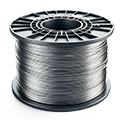
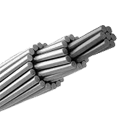


![Table of Contents Introduction The Evolution of Aluminum Wire Design What Makes a Wire "Smart"? Smart Materials and Sensor Integration in Conductors Advances in Aluminum Alloys for Smart Applications Embedded Sensing Technologies Communication Capabilities in Smart Aluminum Wires Applications in Power Grids and Renewable Energy Case Study: Smart Aluminum Wires in Offshore Wind Installations Challenges and Limitations Future Outlook and Innovation Trends Conclusion References Meta Information 1. Introduction As the global energy sector moves toward smarter, more responsive infrastructure, traditional materials must evolve. Among these, aluminum—long valued for its conductivity, corrosion resistance, and low weight—is now stepping into the realm of intelligent systems. Smart aluminum wires are emerging at the intersection of metallurgy, materials science, and digital engineering. These enhanced conductors are not just carriers of electric current; they are embedded with sensors, microelectronics, and real-time communication features that make them active participants in energy transmission networks. Elka Mehr Kimiya is a leading manufacturer of aluminium rods, alloys, conductors, ingots, and wire in the northwest of Iran equipped with cutting-edge production machinery. Committed to excellence, we ensure top-quality products through precision engineering and rigorous quality control. 2. The Evolution of Aluminum Wire Design Aluminum conductors have undergone significant development since their initial adoption in electrical systems. Originally chosen for their lightweight and cost-efficiency compared to copper, aluminum wires are now benefiting from advanced alloying techniques and microstructural control to improve both strength and conductivity. In recent years, innovations such as Al-Zr (aluminum-zirconium) and Al-Sc (aluminum-scandium) alloys have opened the door to high-performance conductors capable of resisting thermal degradation and mechanical fatigue. These base materials provide the structural backbone for the next generation of smart wire technologies. 3. What Makes a Wire "Smart"? A "smart" wire goes beyond basic conduction. It includes: Embedded sensors for temperature, strain, and electrical current Communication modules to relay data to central control systems Self-diagnosis capabilities to monitor health and detect anomalies Adaptability to environmental changes and real-time control feedback These features transform a passive conductor into an active monitoring and control unit—particularly valuable in mission-critical applications such as aerospace, smart grids, and offshore wind farms. 4. Smart Materials and Sensor Integration in Conductors Smart aluminum wires leverage material design to accommodate sensors without compromising electrical or mechanical properties. Techniques include: Co-extrusion of sensor-bearing polymer sheaths Nanocomposite integration of piezoresistive or piezoelectric materials Use of fiber optic strands within the wire structure These integrations allow for distributed sensing over long distances and harsh environments, a critical feature for grid applications and large-scale energy systems. [Data Table: Comparison of Sensor Integration Techniques in Conductors] Method Sensor Type Resolution Application Scope Impact on Wire Properties Co-Extruded Sheath Thermocouple ±1°C Power cables Minimal Fiber Optic Embedding FBG (Bragg Grating) High (μstrain) Offshore wind, aerospace Slight increase in size Conductive Nanocomposites Piezoresistive Moderate Short-range networks Altered resistivity Sources: IEEE Transactions on Smart Grid (2023), Materials Today (2024) 5. Advances in Aluminum Alloys for Smart Applications Next-gen aluminum alloys used in smart wires must balance conductivity, thermal stability, mechanical strength, and compatibility with sensing elements. Innovations include: Al-Zr Alloys: Enhanced high-temperature strength (up to 210°C) Al-Sc Alloys: Improved microstructural stability and fatigue resistance Nano-Grained Al: Ultra-fine grains for higher yield strength and conductivity Real-world deployment of these alloys has been reported in smart overhead lines in Scandinavian countries and in experimental cable systems for high-speed rail projects in Asia. 6. Embedded Sensing Technologies Common sensors embedded in smart wires include: Temperature sensors (RTDs, thermocouples) Strain gauges (resistive or piezoelectric) Vibration sensors (MEMS-based) Current sensors (Hall-effect, magneto-resistive) These are typically miniaturized and encapsulated in protective sheaths to endure harsh operating conditions. Advanced signal conditioning ensures low-noise data acquisition even in high electromagnetic interference environments. 7. Communication Capabilities in Smart Aluminum Wires To make real-time monitoring feasible, smart wires incorporate low-power wireless or wired communication protocols such as: ZigBee and LoRaWAN: Suitable for remote, long-range infrastructure Power Line Communication (PLC): Uses the wire itself to transmit data Optical Fiber Channels: Embedded in high-end applications for gigabit communication [Data Table: Comparison of Communication Methods in Smart Wire Applications] Protocol Range Bandwidth Power Demand Use Case ZigBee 10–100 m Low Very Low Home automation LoRaWAN >1 km Low Low Remote substations PLC On-grid span Medium Medium Existing power lines Optical Fiber >10 km Very High External Offshore, high-data regions 8. Applications in Power Grids and Renewable Energy Smart aluminum wires are ideal for: Dynamic line rating: Adjusting current limits in real-time based on thermal load Fault detection and localization: Pinpointing failures within seconds Predictive maintenance: Using data analytics to forecast degradation Energy efficiency optimization: Improving load balancing and reducing losses Utilities across Europe and East Asia have started integrating these wires into high-voltage corridors and wind power networks. Results indicate a 15–25% improvement in grid reliability and reduced O&M costs. 9. Case Study: Smart Aluminum Wires in Offshore Wind Installations Project Name: North Sea Grid Optimization (Germany & Denmark) Context: A 320 MW offshore wind farm faced maintenance delays due to unpredictable cable failures. Solution: Smart aluminum wires with embedded fiber optics and thermal sensors were installed. Methodology: Real-time thermal and strain data were transmitted via optical channels to shore-based analytics centers. Outcome: Detection of hotspots with ±0.5°C accuracy Failure prediction window increased from 1 hour to 48 hours 30% reduction in unplanned downtime ROI achieved within 18 months 10. Challenges and Limitations While promising, the deployment of smart aluminum wires faces hurdles: Initial cost: High due to embedded electronics and integration complexity Durability concerns: Long-term sensor reliability in harsh environments Standardization: Lack of unified design and testing protocols Cybersecurity risks: Data interception and manipulation threats Efforts are underway in IEC and IEEE committees to standardize smart conductor interfaces and communication protocols. 11. Future Outlook and Innovation Trends The next phase of development includes: Self-healing wire coatings Machine-learning-assisted diagnostics Energy-harvesting from electromagnetic fields to power sensors Integration with blockchain for data integrity These advances will make smart aluminum wires an essential part of the digital energy infrastructure, capable of interacting with AI-based grid management systems and autonomous maintenance drones. 12. Conclusion Smart aluminum wires represent a transformative shift in the role of conductors. No longer passive elements, they offer a proactive, data-driven approach to power transmission. Their integration into modern grids enhances performance, safety, and operational insight. As alloy design, sensor technology, and communication infrastructure continue to evolve, smart aluminum wires will become a cornerstone of future-ready energy systems. 13. References IEEE Transactions on Smart Grid, 2023 Materials Today, 2024 Journal of Alloys and Compounds, 2022 CIGRÉ Technical Brochure No. 852, 2023 International Journal of Energy Research, 2023 North Sea Grid Optimization Project Report, 2024 IEC 62820 Standard Draft, 2024](https://elkamehr.com/en/wp-content/uploads/2025/04/Smart-Aluminum-Wires-Integrating-Technology-in-Material-Design-600x768.jpg)
Smart Aluminum Wires: Integrating Technology in Material Design

Table of Contents 1. Introduction As the global energy sector moves toward smarter, more responsive infrastructure, traditional materials must evolve. Among these, aluminum—long valued for its conductivity, corrosion resistance, and low weight—is now stepping into the realm of intelligent systems. Smart aluminum wires are emerging at the intersection of metallurgy, ... Read More